
[論文レビュー] Implications of the electron-phonon coupling in CuPb$_9$(PO$_4$)$_6$O for superconductivity: an extit{ab initio} study
このab initio研究では、CuPb9(PO4)6Oにおける電子-格子結合を調査し、高温超伝導の可能性を評価する。Fermi準位近くの平坦なCu 3d–O 2pバンドと軟らかい低エネルギー格子振動を有するが、電子-格子結合定数は弱く(λ ≈ 0.4)あり、クーロン反発を克服できない。したがって、Migdal-Eliashberg理論による常識的高温超伝導は成立せず、超伝導転移温度は2 K未満であると予測される。
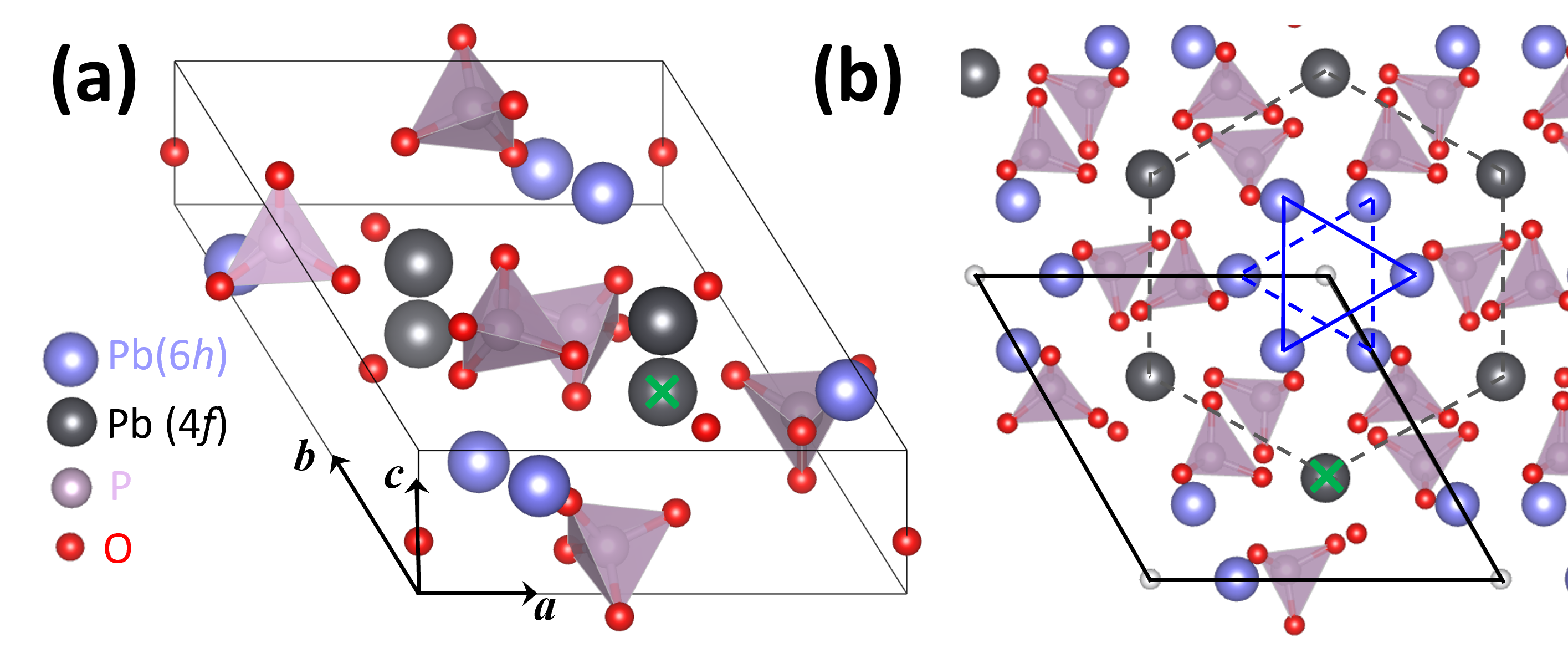
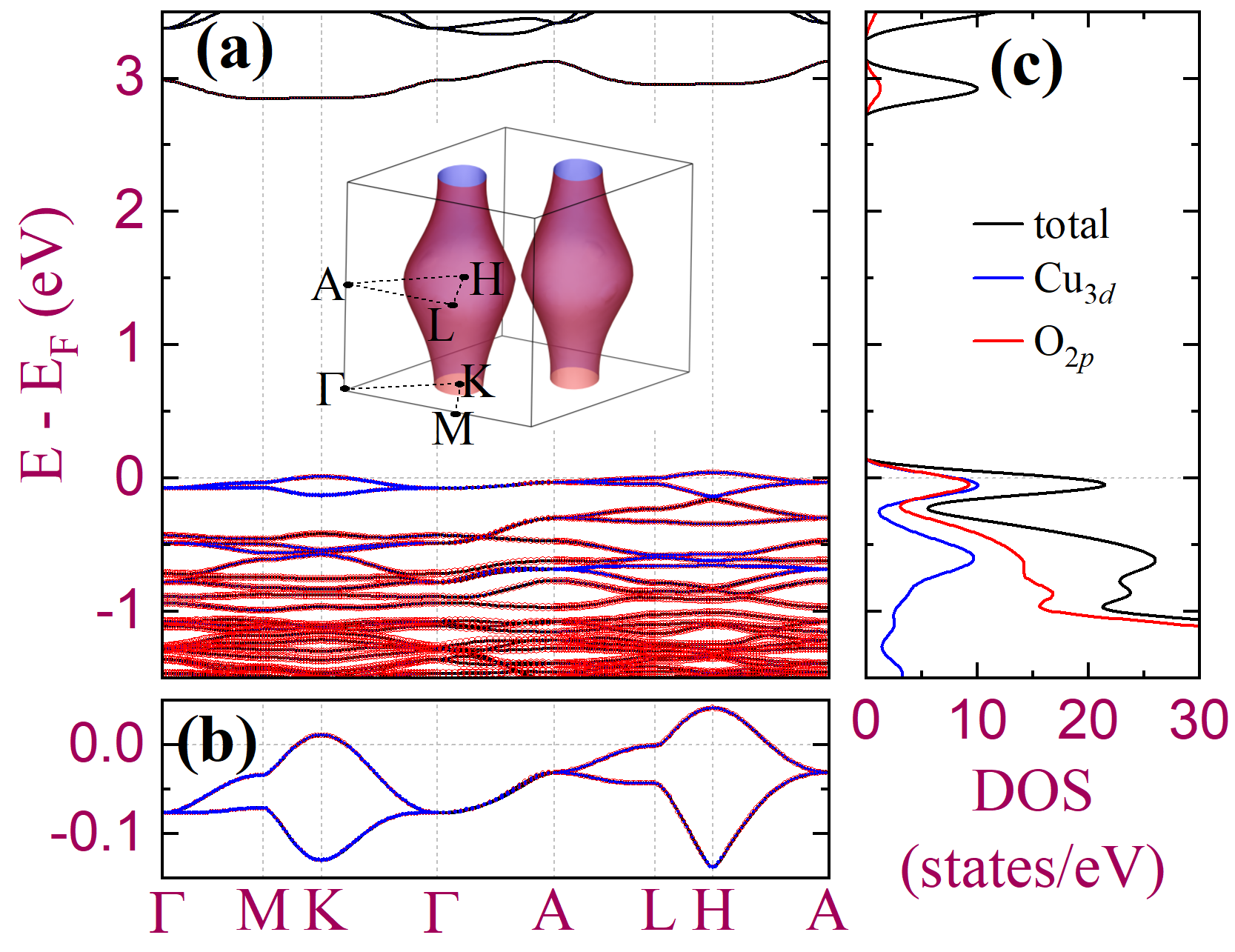
We report $ab~initio$ calculations of the electronic and vibrational properties in CuPb$_9$(PO$_4$)$_6$O, including the electron-phonon coupling strength via strong-coupling Migdal-Eliashberg theory. We verify the presence of appealing flat electronic bands near the Fermi level, a strong hybridization between the Cu $3d$ and O $2p$ states, and soft low-energy phonons, which can suggest high-temperature superconducting behavior. However, the electron-phonon coupling strength appears insufficient to overcome the Coulomb repulsion between an electron pair and thus does does not support high-temperature superconductivity in CuPb$_9$(PO$_4$)$_6$O via the conventional electron-phonon Migdal-Eliashberg mechanism. Even neglecting Coulomb repulsion of the electron pair we find this electron-phonon coupling suggests a superconducting transition temperature less than 2~K.
研究の動機と目的
- 電子-格子結合が強結合Migdal-Eliashberg理論によって高温超伝導を支える可能性があるかどうかを評価すること。
- Fermi準位近くの平坦な電子バンド、強いCu 3d–O 2p混合状態、低エネルギー格子振動が超伝導を促進する役割を評価すること。
- この系において、電子-格子結合定数が電子間クーロン反発を克服するのに十分かどうかを特定すること。
- ハーバードUを用いたスピン極化計算を用いて、電子相関効果が超伝導可能性に与える影響を評価すること。
- ab initio電子-格子結合とEliashberg理論に基づき、超伝導転移温度(Tc)の定量的推定を行うこと。
提案手法
- ノーマルコンセービング擬ポテンシャルとPBE-GGA交換相関関数を用いたQuantum ESPRESSOを用いたab initio計算。
- 密度汎関数理論に基づく高密度kメッシュ(16×16×16および32×32×32)を用いて、電子状態およびFermi表面の計算を行い、状態密度およびバンド分散の高精度な評価を実施。
- 密度汎関数摂動論を用いて、4×4×4のqメッシュ上で格子力学および電子-格子結合を計算。
- 温度依存の非線形Eliashberg方程式を解くためにMigdal-Eliashberg理論を適用し、有効クーロン反発(μ*)を組み込んでTcを推定。
- 磁気不安定性と超伝導への影響を評価するため、Ueff = 3.0 eVを用いたスピン極化計算を実施。
- Fermiエネルギーのシフト(−50から+20 meV)に対する電子-格子結合の感度分析を実施し、結果の頑健性を検証。
実験結果
リサーチクエスチョン
- RQ1CuPb9(PO4)6Oにおける電子-格子結合は、強結合Migdal-Eliashberg理論によって高温超伝導を支えうるか?
- RQ2Fermi準位近くに存在する平坦バンドと強いCu 3d–O 2p混合状態が、電子-格子結合を十分に強化し、超伝導を誘発するか?
- RQ3この系において、電子-格子結合定数は、対電子間クーロン反発を克服するのに十分か?
- RQ4有効クーロン反発パラメータμ*に依存して超伝導転移温度はどのように変化するか?
- RQ5電子相関および磁気秩序が、CuPb9(PO4)6Oにおける超伝導の抑制または促進に果たす役割は何か?
主な発見
- 計算された電子-格子結合定数(λ)は弱く、平均して約0.4であり、これは電子間クーロン反発を克服するには不十分である。
- クーロン反発がない状況ですら、予測される超伝導転移温度は2 K未満であり、高温超伝導の可能性は否定される。
- 実際のμ*値(0.1、0.15、0.2)に対応するTcの推定値は、250 mK、26 mK、および約0 mKである。
- 多くの低周波数の格子振動モード(5 meV未満)が存在し、主にPb原子に関連していることから、動的安定性を示している。
- 平坦バンドと強いCu 3d–O 2p混合状態によりFermi準位における状態密度が増大しているが、これは強い電子-格子結合をもたらさない。
- スピン極化計算ではわずかな磁気モーメント(約1 μB/f.u.)が観測されたが、電子相関効果は超伝導可能性に顕著な影響を及ぼさない。
より良い研究を、今すぐ始めましょう
論文の読解から最終レビューまで、研究時間を劇的に削減しましょう。
クレジットカード登録不要
このレビューはAIが作成し、人間の編集者が確認しました。