
[論文レビュー] Intelligent Agricultural Greenhouse Control System Based on Internet of Things and Machine Learning
この論文は、機械学習を用いて環境パラメータを監視し、温度、湿度、光、灌漑などを適応的に調節して作物の成長と資源効率を改善するIoT駆動の温室制御システムを設計・実装する。
This study endeavors to conceptualize and execute a sophisticated agricultural greenhouse control system grounded in the amalgamation of the Internet of Things (IoT) and machine learning. Through meticulous monitoring of intrinsic environmental parameters within the greenhouse and the integration of machine learning algorithms, the conditions within the greenhouse are aptly modulated. The envisaged outcome is an enhancement in crop growth efficiency and yield, accompanied by a reduction in resource wastage. In the backdrop of escalating global population figures and the escalating exigencies of climate change, agriculture confronts unprecedented challenges. Conventional agricultural paradigms have proven inadequate in addressing the imperatives of food safety and production efficiency. Against this backdrop, greenhouse agriculture emerges as a viable solution, proffering a controlled milieu for crop cultivation to augment yields, refine quality, and diminish reliance on natural resources [b1]. Nevertheless, greenhouse agriculture contends with a gamut of challenges. Traditional greenhouse management strategies, often grounded in experiential knowledge and predefined rules, lack targeted personalized regulation, thereby resulting in resource inefficiencies. The exigencies of real-time monitoring and precise control of the greenhouse's internal environment gain paramount importance with the burgeoning scale of agriculture. To redress this challenge, the study introduces IoT technology and machine learning algorithms into greenhouse agriculture, aspiring to institute an intelligent agricultural greenhouse control system conducive to augmenting the efficiency and sustainability of agricultural production.
研究の動機と目的
- 食料需要の高まりと気候変動の課題の中で、知的で持続可能な温室管理の必要性を動機づける。
- IoTベースのアーキテクチャを機械学習と統合して温室内部条件を監視・制御する。
- リアルタイムデータ収集、処理、モデル駆動の規制を実証して作物成長の効率を改善し、資源の無駄を削減する。
- スマート温室システムの展開におけるプライバシー、セキュリティ、モジュール性、社会経済的考慮事項に対処する。
提案手法
- 温室全体を監視するために、温度、湿度、光を含むセンサーを配置する。
- IoTを用いてセンサデータをクラウドへ送信し、処理と保存を行う。
- データ前処理(外れ値修正、正規化)を適用し、履歴の時系列データでRNNベースのモデルを訓練する。
- PID、MPC、ファジィ制御を組み合わせたハイブリッド制御戦略をリアルタイム規制に実装する。
- 機械学習の出力を用いて環境パラメータをフィードバック制御で調整する。
- 資源利用を最適化するためのエネルギー、灌漑、肥料モデルを開発する。
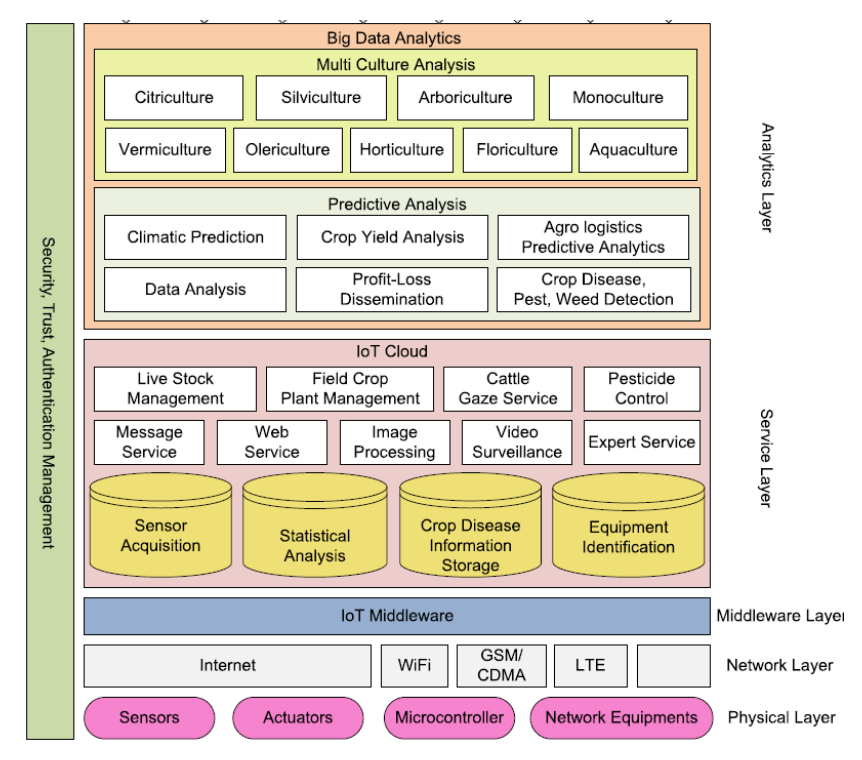
実験結果
リサーチクエスチョン
- RQ1IoT対応センサとクラウド処理は、温室環境ダイナミクスの正確なモデリングをどのように支援できるか。
- RQ2ML予測に導かれたPID、MPC、ファジィ制御を組み合わせたフレームワークは、リアルタイムの温室規制をどの程度正確に実現できるか。
- RQ3ML駆動の温室制御によって、作物ごとにどの程度のエネルギー、水、肥料の節約が可能か。
- RQ4スマート温室の展開におけるデータプライバシー、システム保守、技術導入の課題は何か。
主な発見
- クラウドベースのデータパイプラインは、温室センサデータのクレンジング、正規化、異常修復をサポートする。
- 過去の時系列データから将来の温室条件を予測するためにRNNベースのモデルが用いられている。
- 複数アルゴリズムの制御戦略(PID、MPC、ファジィ)は、規制の柔軟性と条件変化への対応を改善する。
- システムは作物ごとの環境調整とエネルギー・水資源の最適化を可能にする。
- 実世界のケーススタディは、作物成長効率の改善と資源浪費の削減を示唆している。
- 将来の作業には高度なセンサー、深層学習、より広範なエコシステムの相互運用性の統合が含まれる。
より良い研究を、今すぐ始めましょう
論文設計から論文執筆まで、研究時間を劇的に削減しましょう。
クレジットカード登録不要
このレビューはAIが作成し、人間の編集者が確認しました。