
[論文レビュー] Is there a left-handed magnetic field in the solar neighborhood? Exploring helical magnetic fields in the interstellar medium through dust polarization power spectra
本稿では、太陽系近傍における大規模な左ねじり型磁場が、プラネットデータにおける全ダスト強度(T)とBモード偏光の予期せぬ正の自己相関を説明できるかどうかを調査している。3次元の合成的磁場モデルを用いて、観測されたT–B相関を再現できるのは、弱い左ねじり型磁場構造に限られ、これは磁気ヘリシティに起因するパリティ奇性の起源であると示唆している。小スケール乱流とは異なり、磁気ヘリシティに起因するものである。
The full-sky Planck polarization data at 850um revealed unexpected properties of the E and B mode power spectra of dust emission in the interstellar medium (ISM). The positive cross-correlation between the total dust intensity, T, with the B modes has raised new questions about the physical mechanisms that affect dust polarization, such as the Galactic magnetic-field structure. This is key both to better understanding ISM dynamics and to accurately describing Galactic foregrounds to the polarization of the Cosmic Microwave Background (CMB). In this theoretical paper we investigate the possibility that the observed cross-correlations in the dust polarization power spectra, and specifically between T and B, can be related to a parity-odd quantity in the ISM such as the magnetic helicity. We produce synthetic dust polarization data, derived from 3D analytical toy models of density structures and helical magnetic fields, to compare with the E and B modes of observations. Focusing on the observed T-B correlation, we propose a new line of interpretation of the Planck observations based on a large-scale helical component of the Galactic magnetic field in the solar neighborhood. Our analysis shows that: I) the sign of magnetic helicity does not affect E and B modes for isotropic magnetic-field configurations; II) helical magnetic fields threading interstellar filaments cannot reproduce the Planck results; III) a weak helical left-handed magnetic field structure in the solar neighborhood may explain the T-B correlation seen in the Planck data. This work suggests a new perspective for the interpretation of the dust polarization power spectra, which strongly supports the imprint of a large-scale structure of the Galactic magnetic field in the solar neighborhood.
研究の動機と目的
- プラネットのダスト偏光データにおける予期せぬ正のT–B自己相関の起源を調査すること。
- パリティ奇性の量である磁気ヘリシティが、観測されたT–B相関を説明できるかどうかを評価すること。
- 小スケール乱流ではなく、大規模なねじり型磁場が、観測された偏光パワー スペクトルの原因であるかどうかを検証すること。
- 磁気ヘリシティが銀河間物質におけるEモードおよびBモードパワー スペクトルに与える影響を評価すること。
- 太陽系近傍における大規模なねじり型銀河磁場に基づいて、プラネットデータの新たな解釈を提案すること。
提案手法
- 密度構造およびねじり型磁場の3次元解析的トロイモデルを用いて、合成的なダスト偏光データを生成すること。
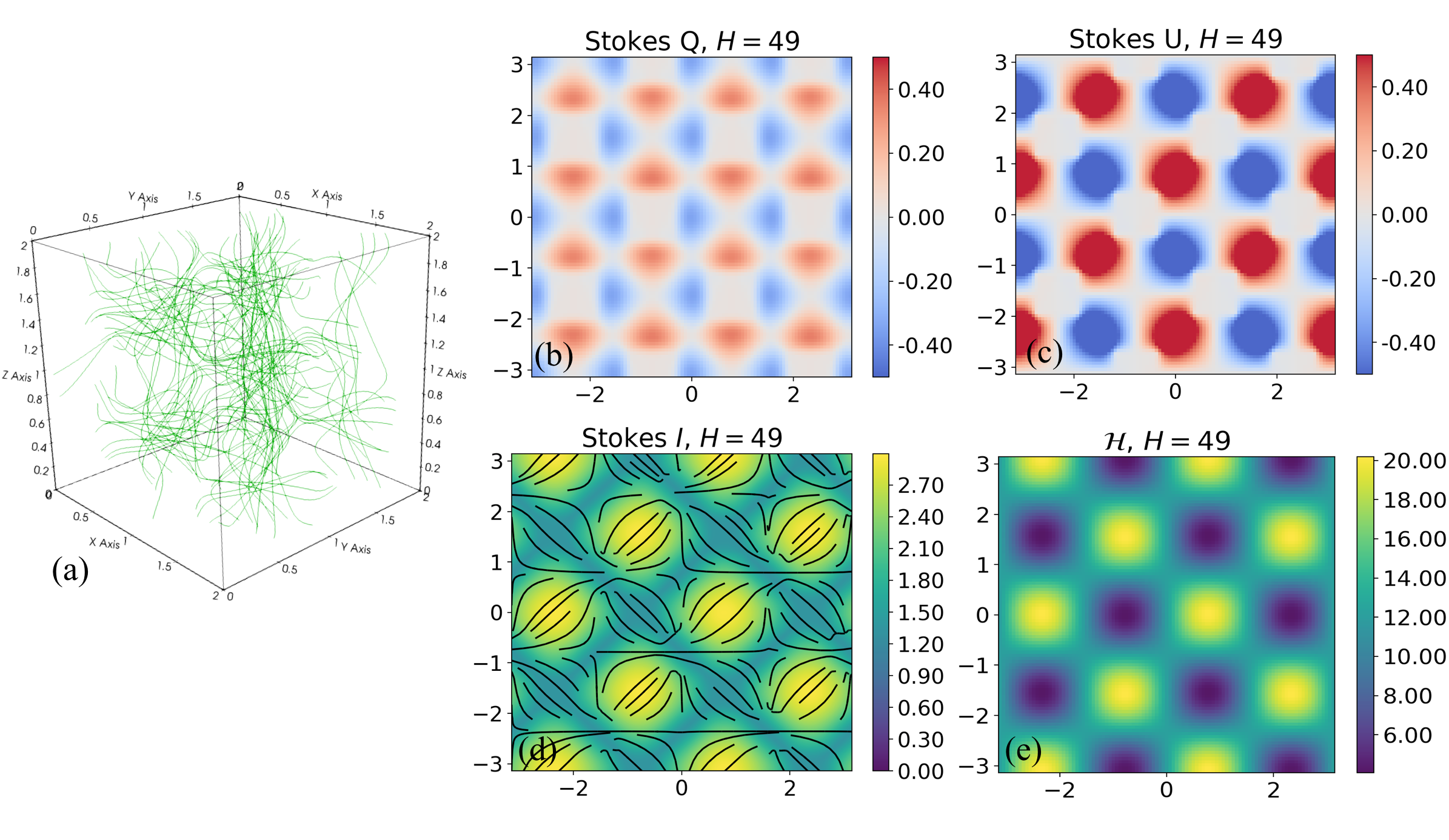
- 3つのモデルタイプの実装: (1) 無向的アーノルド=ベルトラミ=チャイルズ場、(2) サイリンドリカルな銀河間星間線状構造に沿ったねじり型磁場、(3) 太陽系近傍における弱い大規模な左ねじり型磁場。
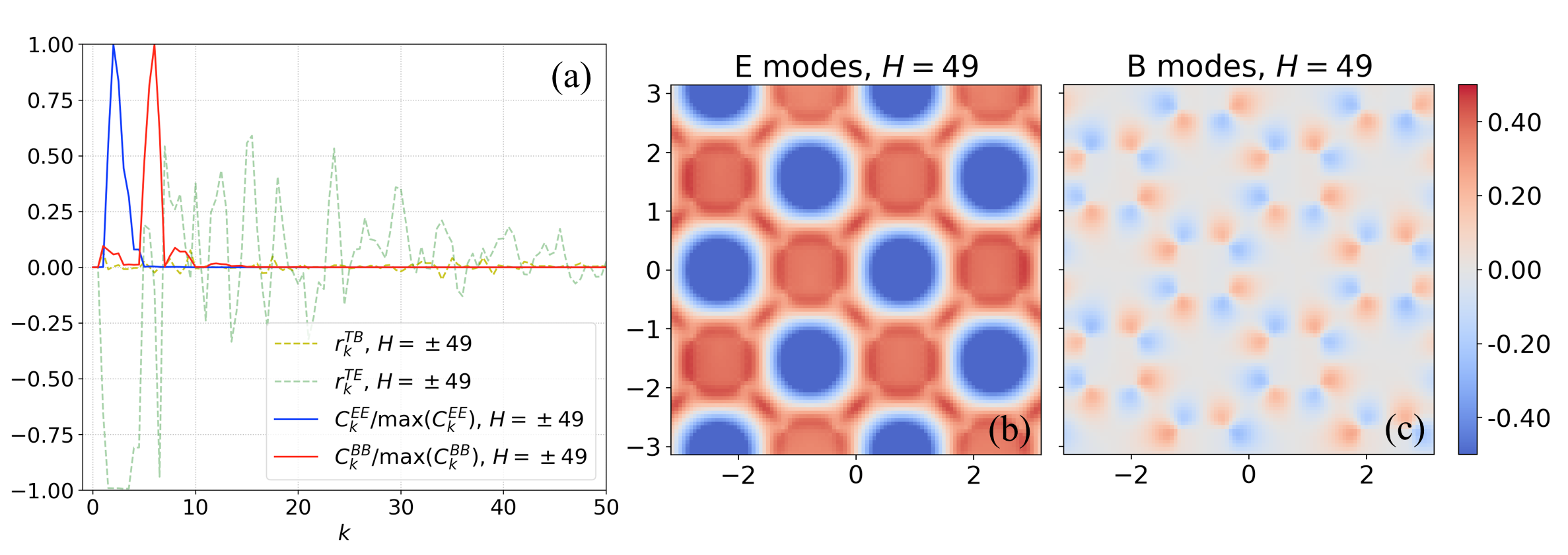
- シミュレートされたEモードおよびBモードパワー スペクトルを、プラネットが観測したパワー スペクトルおよび自己相関(T–EおよびT–B)と比較すること。
- E–Bモード分解を用いて、偏光のパリティ奇性およびパリティ偶性成分を分析し、磁気ヘリシティの役割に焦点を当てる。
- さまざまなヘリシティ設定下でのEモードおよびBモード間の相対的パワーの定量的分析。
- 特に大規模(l < 50)領域におけるヘリシティの符号および振幅の関数としてのT–B相関強度の評価。
実験結果
リサーチクエスチョン
- RQ1磁気ヘリシティは、プラネットのダスト偏光データにおける観測された正のT–B自己相関を説明できるか?
- RQ2無向的磁場配置における磁気ヘリシティの符号が、EモードおよびBモードパワー スペクトルに影響を与えるか?
- RQ3星間線状構造に沿って貫通するねじり型磁場は、観測されたT–B相関を再現できるか?
- RQ4太陽系近傍における大規模な左ねじり型ねじり型磁場は、観測されたT–EおよびT–B相関と整合的か?
- RQ5弱いねじり型磁場構造は、T–EおよびT–B相関の両方を同時に説明できるか?
主な発見
- 無向的磁場配置において、磁気ヘリシティの符号はEモードおよびBモードパワー スペクトルに影響しない。
- 星間線状構造に沿って貫通するねじり型磁場は、プラネットデータにおける観測されたT–B相関を再現できない。
- 太陽系近傍(約100–300 pc圏内)における弱い左ねじり型ねじり型磁場構造が、観測された正のT–B相関を定量的に説明できる。
- このようなねじり型磁場構造は、l < 50のマルチポールにおいて観測された大規模なT–E相関に対しても説明がつく。
- ヘリシティが存在する場合、BモードとEモードの相対的パワーは一定ではなく、左ねじり型ヘリシティではBモードパワーがEモードに対して相対的に増加する。
- 結果は、パラダイムの転換を示唆している:T–B相関は小スケールMHD乱流ではなく、銀河磁場の大規模なねじり成分に起因している可能性が高い。
より良い研究を、今すぐ始めましょう
論文の読解から最終レビューまで、研究時間を劇的に削減しましょう。
クレジットカード登録不要
このレビューはAIが作成し、人間の編集者が確認しました。