
[論文レビュー] ISLES 2022: A multi-center magnetic resonance imaging stroke lesion segmentation dataset
本論文は、急性〜亜急性期の虚血性脳卒中400例の多施設的MRIデータセットであるISLES 2022を紹介する。このデータセットは、神経放射線科医による階層的検証を経たハイブリッド人間-アルゴリズムワークフローを用いて、高品質なアノテーションが施されている。これにより、多様なスキャナーや臨床ステージをカバーする、耐障害性・一般化性能に優れた深層学習モデルのベンチマークが可能となる。
Magnetic resonance imaging (MRI) is a central modality for stroke imaging. It is used upon patient admission to make treatment decisions such as selecting patients for intravenous thrombolysis or endovascular therapy. MRI is later used in the duration of hospital stay to predict outcome by visualizing infarct core size and location. Furthermore, it may be used to characterize stroke etiology, e.g. differentiation between (cardio)-embolic and non-embolic stroke. Computer based automated medical image processing is increasingly finding its way into clinical routine. Previous iterations of the Ischemic Stroke Lesion Segmentation (ISLES) challenge have aided in the generation of identifying benchmark methods for acute and sub-acute ischemic stroke lesion segmentation. Here we introduce an expert-annotated, multicenter MRI dataset for segmentation of acute to subacute stroke lesions. This dataset comprises 400 multi-vendor MRI cases with high variability in stroke lesion size, quantity and location. It is split into a training dataset of n=250 and a test dataset of n=150. All training data will be made publicly available. The test dataset will be used for model validation only and will not be released to the public. This dataset serves as the foundation of the ISLES 2022 challenge with the goal of finding algorithmic methods to enable the development and benchmarking of robust and accurate segmentation algorithms for ischemic stroke.
研究の動機と目的
- 急性および亜急性期における虚血性脳卒中病変セグメンテーションのための、大規模かつ多施設的、高品質なMRIデータセットの不足に対処すること。
- 専門家の監視のもとで実施されるハイブリッド人間-アルゴリズムアノテーションパイプラインにより、観察者間ばらつきと手作業アノテーションの負担を低減すること。
- 異なるスキャナー、脳卒中パターン、臨床的時間点(再vascularization前後)をカバーするセグメンテーションモデルの堅牢な評価を可能にすること。
- 脳卒中予後予測および治療意思決定支援のための、自動化され臨床現場で利用可能なツールの開発を支援すること。
提案手法
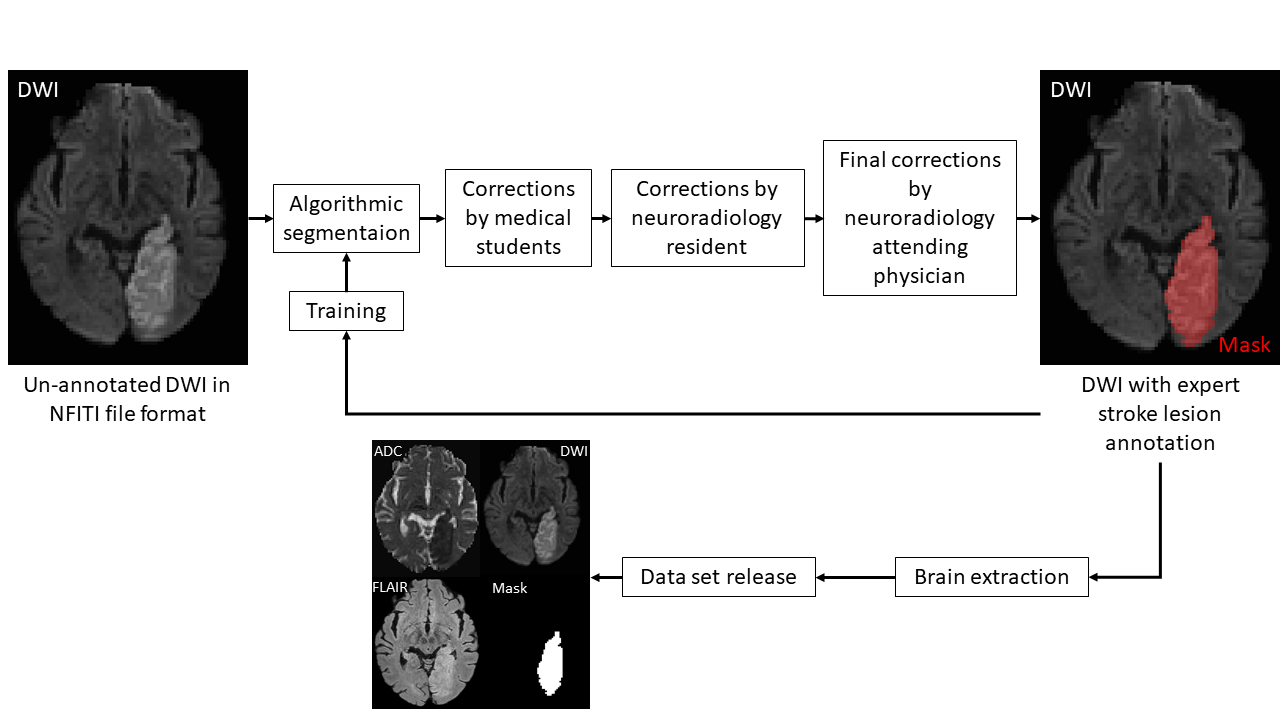
- ハイブリッドアノテーションワークフローを採用:高品質なアノテーションで事前に学習された深層学習モデルを用いた初期の自動前処理セグメンテーションの後、訓練を受けた医学生による手動補正を実施。
- 全医学生によるアノテーションマスクは、神経放射線科レジデントによる厳密なレビューと補正が行われ、その大部分が経験10年以上のアテンディング神経放射線科医によって確認された。
- 画像データはHD-BETを用いた脳抽出により個人特定情報が除去され、FLAIRをDWIに剛体登録し、登録済みの脳マスクを用いて頭蓋骨除去が実施された。
- 全MRIシーケンスおよびセグメンテーションマスクはNIfTI形式に保存され、DICOMメタデータはJSONファイルに保持された。
- データセットは、公開トレーニングセット(n=250)と非公開テストセット(n=150)に分割され、施設および脳卒中表現型のバランスが取られていた。
- データはCC BY-SA 4.0ライセンスで公開され、GitHubに付随するコードおよび可視化スクリプトも提供され、再現性とコミュニティ利用を支援した。
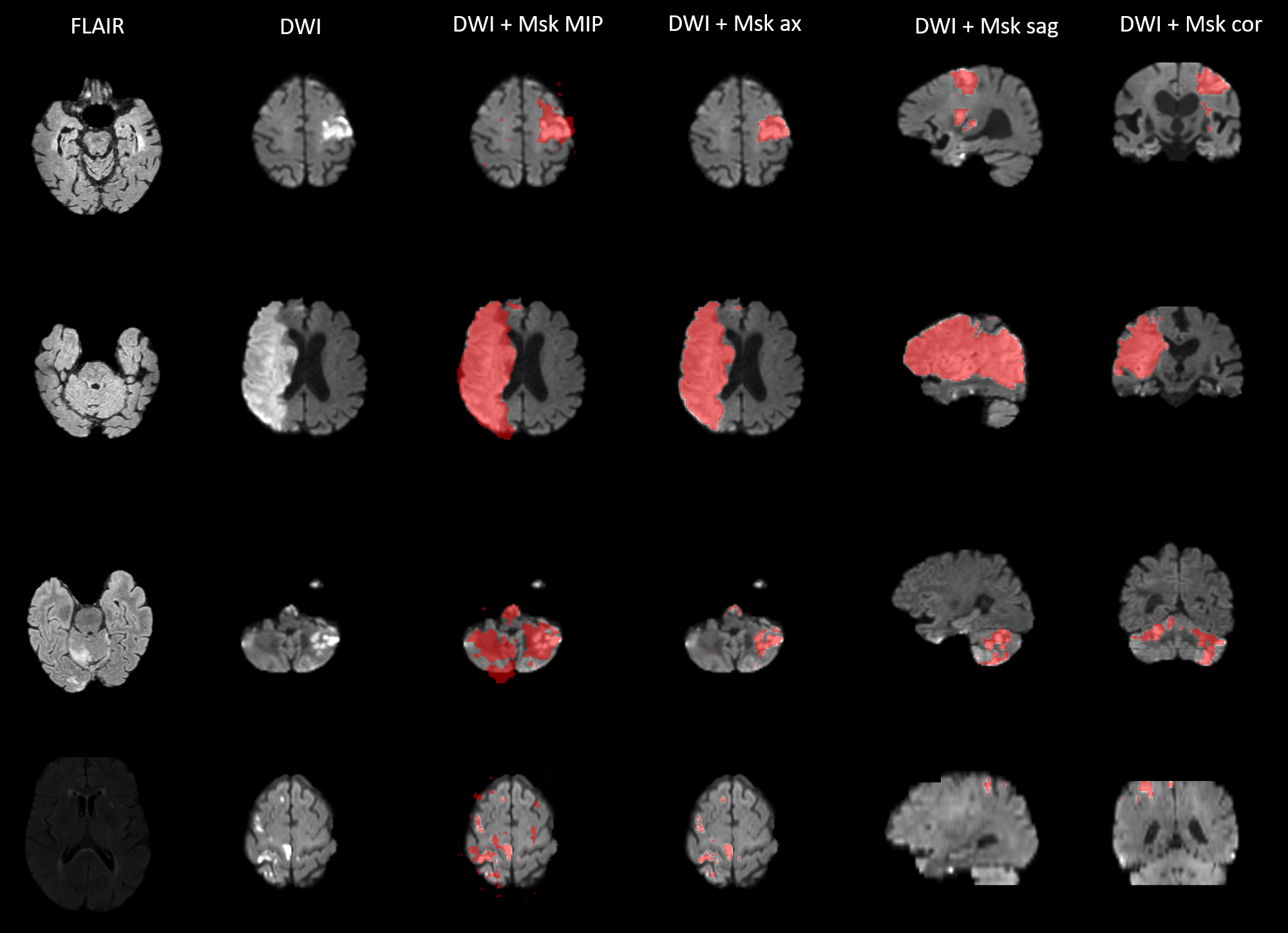
実験結果
リサーチクエスチョン
- RQ1ハイブリッド人間-アルゴリズムアプローチは、脳卒中病変セグメンテーションにおけるアノテーション効率を著しく向上させるとともに、高い観察者間信頼性を維持できるか?
- RQ2急性および亜急性期の脳卒中において、異なるMRIスキャナー、施設、臨床的時間点(再vascularization前後)におけるモデルの一般化性能はどのように変動するか?
- RQ3多施設的・多ベンダーのデータを含めることで、脳卒中病変セグメンテーションのための深層学習モデルの耐障害性はどの程度向上するか?
- RQ4専門家が検証済みのデータで学習された自動セグメンテーションツールは、脳卒中管理における臨床意思決定支援に適した性能に達するか?
主な発見
- ISLES 2022データセットは、専門家が検証済みの病変セグメンテーションを備えた400例の多ベンダーMRI症例を含み、大域性梗塞から小規模な点状梗塞まで多様な病変パターンが含まれる。
- 250例のトレーニングセットはCC BY-SA 4.0の下で公開されており、150例のテストセットはチャレンジ評価のための非公開に留められ、公平なベンチマークが保証されている。
- アノテーションパイプラインは、事前に学習されたセグメンテーションモデルを活用することで、手作業の負担を低減した。最終的なマスクは、アテンディング神経放射線科医を含む複数の専門家レベルによる検証が行われた。
- データセットには再vascularization前の後でのスキャンが含まれており、再vascularization効果およびスキャンタイミングに伴うモデルの耐障害性の評価が可能である。
- データセットは3施設にまたがり、テストセットにはトレーニング時に使用されなかった新しい施設のデータが含まれており、一般化評価の強化が図られた。
- 併せて提供されるGitHubリポジトリには、データ読み込み、可視化、およびチャレンジ標準メトリクスを用いた性能評価のためのコードが含まれている。
より良い研究を、今すぐ始めましょう
論文の読解から最終レビューまで、研究時間を劇的に削減しましょう。
クレジットカード登録不要
このレビューはAIが作成し、人間の編集者が確認しました。