
[論文レビュー] Kinematics of Antlia 2 and Crater 2 from The Southern Stellar Stream Spectroscopic Survey (S5)
本研究では、S⁵調査から得られた新しいスペクトロスコピックデータが、アンティラ2における明確なドップラー速度勾配と、クラウター2における一時的な勾配を明らかにした。これらは潮汐破壊と整合的である。運動学的特徴に加え、ガイヤーEDR3の天球測定と大マゼラン雲による反動運動を組み合わせることで、これらの超拡散銀河赤道球族の起源が潮汐破壊であることを支持するが、更新された金属量からは最小限の星間物質損失が示唆され、これは現在の動力学的モデルに挑戦するものである。
We present new spectroscopic observations of the diffuse Milky Way satellite galaxies Antlia 2 and Crater 2, taken as part of the Southern Stellar Stream Spectroscopic Survey (S5). The new observations approximately double the number of confirmed member stars in each galaxy and more than double the spatial extent of spectroscopic observations in Antlia 2. A full kinematic analysis, including Gaia EDR3 proper motions, detects a clear velocity gradient in Antlia 2 and a tentative velocity gradient in Crater 2. The velocity gradient magnitudes and directions are consistent with particle stream simulations of tidal disruption. Furthermore, the orbit and kinematics of Antlia 2 require a model that includes the reflex motion of the Milky Way induced by the Large Magellanic Cloud. We also find that Antlia 2's metallicity was previously overestimated, so it lies on the empirical luminosity-metallicity relation and is likely only now experiencing substantial stellar mass loss. Current dynamical models of Antlia 2 require it to have lost over 90% of its stars to tides, in tension with the low stellar mass loss implied by the updated metallicity. Overall, the new kinematic measurements support a tidal disruption scenario for the origin of these large and extended dwarf spheroidal galaxies.
研究の動機と目的
- アンティラ2とクラウター2という超拡散の銀河赤道球族の運動学的特徴を調査し、その大きなサイズと低密度の起源としての潮汐破壊を検証する。
- 動力学的モデルが予測する高い潮汐物質損失と、金属量から推定される低い星間物質損失との間に生じる矛盾を解消する。
- 大マゼラン雲の反動運動が、アンティラ2の軌道と運動学的特徴に与える影響を評価する。
- 観測された速度勾配を、潮汐破壊の粒子ストリームシミュレーションと一致させる。
提案手法
- アンガロ・オーストラリア望遠鏡(AAT)を用い、AAOmegaと2dFを搭載して、アンティラ2およびクラウター2のメンバー星の新しいスペクトロスコピック観測を実施した。
- スペクトロスコピックデータをガイヤーEDR3の自己運動と統合し、銀河の運動学的解析を実施。これには、大マゼラン雲の影響による銀河の反動運動の補正を含めた。
- ラインオブSIGHT速度に速度勾配をフィットし、主軸および自己運動と一致させる。これにより、潮汐ストリームモデルの検証が可能になった。
- 更新されたガイヤーEDR3天球測定を用いて、アンティラ2の光度および空間的パラメータを再評価し、その推定光度を増加させた。
- 金属量分布関数を構築し、実験的光度-金属量関係と比較することで、星間物質損失の再評価を実施した。
- 粒子ストリームシミュレーションを用いて、観測された運動学的勾配が、潮汐破壊シナリオと一致するかを検証した。
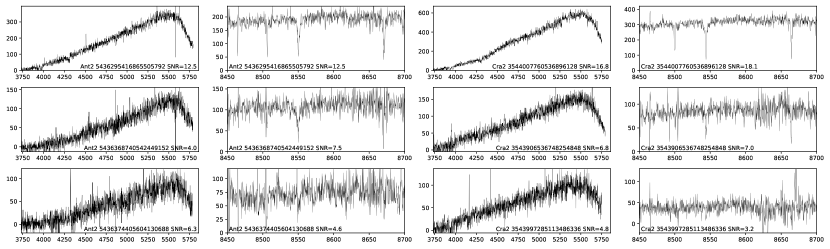
実験結果
リサーチクエスチョン
- RQ1アンティラ2とクラウター2は、主軸と一致する速度勾配を示しており、潮汐破壊の兆候と一致するか?
- RQ2大マゼラン雲による反動運動が、アンティラ2の観測された軌道と運動学的特徴を再現するために必要か?
- RQ3更新されたアンティラ2の金属量は、実験的光度-金属量関係上に位置づけられ、星間物質損失が最小限であると示唆するか?
- RQ4現在の動力学的モデルは、観測された高い潮汐物質損失と、金属量から推定される低い星間物質損失を両立できるか?
- RQ5アンティラ2とクラウター2の運動学的特徴は、潮汐破壊によるものか、それとも他の形成メカニズムによるものかが最も適切か?
主な発見
- アンティラ2に明確な速度勾配が検出され、主軸および自己運動と一致しており、潮汐破壊の起源を強く支持する。
- クラウター2に対しても一時的な速度勾配が確認され、自己運動と一致しており、潮汐的要因と整合的である。
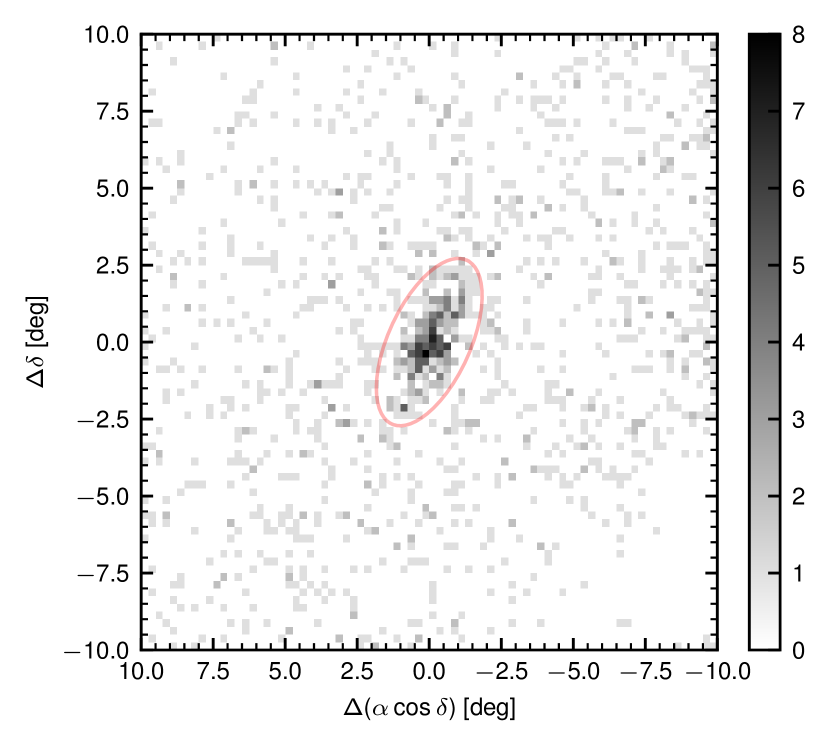
- アンティラ2におけるスペクトロスコピック観測の空間的範囲が2倍以上に拡大され、運動学的カバー率が向上した。
- アンティラ2の金属量は0.2 dex低下し、実験的光度-金属量関係上に位置づけられ、星間物質損失が最小限であると示唆された。
- アンティラ2の軌道と運動学的特徴を再現するには、大マゼラン雲による銀河の反動運動を考慮する必要がある。
- 現在の動力学的モデルでは、アンティラ2の星間物質損失が90%以上に達すると予測されるが、更新された金属量からは低損失が示唆されている。
より良い研究を、今すぐ始めましょう
論文の読解から最終レビューまで、研究時間を劇的に削減しましょう。
クレジットカード登録不要
このレビューはAIが作成し、人間の編集者が確認しました。