
[論文レビュー] Knowledge Editing for Large Language Models: A Survey
本サーベイは、大規模言語モデル(LLM)における知識編集(KME)の包括的概要を提供し、正確で効率的かつ知識を保持する更新を可能にするために、KMEを制約付き最適化問題として統一的に定式化する。知識注入メカニズムに基づき、KME手法の新しい分類法を提唱し、主要な手法を分析し、メトリクスとデータセットを評価し、LLMにおける強固で継続的かつ公平な編集のための重要な課題と今後の方向性を特定する。
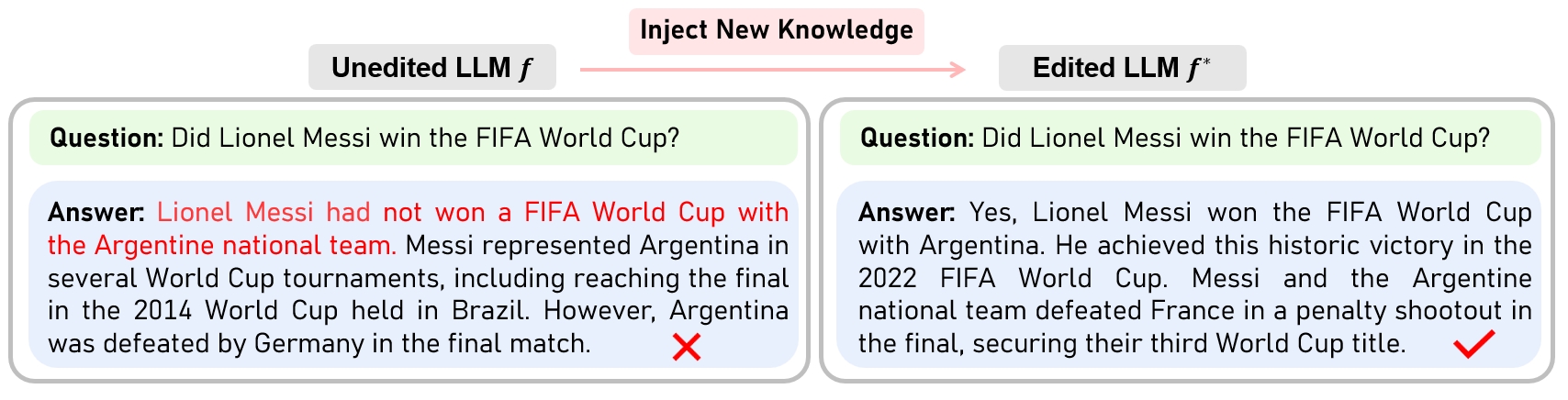
Large language models (LLMs) have recently transformed both the academic and industrial landscapes due to their remarkable capacity to understand, analyze, and generate texts based on their vast knowledge and reasoning ability. Nevertheless, one major drawback of LLMs is their substantial computational cost for pre-training due to their unprecedented amounts of parameters. The disadvantage is exacerbated when new knowledge frequently needs to be introduced into the pre-trained model. Therefore, it is imperative to develop effective and efficient techniques to update pre-trained LLMs. Traditional methods encode new knowledge in pre-trained LLMs through direct fine-tuning. However, naively re-training LLMs can be computationally intensive and risks degenerating valuable pre-trained knowledge irrelevant to the update in the model. Recently, Knowledge-based Model Editing (KME) has attracted increasing attention, which aims to precisely modify the LLMs to incorporate specific knowledge, without negatively influencing other irrelevant knowledge. In this survey, we aim to provide a comprehensive and in-depth overview of recent advances in the field of KME. We first introduce a general formulation of KME to encompass different KME strategies. Afterward, we provide an innovative taxonomy of KME techniques based on how the new knowledge is introduced into pre-trained LLMs, and investigate existing KME strategies while analyzing key insights, advantages, and limitations of methods from each category. Moreover, representative metrics, datasets, and applications of KME are introduced accordingly. Finally, we provide an in-depth analysis regarding the practicality and remaining challenges of KME and suggest promising research directions for further advancement in this field.
研究の動機と目的
- 新しい知識を更新する際のファインチューニングにおける高い計算コストと知識の劣化リスクを軽減すること。
- 従来のファインチューニングの限界、すなわちパラメータの上書き、深刻な忘却、高コストなリソース要件を特定すること。
- 新しい知識が事前学習モデルにどのように注入されるかに基づいて、KME手法の体系的分類を提供すること。
- 標準化されたメトリクス、データセット、実世界の応用を用いて、既存のKME手法を評価すること。
- 継続的編集、敵対的耐性、公平性に関する未解決の課題を特定し、今後の研究方向性を提案すること。
提案手法
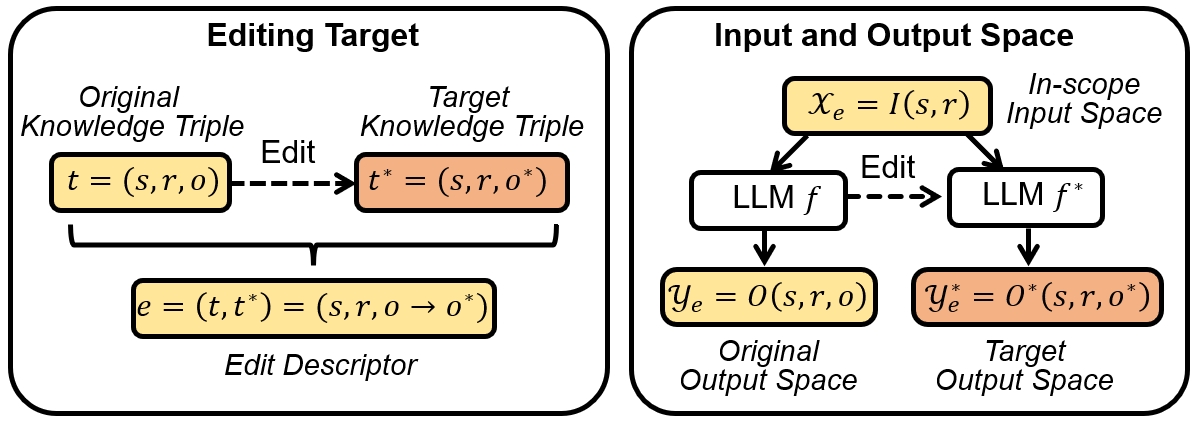
- 新しい知識の正確性と事前知識の保持のバランスを取る制約付き最適化問題としてKMEを定式化すること。
- KME手法を2つの主要なタイプに分類する:(1) パラメータ更新に基づく編集(例:アテンションヘッドやMLP層の更新)、(2) 補助ネットワークに基づく編集(例:リtrieval増強型またはアダプタモジュールの使用)。
- 知識注入メカニズムに基づく構造的分類を導入:パラメータベース編集、リtrieval増強編集、アダプタベース編集。
- 編集成功確率、知識保持率、編集特異性といった評価メトリクスを提案し、KMEのパフォーマンスを評価すること。
- HELM、MMLU、およびカスタム知識注入ベンチマークなど、特別なデータセットを活用して学習と評価を行うこと。
- 変更されていない事実に対する元のモデル挙動からの逸脱をペナルティ化する損失関数を統合し、知識保持を確保すること。
実験結果
リサーチクエスチョン
- RQ1知識注入メカニズムに基づいて、KME手法を体系的に分類する方法は何か?
- RQ2異なるKME手法において、編集の正確性、知識保持、計算効率の間で生じる主なトレードオフは何か?
- RQ3複数の編集が逐次的に適用される継続的編集の状況下で、既存のKME手法はどのように動作するか?
- RQ4KME手法は、敵対的編集や誤情報に対して、どの程度モデルの耐性を高められるか?
- RQ5KMEは、事前学習されたLLMにおけるバイアスを軽減し、公平性を向上させるために効果的に活用できるか?
主な発見
- KME手法は、モデルパラメータのサブセットの変更や軽量モジュールの統合にとどまることで、完全なファインチューニングに比べて計算コストを顕著に削減する。
- アテンションヘッドやMLP層を変更するパラメータベース編集手法は、高い編集成功確率を示すが、適切に正則化されない場合、知識の忘却リスクを伴う。
- リtrieval増強型やアダプタベースの補助ネットワークアプローチは、知識保持が良く、モジュラー性に優れるが、推論遅延を引き起こす可能性がある。
- 編集成功確率や保持精度といった評価メトリクスは、KMEパフォーマンスを定量化するために不可欠であり、最先端の手法では標準ベンチマークで90%を超える成功確率を達成している。
- 継続的編集は依然として大きな課題であり、連続する編集が干渉を引き起こし、特に直交しない編集空間では過去の編集の忘却が生じやすい。
- 耐性と公平性は、今後ますます重要な懸念事項となりつつあり、制約付き最適化と検証メカニズムを組み合わせることで、KMEはバイアス軽減や敵対的編集への耐性向上に有望である。
より良い研究を、今すぐ始めましょう
論文の読解から最終レビューまで、研究時間を劇的に削減しましょう。
クレジットカード登録不要
このレビューはAIが作成し、人間の編集者が確認しました。