
[論文レビュー] Large Language Models for Supply Chain Optimization
本論文は OptiGuide を提案します。これはインコンテキスト学習を用いて人間のクエリを最適化コードへ翻訳し、ソルバーを実行し、結果をサプライチェーンの意思決定のために説明する枠組みです。機密データを漏らすことなく、サプライチェーンの意思決定のために結果を説明します。
Supply chain operations traditionally involve a variety of complex decision making problems. Over the last few decades, supply chains greatly benefited from advances in computation, which allowed the transition from manual processing to automation and cost-effective optimization. Nonetheless, business operators still need to spend substantial efforts in explaining and interpreting the optimization outcomes to stakeholders. Motivated by the recent advances in Large Language Models (LLMs), we study how this disruptive technology can help bridge the gap between supply chain automation and human comprehension and trust thereof. We design OptiGuide -- a framework that accepts as input queries in plain text, and outputs insights about the underlying optimization outcomes. Our framework does not forgo the state-of-the-art combinatorial optimization technology, but rather leverages it to quantitatively answer what-if scenarios (e.g., how would the cost change if we used supplier B instead of supplier A for a given demand?). Importantly, our design does not require sending proprietary data over to LLMs, which can be a privacy concern in some circumstances. We demonstrate the effectiveness of our framework on a real server placement scenario within Microsoft's cloud supply chain. Along the way, we develop a general evaluation benchmark, which can be used to evaluate the accuracy of the LLM output in other scenarios.
研究の動機と目的
- サプライチェーン最適化と人間の理解および信頼とのギャップを埋める。
- 機密データを開示せず、平文のクエリを最適化ワークフローへ翻訳するためにLLMsを活用する。
- 従来の最適化ソルバーと統合してwhat-if分析を可能にする。
- サプライチェーンにおけるLLMベースの説明可能性の評価ベンチマークを提供する。
- 実世界のMicrosoft Azureサーバ配置シナリオでの展開を実証する。
提案手法
- 再訓練なしに prompts を通じてLLMにドメイン概念を教えるためにインコンテキスト学習を用いる。
- LLMに最適化ソルバー(例:Gurobi)やデータベースと連携するコードを生成させ、結果を取得する。
- 出力ミスを検知し回復するセーフガード機構を組み込む。
- クエリ結果を解釈機を通じて人間に分かりやすい説明と可視化を生成する。
- ログを用いてクエリを反復的に(2〜5回)改善し、最終解に到達する。
- データプライバシーを保つためにアプリケーション固有のコンポーネントを備えたモジュラーアーキテクチャを展開する。
実験結果
リサーチクエスチョン
- RQ1LLMはサプライチェーン問題の最適化結果を正確で人間が読みやすい説明として提供できるか?
- RQ2クエリを最適化入力に再構成することでLLMはどの程度効果的にwhat-if分析を実行できるか?
- RQ3説明可能性の精度に対するプロンプト設計、例の選択、モデル選択の影響は何か?
- RQ4OptiGuideは解釈のために外部LLMを活用しつつデータプライバシーをどのように維持できるか?
- RQ5実世界のAzureサーバ配置展開でのOptiGuideの性能はどうか?
主な発見
- OptiGuideはGPT-4を用いた評価ベンチマークで平均93%の精度を達成した。
- このフレームワークは、ドメインデータをソルバーまたはデータベース内に保持し、LLMへ送らないことでプライバシーを保護する。
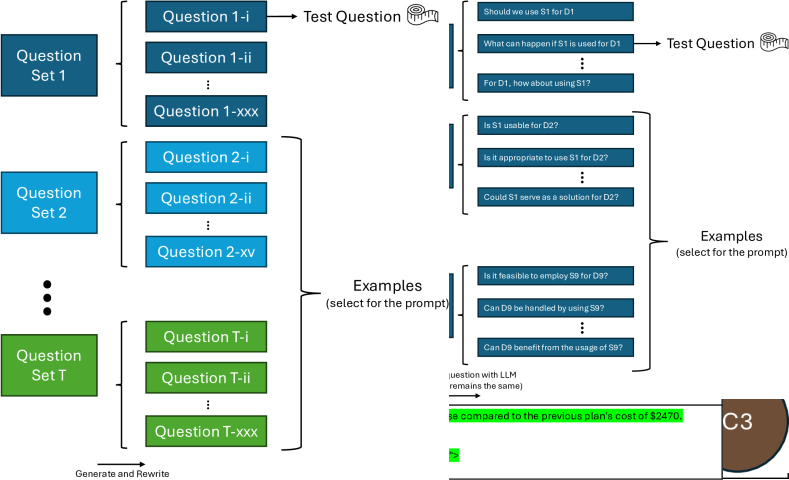
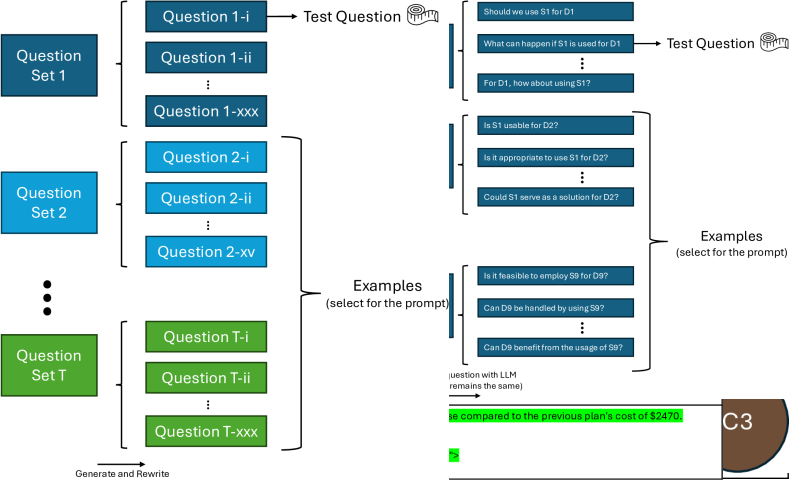
- 評価には、分布内および分布外シナリオが含まれ、複数のプロンプト戦略と例のサイズが用いられた。
- 実世界のAzure展開ではプランナーとエンジニアからの肯定的なフィードバックと、分布内精度が90%超を示した。
- このベンチマークと方法論は、サプライチェーンにおけるLLMベースの説明可能性の将来的な評価を可能にする。
より良い研究を、今すぐ始めましょう
論文設計から論文執筆まで、研究時間を劇的に削減しましょう。
クレジットカード登録不要
このレビューはAIが作成し、人間の編集者が確認しました。