
[論文レビュー] Life-Cycle Emissions of AI Hardware: A Cradle-To-Grave Approach and Generational Trends
このプレプリプリントは、五つの Google TPUs の cradle-to-grave LCA を提示し、Compute Carbon Intensity (CCI) を導入し、TPU v4i から v6e への 3x の CCI 改善を示し、24/7 のクリーンエネルギーシナリオが利得を拡大する。
Specialized hardware accelerators aid the rapid advancement of artificial intelligence (AI), and their efficiency impacts AI's environmental sustainability. This study presents the first publication of a comprehensive AI accelerator life-cycle assessment (LCA) of greenhouse gas emissions, including the first publication of manufacturing emissions of an AI accelerator. Our analysis of five Tensor Processing Units (TPUs) encompasses all stages of the hardware lifespan - from raw material extraction, manufacturing, and disposal, to energy consumption during development, deployment, and serving of AI models. Using first-party data, it offers the most comprehensive evaluation to date of AI hardware's environmental impact. We include detailed descriptions of our LCA to act as a tutorial, road map, and inspiration for other computer engineers to perform similar LCAs to help us all understand the environmental impacts of our chips and of AI. A byproduct of this study is the new metric compute carbon intensity (CCI) that is helpful in evaluating AI hardware sustainability and in estimating the carbon footprint of training and inference. This study shows that CCI improves 3x from TPU v4i to TPU v6e. Moreover, while this paper's focus is on hardware, software advancements leverage and amplify these gains.
研究の動機と目的
- AI アクセラレータと接続ホストのライフサイクル全体で温室効果ガス排出量を定量化する。
- AI アクセラレータの製造時排出データを初めて公開する。
- 公正で性能正規化された炭素指標として Compute Carbon Intensity (CCI) を導入する。
- ハードウェア設計におけるより広範な適用を可能にする、詳述で再現可能な LCA 方法論を提供する。
- TPU 世代間で排出を比較し、性能と炭素のトレードオフを理解する。
提案手法
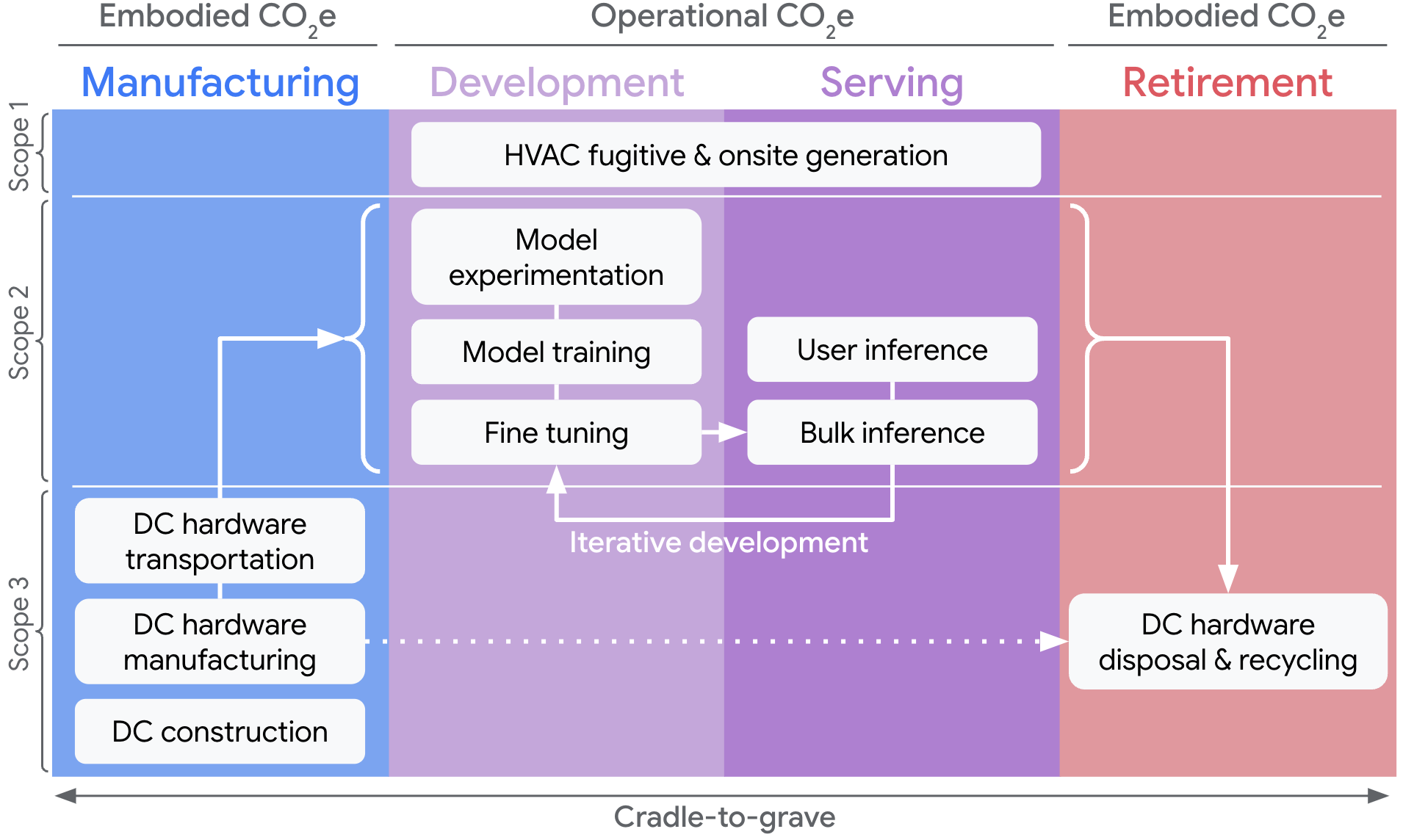
- 原材料、製造、データセンター建設、運用(開発、訓練、提供)、および終末処理をカバーする cradle-to-grave LCA 境界を採用する。
- TPU フリート全体の運用エネルギーと排出を測定するための第一者データを使用する。
- 埋め込みおよび運用要素を含む gCO2e per ExaFLOP(FLOPs)として Compute Carbon Intensity (CCI) を定義・適用する。
- MB(市場ベース)と LB(所在地ベース)電力会計を区別し、24/7 時間ごとのクリーンエネルギー対比シナリオを含める。
- ランタイムカウンタで利用 FLOPs を測定し、測定エネルギーと組み合わせて運用 CCI を計算する。
- TPU 世代を比較する際に fleet duty-cycle の違いを考慮するための傾向スコア重み付けを使用する。
- ツール、仮定、手順を詳述した LCA チュートリアル風の付録を提供する。
実験結果
リサーチクエスチョン
- RQ1Google AI ハードウェア加速器(TPU)と接続ホストの cradle-to-grave GHG 排出量はどれくらいですか?
- RQ2embodied と運用排出は TPU 世代を跨いで総ライフサイクル排出量にどう寄与しますか?
- RQ3正規化されたハードウェア中心の炭素指標(CCI)は、異なる性能レベルの AI アクセラレータを公正に比較できますか?
- RQ4異なる電力会計方法(MB vs LB vs 24/7 CFE )は報告される排出量と緩和戦略にどう影響しますか?
- RQ5TPU v4i/v5e から v6e に移行する際の製造、運用、ライフサイクル性能の排出傾向は?
主な発見
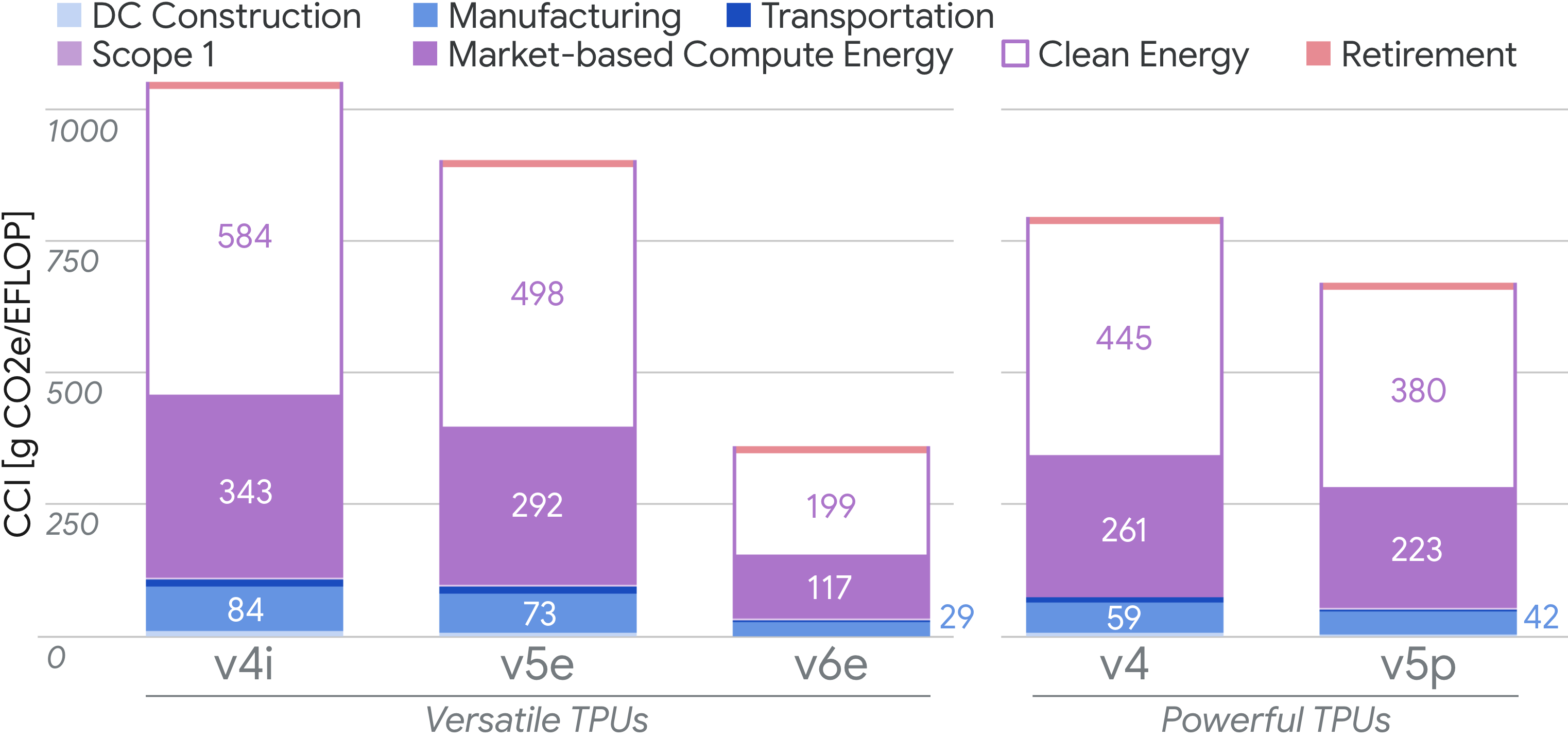
- Compute Carbon Intensity (CCI) は TPU v4i から TPU v6e で 3x 改善。
- 運用電力排出は embodied ハードウェア排出を支配し、 lifetime 排出の約 70%(MB)〜約 90%(LB)を占める。
- MB 会計はクリーンエネルギー購入により運用排出を削減する一方、24/7 時間 CFE マッチングはより厳格で現実的な緩和像を提供する。
- 新しい世代は ASIC ダイの大型化とメモリ増加により製造排出が増加するが、性能向上により計算単位あたりの排出は低下する。
- embodied CCI は世代が進むにつれて低下する(例:variant ごとに 38–114 gCO2e/10^18 FLOPs)、一方で運用 CCI もハードウェアとエネルギー戦略の改善とともに改善する。
- 仮想の 90% CFE シナリオでは総 CCI が大幅に低下し、ライフサイクル排出に対するクリーンエネルギー調達の影響を強調する。
より良い研究を、今すぐ始めましょう
論文設計から論文執筆まで、研究時間を劇的に削減しましょう。
クレジットカード登録不要
このレビューはAIが作成し、人間の編集者が確認しました。