
[論文レビュー] Lightning-fast adaptive immune receptor similarity search by symmetric deletion lookup
本論文では、対称的削除検索(SymDel)を用いたGPU並列処理アルゴリズムであるXTNeighborを紹介する。この手法により、リーマン距離に基づく近隣同定が、数個の編集距離内での類似性探索において、従来手法と比べて桁違いに高速化される。100万個の配列に対して、コンsumerハードウェア上でも1秒未満で2回以内の編集距離内にあるすべてのペアを特定可能であり、既存手法を大きく上回り、スケーラブルなコhortレベルの免疫シーケンシング解析を可能にする。
An individual's adaptive immune receptor (AIR) repertoire records immune history due to the exquisite antigen specificity of AIRs. Reading this record requires computational approaches for inferring receptor function from sequence, as the diversity of possible receptor-antigen pairs vastly outstrips experimental knowledge. Identification of AIRs with similar sequence and thus putatively similar function is a common performance bottleneck in these approaches. Here, we benchmark the time complexity of five different algorithmic approaches to radius-based search for Levenshtein neighbors. We show that a symmetric deletion lookup approach, originally proposed for spell-checking, is particularly scalable. We then introduce XTNeighbor, a variant of this algorithm that can be massively parallelized on GPUs. For one million input sequences, XTNeighbor identifies all sequence neighbors that differ by up to two edits in seconds on commodity hardware, orders of magnitude faster than existing approaches. We also demonstrate how symmetric deletion lookup can speed up search with more complex sequence-similarity metrics such as TCRdist. Our contribution is poised to greatly speed up existing analysis pipelines and enable processing of large-scale immunosequencing data without downsampling.
研究の動機と目的
- レパートリー解析パイプラインにおける一般的なステップであるAIR類似性検索の性能ボトルネックを解消すること。
- 所定のリーマン距離閾値内でのAIR配列の同定を可能にする、スケーラブルで高効率なアルゴリズムの開発。
- ダウンサンプリングを伴わず、大規模な免疫シーケンシングデータセットの効率的処理を可能にすること。
- もともとスペルチェック用途で使われていた対称的削除検索(SymDel)を、適応的免疫受容体解析分野へ応用すること。
- SymDelに基づく検索が、実世界の免疫学的データワークロードに対して、GPU上で効果的に並列化可能であることを実証すること。
提案手法
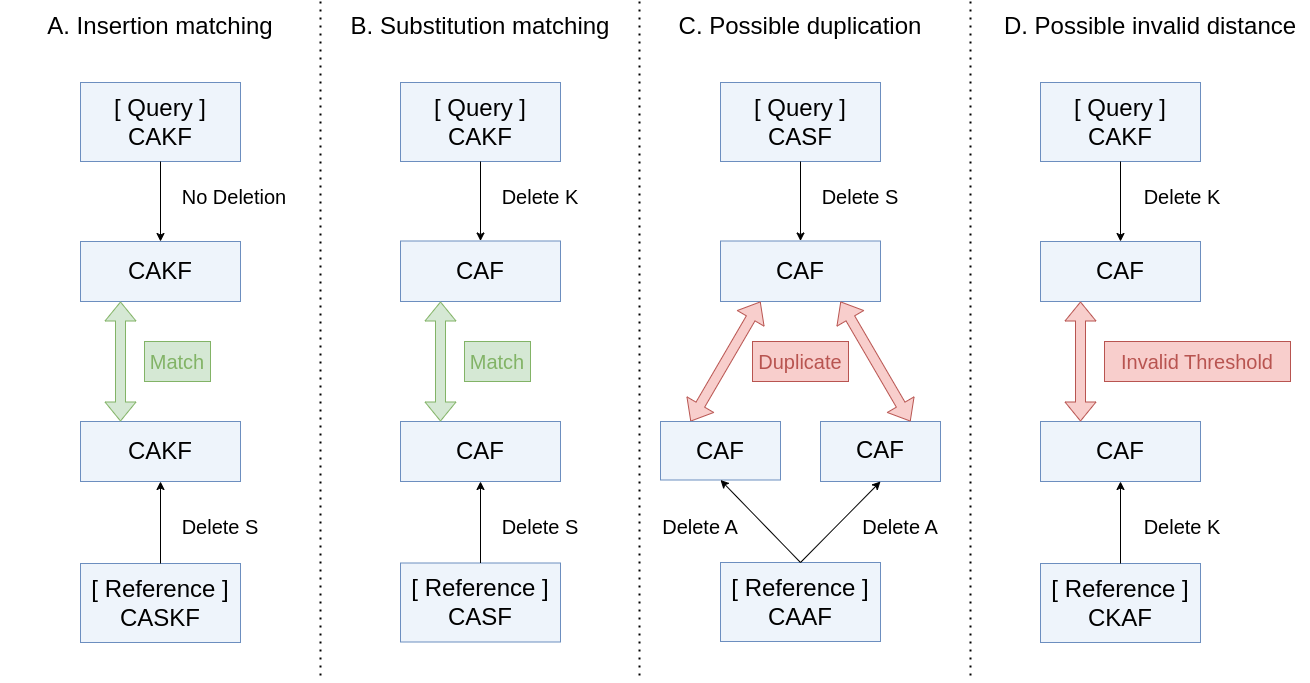
- スペルチェック分野で使われてきた対称的削除検索(SymDel)を応用し、クエリおよびリファレンス配列の削除バリアントを生成・比較することで、指定された編集距離内にあるAIR配列の近隣を特定する。
- 削除バリアントに対して正確なハッシュベースの照合を用いることで、候補となる近隣を効率的に同定し、全ペア比較を回避する。
- 数千のスレッドにわたる大規模並列処理を可能にする、GPU最適化版のSymDelであるXTNeighborを導入する。
- 2段階のプロセスを採用:第一段階ではSymDelが削除バリアントを用いて候補近隣を生成し、第二段階では重複削除と編集距離閾値を超えるペアのフィルタリングを実施。
- TCRdistのような複雑な類似性指標に対しても、SymDelを高速なプリフィルタとして拡張し、その有効性を示す。
- CPU版およびGPU版の両方でアルゴリズムを実装し、GPU版により100万個の配列に対するサブ秒レベルの検索を実現。
実験結果
リサーチクエスチョン
- RQ1対称的削除検索(SymDel)は、高い編集距離閾値でも、AIR類似性検索の高速化に効果的に適用可能か?
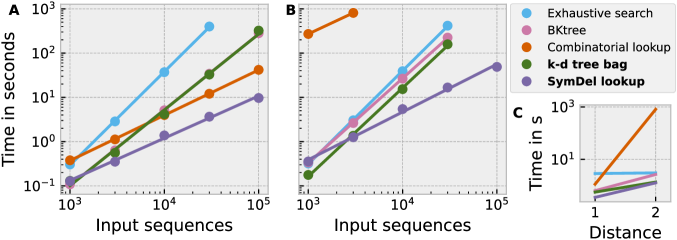
- RQ2実際の免疫シーケンシングデータセットにおいて、SymDelベースの検索は、組み合わせ的検索や他の正確な検索手法と比較して、どのようにスケーリングするか?
- RQ3SymDelはGPU上でどの程度並列化可能であり、コhortレベルのAIR解析においてインタラクティブスケールのパフォーマンスを達成できるか?
- RQ4SymDelは、精度を損なわずに、TCRdistのようなより複雑な類似性指標の高速プリフィルタとして使用可能か?
- RQ5実世界のAIRデータセット(多様性や類似性閾値が異なるもの)に適用した場合、SymDelは既存ツールに比べてどの程度のパフォーマンス向上を達成するか?
主な発見
- XTNeighborは、コンsumerハードウェア上でも100万個の入力配列に対して、リーマン距離2以内のすべての近隣ペアを10秒未満で特定可能であり、ベースライン手法と比べて100倍の高速化を達成している。
- SymDel検索アルゴリズムは、リーマン距離閾値d=2では約100倍、d=3では約20倍の高速化を達成している。
- 過剰なプリフィルタリングにもかかわらず、TCRdist ~20および~30の範囲内にある配列ペアの99%以上が、d=2およびd=3で保持されており、高い再現性と最小限の情報損失を示している。
- SymDelアプローチにより、候補近隣の効率的フィルタリングが可能となり、ペアワイズ比較回数が桁違いに削減されつつも、正確性は維持されている。
- GPU並列処理を施したXTNeighbor実装は、効果的にスケーリング可能であり、コhortスケールのデータサイズにおいても正確な類似性検索が現実可能である。
- TCRdistベースの検索にSymDelをプリフィルタとして統合することで、高い感度を維持しつつ、下流の計算時間を劇的に削減している。
より良い研究を、今すぐ始めましょう
論文の読解から最終レビューまで、研究時間を劇的に削減しましょう。
クレジットカード登録不要
このレビューはAIが作成し、人間の編集者が確認しました。