
[論文レビュー] Machine Learning for Economic Forecasting: An Application to China's GDP Growth
tldr: 本論文は、China’s の四半期 GDP 成長を予測するために、機械学習モデルを広範に評価し、単独および econometric methods と組み合わせた場合を分析し、解釈可能性と頑健性を、転換点を含む期間を通じて検討する。
This paper aims to explore the application of machine learning in forecasting Chinese macroeconomic variables. Specifically, it employs various machine learning models to predict the quarterly real GDP growth of China, and analyzes the factors contributing to the performance differences among these models. Our findings indicate that the average forecast errors of machine learning models are generally lower than those of traditional econometric models or expert forecasts, particularly in periods of economic stability. However, during certain inflection points, although machine learning models still outperform traditional econometric models, expert forecasts may exhibit greater accuracy in some instances due to experts' more comprehensive understanding of the macroeconomic environment and real-time economic variables. In addition to macroeconomic forecasting, this paper employs interpretable machine learning methods to identify the key attributive variables from different machine learning models, aiming to enhance the understanding and evaluation of their contributions to macroeconomic fluctuations.
研究の動機と目的
- China’s quarterly GDP growth の予測性能を、従来の計量経済学モデルおよび専門家予測と比較して、機械学習モデルの予測性能を評価する。
- MLと計量経済学の双方の強みを活かすため、組み合わせ型および混合型のモデリング手法を評価する。
- 中国の GDP 変動の主要因を特定するために、解釈可能な ML 手法を適用する。
- 安定期と転換点(危機、COVID-19)をまたぐモデル性能を検証する。
- 予測精度の頑健性検証と時間的分析を提供する。
提案手法
- モデルを五つのグループに分類する:econometric(AR, FM)、machine learning(LASSO, ridge, KRR, RF, GBDT, XGBoost)、combined(FM+ML)、mixed(groupモデルの平均/中央値)、および weighted ensembles.
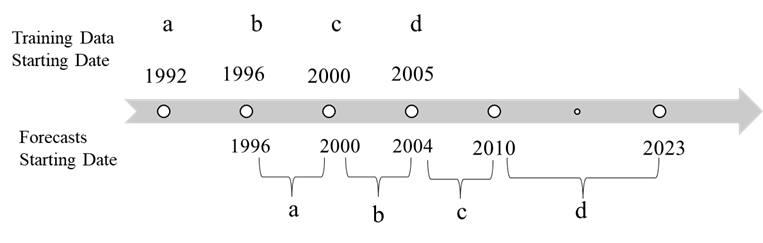
- 約20 のマクロ変数を主に中国統計局および国際的な同僚から調達し、拡張窓法(EWM)で予測する。
- 予測を y_{t+h}=f(Z_t)+ε_{t+h} とし、Z_t には遅延 y と高次元 X を含める;min L(y,f(Z))+R(f,ρ) によって最適化する。
- Latent factors F_t を X_t から得る ML を用いて y_t+h を予測することで、combined models を活用する:X_t = ΛF_t + η_t。
- 解釈性のために SHAP を使用し、グローバルおよびローカルの変数重要度を評価する。
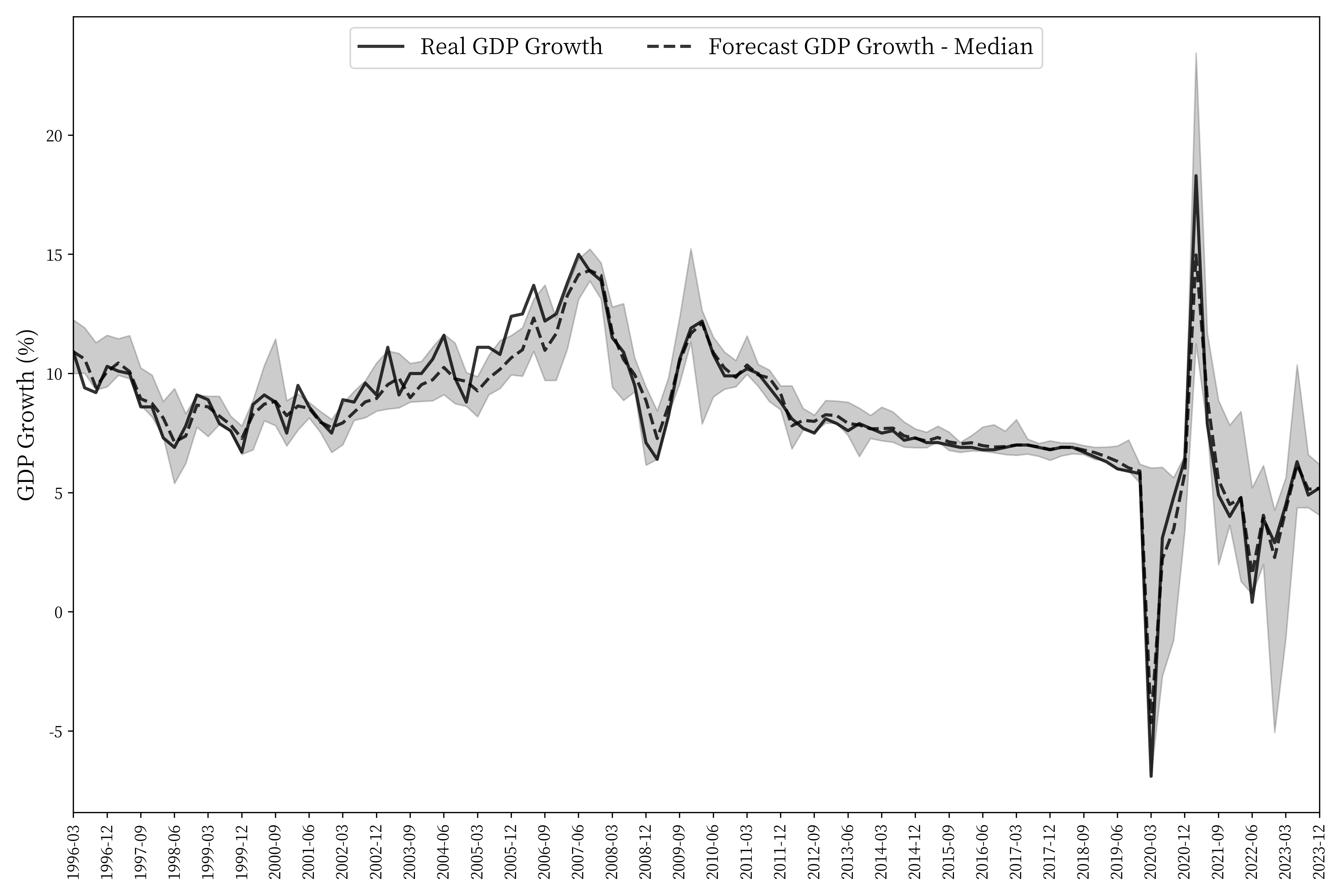
- 1996Q1 から 2023Q4 までのアウト・オブ・サンプル予測を RMSE および MAE で評価し、拡張窓と頑健性分析を用いる。
実験結果
リサーチクエスチョン
- RQ1機械学習モデルが、単独または組み合わせで、従来の計量経済学モデルおよび専門家予測よりも中国’s GDP 成長の予測誤差を小さくしますか?
- RQ2安定期と経済的転換点(危機、COVID-19)において、モデルの性能はどう異なりますか?
- RQ3SHAP 説明に基づき、ML ベースのGDP予測に最も寄与する変数は、グローバルおよびローカルでどれですか?
- RQ4異なる時間軸で、組み合わせおよび加重ML/計量経済学モデルは、単一モデルの予測より頑健ですか?
- RQ52014年以降の期間において、MLアンサンブルの予測性能は、Longrun Expert ForecastsおよびYicai などの専門家合意予測と比較してどうですか?
主な発見
- MLモデルとMLベースのハイブリッドは、アウトオブサンプルのGDP成長予測において、従来の計量経済学モデルを一般に上回る。
- 安定期間には、MLモデルと組み合わせは、計量経済学的および専門家予測より高い精度を示す。
- 転換点では、MLモデルは方向性を予測することが多いが、マクロ経済文脈の理解の差から、場合によっては専門家予測に劣ることがある。
- 解釈可能な ML(SHAP)は、時間を通じた GDP の変動に対するグローバルおよびローカルな推進因子の重要性を明らかにする。
- Longrun Expert Forecasts および他のベンチマークと比較して、特定の ML モデル(例:RF、XGBoost)は2005–2015期間でより低い RMSE を達成する。一方、組み合わせモデルは競争力があるが、時には専門家予測に遅れることもある。
より良い研究を、今すぐ始めましょう
論文の読解から最終レビューまで、研究時間を劇的に削減しましょう。
クレジットカード登録不要
このレビューはAIが作成し、人間の編集者が確認しました。