
[論文レビュー] Mapper of the IGM spin temperature: instrument overview
本論文は、地上設置の単一アンテナによるグローバル21 cm実験MISTの設計、較正形式論、および電磁特性を記述する。金属製地面板を用いず、25–105 MHzで動作。土壌影響のシミュレーションと初期の現場測定を含む。
The observation of the global 21 cm signal produced by neutral hydrogen gas in the intergalactic medium (IGM) during the Dark Ages, Cosmic Dawn, and Epoch of Reionization requires measurements with extremely well-calibrated wideband radiometers. We describe the design and characterization of the Mapper of the IGM Spin Temperature (MIST), which is a new ground-based, single-antenna, global 21 cm experiment. The design of MIST was guided by the objectives of avoiding systematics from an antenna ground plane and cables around the antenna, as well as maximizing the instrument's on-sky efficiency and portability for operations at remote sites. We have built two MIST instruments, which observe in the range 25-105 MHz. For the 21 cm signal, this frequency range approximately corresponds to redshifts 55.5 > z > 12.5, encompassing the Dark Ages and Cosmic Dawn. The MIST antenna is a horizontal blade dipole of 2.42 m in length, 60 cm in width, and 52 cm in height above the ground. This antenna operates without a metal ground plane. The instruments run on 12 V batteries and have a maximum power consumption of 17 W. The batteries and electronics are contained in a single receiver box located under the antenna. We present the characterization of the instruments using electromagnetic simulations and lab measurements. We also show sample sky measurements from recent observations at remote sites in California, Nevada, and the Canadian High Arctic. These measurements indicate that the instruments perform as expected. Detailed analyses of the sky measurements are left for future work.
研究の動機と目的
- MIST装置の設計とDark AgesとCosmic Dawnにわたるグローバル21 cm測定の目標を説明する。
- 天空温度、アンテナ・受信機パラメータ、および漏れ/損失要因を結ぶ較正フレームワークを提示する。
- 電磁シミュレーションと実測を通じてMISTアンテナ、バラン、受信機を特徴づける。
- 土壌特性がアンテナ性能に与える影響を検討し、放射効率とビーム指向性を定量化する。
- 遠隔地での初期現場測定を提供し、機器の挙動とデータ解析準備状況を検証する。
提案手法
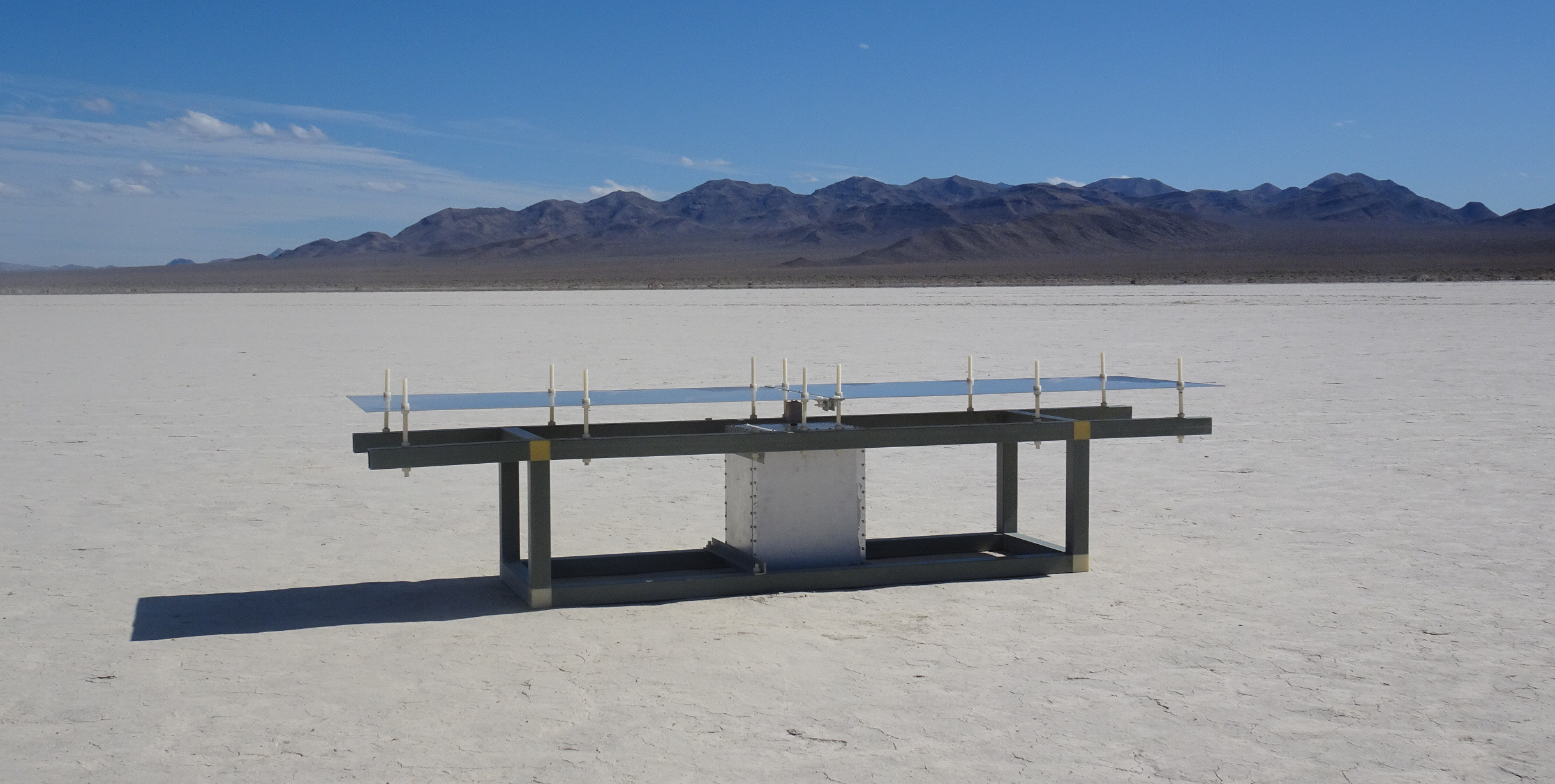
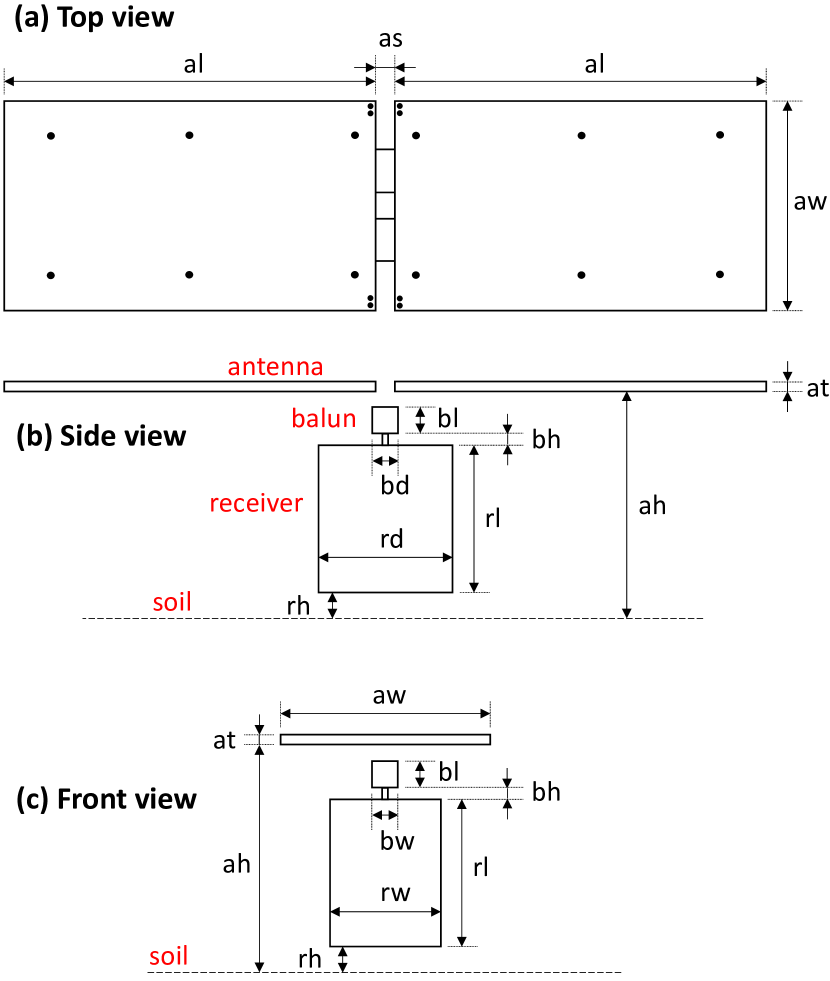
- 単一アンテナ・単一偏波の放射計設計で、水平ブレードダイポール、長さ2.42 m、幅0.60 m、地表から52 cm、金属地面板なし。
- 放射効率、ビーム指向性、ビーム効率、反射係数を予測するためのFEKOを用いた電磁シミュレーション。
- 天空温度(式2)、アンテナ温度(式3)、天空温度の抽出(式4)、受信機較正(式6–7)を含む天空温度と受信機パラメータを結ぶ較正形式。
- 表2に示す九つのFEKO土壌構成(標準、1L_xx、2L_xx)を用いた土壌モデリングと、伝導度および相対誘電率がアンテナ性能へ与える影響の評価。
- 25–125 MHzでの放射効率、ビーム指向性、ビーム効率、反射係数の評価(25–105 MHzの天空観測を含む)。
- CAのDeep Springs Valley、NVのDeath Valley、CAのMcGill Arctic Research Stationでの現場展開と初期天空測定。
実験結果
リサーチクエスチョン
- RQ1金属地面板なしでの地上設置・単一アンテナグローバル21 cm装置は、25–105 MHzでどのように機能するか?
- RQ2土壌の電気的性質(伝導度と相対誘電率)は、MISTの放射効率、ビーム指向性、ビーム効率に影響を与えるか?
- RQ3受信機・バランとアンテナインピーダンスを前提に天空温度を信頼性高く抽出できるか?
- RQ4遠隔地での現場測定は機器性能を検証し、グローバル21 cm検出の系統誤差評価を導くか?
- RQ5導出されたビーム特性と土壌依存効果を考慮した信号回収への影響はどうなるか?
主な発見
- 標準土壌での放射効率は25–125 MHzで99.93%–99.99%、土壌特性により標準と比較して最大約0.08%の変化を引き起こす。
- ビーム指向性は天頂でピークを持ち、25–125 MHzで約0.6〜5.1の範囲。天頂で高く、水平面(H-plane)でより広いビーム。
- ビーム効率は周波数とともに25 MHzで9%–15%から125 MHzで54%–74%へ上昇、二層土壌では土壌モデル依存のリップルがあります。
- ダイポールポートの反射係数は52 MHz付近で共振的最小、25 MHz付近で約0 dB、90–95 MHz付近で約-4 dBに達する土壌モデルもあり、マッチングに対する土壌の強い影響を示す。
- アンテナ性能と地面との相互作用は土壌モデルに大きく依存するため、土壌を考慮した正確な較正とモデリングの必要性を裏付ける。
より良い研究を、今すぐ始めましょう
論文設計から論文執筆まで、研究時間を劇的に削減しましょう。
クレジットカード登録不要
このレビューはAIが作成し、人間の編集者が確認しました。