
[論文レビュー] Mapping LLM Security Landscapes: A Comprehensive Stakeholder Risk Assessment Proposal
本論文は、OWASPベースのリスク評価プロセスをLLMセキュリティに提案し、シナリオ分析、依存関係マッピング、影響分析を組み合わせて、ステークホルダーに焦点を当てた脅威行列を作成し、大学のユースケースで実証する。
The rapid integration of Large Language Models (LLMs) across diverse sectors has marked a transformative era, showcasing remarkable capabilities in text generation and problem-solving tasks. However, this technological advancement is accompanied by significant risks and vulnerabilities. Despite ongoing security enhancements, attackers persistently exploit these weaknesses, casting doubts on the overall trustworthiness of LLMs. Compounding the issue, organisations are deploying LLM-integrated systems without understanding the severity of potential consequences. Existing studies by OWASP and MITRE offer a general overview of threats and vulnerabilities but lack a method for directly and succinctly analysing the risks for security practitioners, developers, and key decision-makers who are working with this novel technology. To address this gap, we propose a risk assessment process using tools like the OWASP risk rating methodology which is used for traditional systems. We conduct scenario analysis to identify potential threat agents and map the dependent system components against vulnerability factors. Through this analysis, we assess the likelihood of a cyberattack. Subsequently, we conduct a thorough impact analysis to derive a comprehensive threat matrix. We also map threats against three key stakeholder groups: developers engaged in model fine-tuning, application developers utilizing third-party APIs, and end users. The proposed threat matrix provides a holistic evaluation of LLM-related risks, enabling stakeholders to make informed decisions for effective mitigation strategies. Our outlined process serves as an actionable and comprehensive tool for security practitioners, offering insights for resource management and enhancing the overall system security.
研究の動機と目的
- 進化するセキュリティ脅威により、LLMベースのシステムにおける構造化リスク評価の必要性を動機づける。
- OWASP Risk Rating MethodologyをLLM固有のリスクへ適応・適用する。
- 発生確率と影響を推定するためのシナリオ駆動型の半定量的プロセスを開発する。
- 緩和策とリソース配分を導く、ステークホルダーに焦点を当てた脅威マトリクスを作成する。
- 架空の大学の仮想アシスタントのユースケースでフレームワークをデモンストレーションする。
提案手法
- OWASPリスク評価手法を用いて、リスクをLikelihood × Impactとして計算する。
- 脅威エージェント、動機、スキル、機会を定義してシナリオ分析を実施する。
- 依存システムの構成要素を脆弱性要因に対してマッピングして、発生確率を導出する。
- 技術的およびビジネス上の影響を含む影響分析を実行する。
- 結果を、三つのステークホルダーグループ(LLMファインチューニング、API統合、エンドユーザー)に合わせた脅威マトリクスへ集約する。
- ワークフローと緩和指針を示すための事例を提供する。
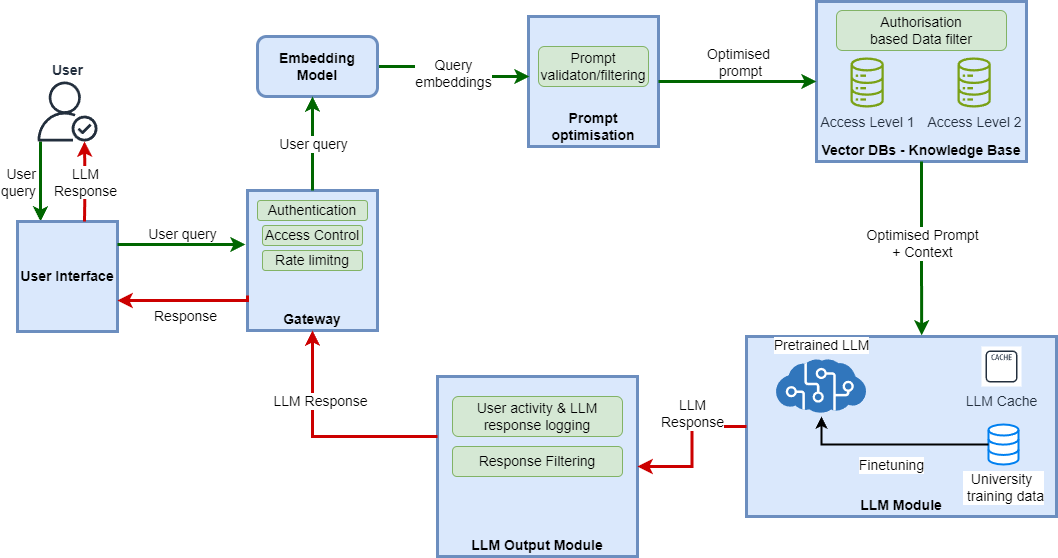
実験結果
リサーチクエスチョン
- RQ1OWASPリスク評価手法をLLM固有の脅威を評価するようにどのように適応できるか。
- RQ2依存関係マッピングとシナリオ分析をどのように統合して、LLMベースのシステムに対する攻撃の発生確率を推定できるか。
- RQ3LLMセキュリティにおけるステークホルダー重視の脅威マトリクスとは何か、そしてそれが緩和戦略の指針となり得るか。
- RQ4大学のユースケースがLLM導入におけるリソース配分とセキュリティ成熟度についてどんな教訓を示すか。
主な発見
- LLMsのための構造化された脅威マトリクスは実現可能で、ステークホルダーグループ全体での緩和策の優先順位づけに役立つ。
- 提案された3ステップのリスク分析(シナリオ分析、依存関係マッピング、影響分析)は、OWASPのガイダンスに沿った半定量的なリスク評価を生み出す。
- マトリクスは、従来のサイバーセキュリティリスクと、プロンプトインジェクションやモデル操作などのLLM固有の脅威を区別する。
- このユースケースは、リスク評価が実用的な展開におけるリソース管理とセキュリティ改善をどのように導くかを示している。
より良い研究を、今すぐ始めましょう
論文設計から論文執筆まで、研究時間を劇的に削減しましょう。
クレジットカード登録不要
このレビューはAIが作成し、人間の編集者が確認しました。