
[論文レビュー] Metropolitan Scale and Longitudinal Dataset of Anonymized Human Mobility Trajectories
本論文は、非特定の日本の都市部で90日間にわたりモバイル端末の位置ピンギングから収集された10万人の個人の軌跡を含む、オープンソースで匿名化され、都市規模かつ縦断的な人間の移動行動データセットを紹介する。このデータセットは空間的に500m×500mのグリッドセル、時間的に30分の時間ボックスに離散化されており、通常の行動を示す75日間と緊急時状態を示す15日間を含む。これにより、HuMob Challenge 2023を介して、移動予測モデルの公平なベンチマーク評価が可能となる。
Modeling and predicting human mobility trajectories in urban areas is an essential task for various applications. The recent availability of large-scale human movement data collected from mobile devices have enabled the development of complex human mobility prediction models. However, human mobility prediction methods are often trained and tested on different datasets, due to the lack of open-source large-scale human mobility datasets amid privacy concerns, posing a challenge towards conducting fair performance comparisons between methods. To this end, we created an open-source, anonymized, metropolitan scale, and longitudinal (90 days) dataset of 100,000 individuals' human mobility trajectories, using mobile phone location data. The location pings are spatially and temporally discretized, and the metropolitan area is undisclosed to protect users' privacy. The 90-day period is composed of 75 days of business-as-usual and 15 days during an emergency. To promote the use of the dataset, we will host a human mobility prediction data challenge (`HuMob Challenge 2023') using the human mobility dataset, which will be held in conjunction with ACM SIGSPATIAL 2023.
研究の動機と目的
- 移動予測モデルの性能比較を公平に行うために、オープンで大規模かつプライバシー保護がなされた人間の移動行動データセットの不足を補うこと。
- 通常および緊急時状態を含む、90日間にわたる実世界のモバイルデバイスからの実際の軌跡を収集した縦断的で都市規模のデータセットを提供すること。
- ACM SIGSPATIAL 2023と連携して、このデータセットを用いたデータコンペティション(HuMob Challenge 2023)を主催することで、再現可能性のある研究とベンチマーク評価を可能にすること。
- 高精度で匿名化された移動行動データを通じて、都市計画、感染症モデル化、災害リスク管理を支援すること。
提案手法
- ヤフー・ジャパンアプリの約5%のユーザーから匿名化されたモバイル端末の位置ピンギングを収集し、ユーザーIDおよび個人属性(例:性別、年齢)を削除した。
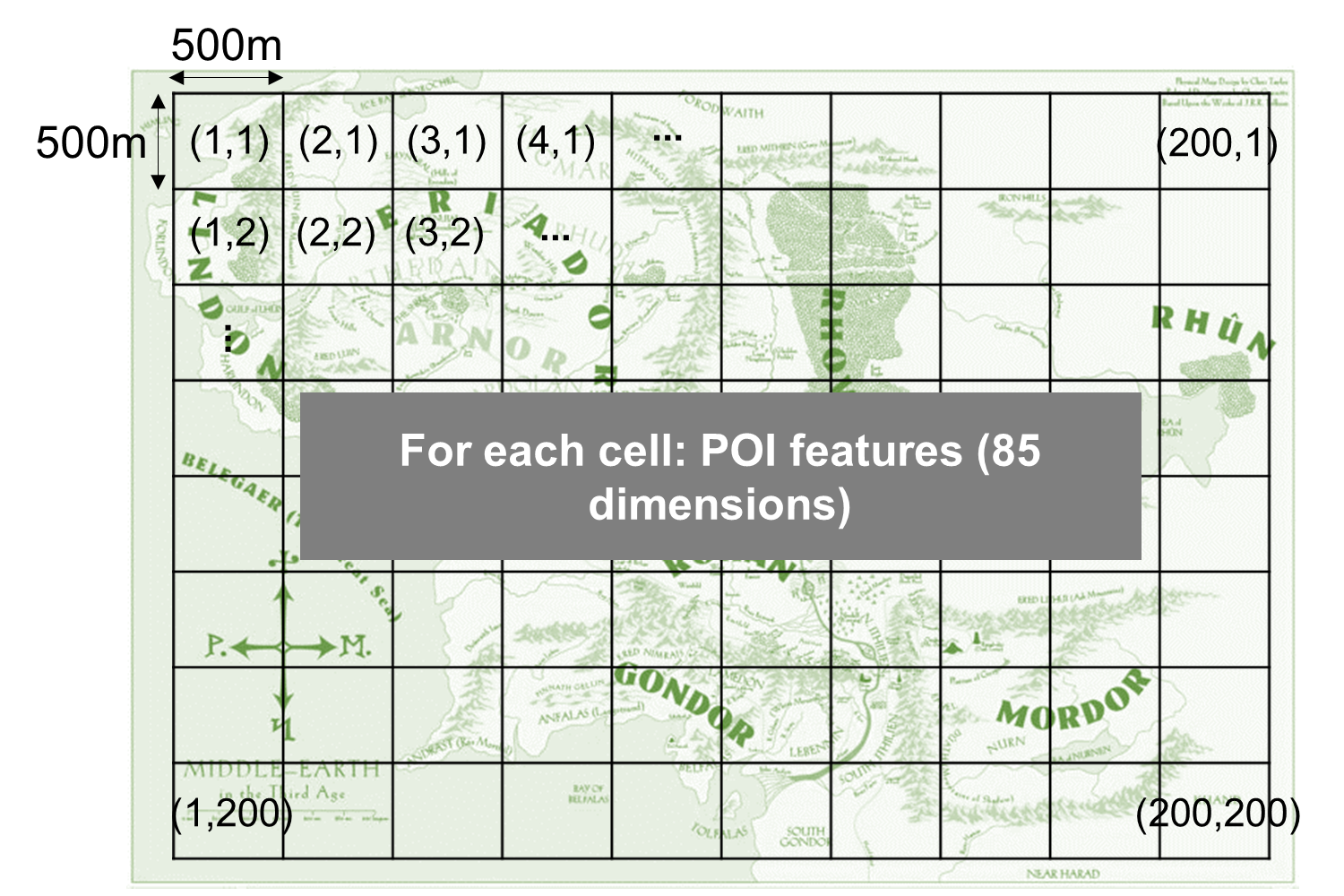
- 位置データは空間的に500m×500mのグリッドセルに、時間的に30分の時間インターバルに離散化して、プライバシーを保護した。
- 90日間のデータセットには、通常の業務遂行行動を示す75日間と、移動パターンが変化した緊急時状態を示す15日間が含まれる。
- 各グリッドセルに対して85次元のベクトルを有する別個のPOI(ポイント・オブ・インタレスト)データセットを提供し、異なるPOIカテゴリーの数を示したが、名称は明示しなかった。
- データセットはZenodo(DOI: 10.5281/zenodo.8111993)を通じて公開され、移動軌跡予測を目的としたHuMob Challenge 2023の開催に使用された。
- 軌跡類似度と局所的特徴の正確性を評価するために、動的時間巻き戻し(DTW)およびGEO-BLEUメトリクスが使用された。
実験結果
リサーチクエスチョン
- RQ1大規模で匿名化され、縦断的な人間の移動行動データを、個人のプライバシーを保護しながら、どのように責任を持って収集・共有できるか。
- RQ2機械学習モデルは、実世界のデータを用いて、都市部におけるマスクされた移動軌跡をどの程度正確に予測できるか。
- RQ3緊急時状態が人間の移動行動パターンに与える影響は何か。また、モデルは通常行動と異常行動の期間を一般化して予測できるか。
- RQ4補助的なPOIデータは、移動軌跡予測モデルの精度にどのような影響を与えるか。
- RQ5オープンで標準化されたデータセットは、異なる研究グループ間での人間の移動予測手法の公平かつ再現可能なベンチマーク評価を可能にするか。
主な発見
- 本データセットは、10万人の匿名化された個人の移動軌跡を90日間分含み、そのうち75日間は通常の行動、15日間は緊急時状態を示す。
- データセットは空間的に500m×500mのグリッドセルに、時間的に30分の時間インターバルに離散化されており、ユーザーのプライバシーを確保している。
- HuMob Challenge 2023は成功裏に開催され、10チームの上位チームがハムブルクで開催されたACM SIGSPATIAL 2023でプレゼンテーションを行った。
- コンペティションでは2つの予測タスクが実施された:1つ目は2万人のマスク済み個人を対象とした(タスク1)、もう1つは2,500人のマスク済み個人を対象とした(タスク2)、両方とも軌跡再構築を要件としていた。
- 評価指標には動的時間巻き戻し(DTW)およびGEO-BLEUが使用され、GEO-BLEU用の公開コードは https://github.com/yahoojapan/geobleu で入手可能である。
- データセットは https://zenodo.org/record/8111993 で公開されており、都市移動行動モデリング分野における再現可能性のある研究を可能としている。

より良い研究を、今すぐ始めましょう
論文の読解から最終レビューまで、研究時間を劇的に削減しましょう。
クレジットカード登録不要
このレビューはAIが作成し、人間の編集者が確認しました。