
[論文レビュー] Microlensing of strongly lensed quasars
本レビューは、レンズ銀河内のコンpakな物体による重力レンズ効果を用いて、10−6アーカセコン未塔のスケールでクェーサー構造をマッピングする手法であるクェーサーミクロレンズ効果の理論的基盤、現在の手法、および重要な科学的知見を統合する。これは、降着円盤および幅広い線領域のスケール、質量関数、および宇宙論的パラメータの探査における進展を強調しつつ、系統的バイアスの課題を特定し、次世代の調査および機械学習の今後の可能性を示している。
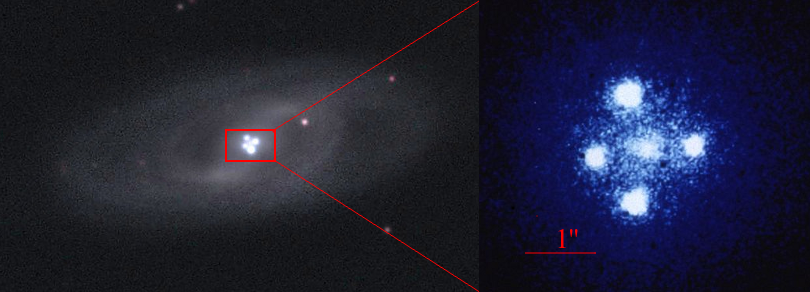
Strong gravitational lensing of quasars has the potential to unlock the poorly understood physics of these fascinating objects, as well as serve as a probe of the lensing mass distribution and of cosmological parameters. In particular, gravitational microlensing by compact bodies in the lensing galaxy can enable mapping of quasar structure to $\lt 10^{-6}$ arcsec scales. Some of this potential has been realized over the past few decades, however the upcoming era of large sky surveys promises to bring this to full fruition. Here we review the theoretical framework of this field, describe the prominent current methods for parameter inference from quasar microlensing data across different observing modalities, and discuss the constraints so far derived on the geometry and physics of quasar inner structure. We also review the application of strong lensing and microlensing to constraining the granularity of the lens potential, i.e. the contribution of the baryonic and dark matter components, and the local mass distribution in the lens, i.e. the stellar mass function. Finally, we discuss the future of the field, including the new possibilities that will be opened by the next generation of large surveys and by new analysis methods now being developed.
研究の動機と目的
- 10−6アーカセコン未塔のスケールでクェーサー内部構造を探査するためのクェーサーのミクロレンズ効果の理論的および観測的状態を統合すること。
- さまざまな観測モダリティにわたるミクロレンズ光曲線からのパrameter推定の現在の手法をレビューすること。
- ミクロレンズ効果から得られるクェーサー降着円盤および幅広い線領域の幾何学的および物理的性質に関する制約を評価すること。
- ミクロレンズ効果がレンズポテンシャルの粗い構造および局所的質量分布(星の質量関数を含む)をどのように探査するかを検討すること。
- 今後の方向性を概説し、大規模な調査および機械学習のような新しい解析手法の影響を示すこと。
提案手法
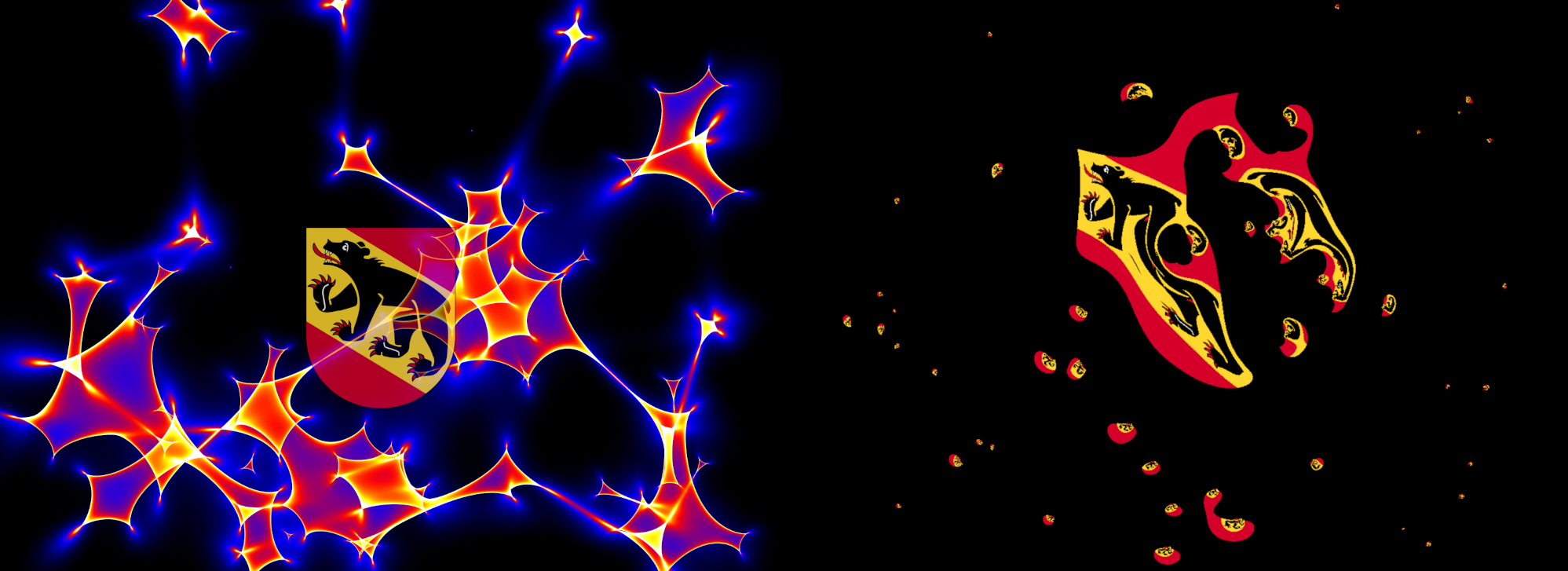
- コンパクトな質量による光の屈折を模擬するためのレイトシューティング・シミュレーションおよびレイト・トレーシング技術を用いたミクロレンズ増幅パターンの理論的モデリング。
- 観測された光曲線から源のサイズ、構造、レンズパラメータを推定するために、マルコフ連鎖モンテカルロ(MCMC)サンプリングを用いたベイズ推論。
- 高解像度のミクロレンズマップを用いて、降着円盤および幅広い線領域がミクロレンズ増幅にどのように反応するかをモデル化。
- 計算コストの高い尤度評価に依存しない、高速な増幅マップ生成および直接的なパラメータ推定を可能にする機械学習の応用。
- 時間遅れおよびリバーブベーション信号を制約するため、複数エポックの光度および分光的データを統合。
- 次世代の調査(例:LSST)からのデータ収集を最適化するための、高増幅イベント(HMEs)の強力なトリガーおよび予測手法の開発。
実験結果
リサーチクエスチョン
- RQ1ミクロレンズ効果は、10−6アーカセコン未塔の解像度でクェーサー降着円盤および幅広い線領域の構造をどのようにマッピングできるか?
- RQ2ミクロレンズ観測は、クェーサー発光領域のサイズおよび幾何学的形状にどのような制約を課すか?
- RQ3ミクロレンズ効果は、レンズ銀河内の星の質量関数およびダークマター分布をどの程度探査できるか?
- RQ4モデル化の系統的バイアス(例:BLRとディスクのフィッティングの違い)は、推定された源サイズの正確性にどの程度影響を与えるか?
- RQ5機械学習および新しいデータ解析手法は、ミクロレンズにおける計算的およびモデリングの課題をどのように克服できるか?
主な発見
- ミクロレンズ効果により、10−6アーカセコン未塔未塔のスケールでクェーサー構造のマッピングが可能となり、降着円盤および幅広い線領域に部分的な構造が明らかになった。
- 現在の幅広い線領域(BLR)と降着円盤の同時モデリングは、妥当なモデルの範囲を制限しており、観測された光曲線を再現できる実現可能性のあるモデルの割合は非常に小さい。
- BLRモデリングにおける系統的不確実性は顕著であり、特に高解像度の大規模なミクロレンズマップの必要性と、バンド幅の広い光度におけるBLRとディスクの発光の混合が主な要因である。
- 計算コストが非常に高いにもかかわらず、数百万のモデル実現のうちわずか数十個しかデータを再現できていないため、より複雑なモデルや改善されたノイズモデリングの必要性が示唆される。
- 機械学習は、増幅マップ生成および直接的なパrameter推定を高速化する可能性を示しており、遅いベイズサンプリングに依存するのを減らす可能性がある。
- LSSTのような大規模な調査の登場により、新しいスケーラブルな解析手法および強力なHMEトリガーの必要性が高まり、ミクロレンズ効果の宇宙論的および天体物理学的発見の潜在能力を十分に活用するための条件が整う。
より良い研究を、今すぐ始めましょう
論文の読解から最終レビューまで、研究時間を劇的に削減しましょう。
クレジットカード登録不要
このレビューはAIが作成し、人間の編集者が確認しました。