
[論文レビュー] Model of Cosmic Ray Propagation in the Milky Way at the Knee
論文は、ミルキーウェイでのペボ源子(PeV)宇宙線伝搬を異方的・時間依存的にモデル化し、CRは離散的な一時的源によって注入され、現実的な銀河磁場の中を伝搬することで、膝付近の局所フラックスが高度に不均一になることを示す。
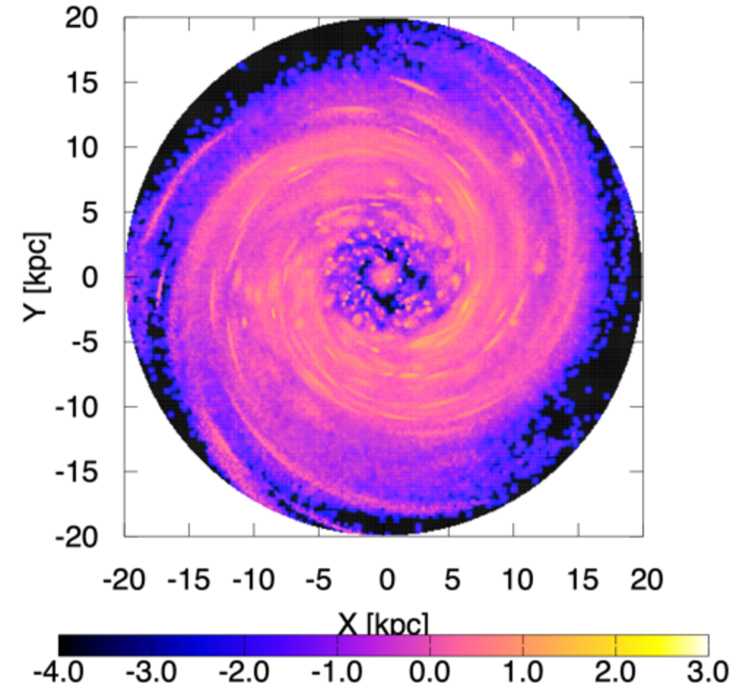
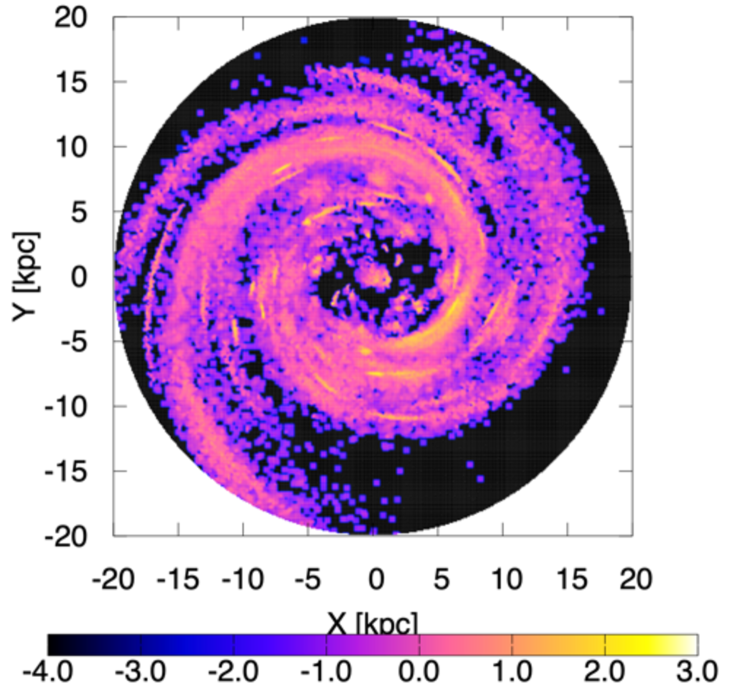
We present a new model of anisotropic cosmic ray propagation in the Milky Way, where cosmic rays are injected at discrete transient sources in the disc and propagated in the Galactic magnetic field. In the framework of our model, we show that the cosmic ray spectrum is time-dependent and space-dependent around the energy of the knee. It has a major contribution of one or a few nearby recent sources at any given location in the Galaxy, in particular at the position of the Solar system. We find that the distribution of $\sim$ PeV cosmic rays in our Galaxy is significantly clumpy and inhomogeneous, and therefore substantially different from the smoother distribution of GeV cosmic rays. Our findings have important implications for the calculation and future interpretation of the diffuse Galactic gamma-ray and neutrino fluxes at very high energies.
研究の動機と目的
- 膝を銀河磁場中の異方拡散で説明する伝搬フレームワークを動機づける。
- ペボエネルギーで局所的な時空依存のCR分布を形作る離散的な一時的源の役割を調べる。
- CR拘束と局所フラックスゆらぎへの定常磁場の影響を評価する。
- 銀河の拡散ガンマ線・ニュートリノフラックスへの含意を探る。
提案手法
- 銀河円盤の離散参照源でCRを注入し、Jansson-Farrar銀河磁場モデルで個別に伝搬させる。
- 外部乱流スケールLmax = 25 pcを用い、乱流磁場強度を抑制してB/C制約を満たす。
- エネルギー{1, 3, 10, 30, 100} PeVで各源あたり10^3軌跡をシミュレーションし、30年から30 Myrにわたり位置を記録。
- 銀河円盤に格子を配置してCR密度を100 pc^3ビンで計算(R=20 kpcまで、|z|=400 pcまで)。
- 注入スペクトルを観測データと対応づけるパラメータalphaとEmaxを用い、源密度を膨張率(SNeの1.6%対10%)に応じて膝領域データへ適合させる。
実験結果
リサーチクエスチョン
- RQ1正規の銀河磁場中の異方拡散は、等方拡散モデルと比べてペボCR分布にどのような影響を与えるか。
- RQ2近くの最近源が膝とそれ以上の局所CRフラックス形成に及ぼす役割は何か。
- RQ3ペボCRの予測される“塊状性”は、拡散ガンマ線およびニュートリノ信号にどのような影響を与えるか。
- RQ4JF12モデルで乱流磁場を抑制してもB/C制約を再現しつつ現実的なCR拘束時間を得られるか。
- RQ5KASCADE、IceTop、AMS-02、DAMPE、CALET等の膝領域測定を再現する最適な源密度とスペクトル指標は何か。
主な発見
- 膝付近のCRフラックは時空依存的であり、特定の地点(地球を含む)で一つまたは数個の近距離の最近源により支配されることが多い。
- 1 PeVではフラック分布が非常にパッチ状で、銀河全体で対比が数桁以上のコントラストとなる。
- 10 PeV以上では分布はさらに不均一となり、多くの地点でごく少数の源のみが寄与する。
- 地球が受け取る膝フラックは、数十万年規模では約100程度の寄与源に支配されることがあり、源密度(1.6%対10%のSNe)に依存して約10万年ごろに主要な変動が生じる。
- 膝領域と約10TeVのブームを説明するには二つの源集団が必要で、αは約2.1–2.2の範囲で、エネルギー領域ごとに寄与が変化する。
より良い研究を、今すぐ始めましょう
論文設計から論文執筆まで、研究時間を劇的に削減しましょう。
クレジットカード登録不要
このレビューはAIが作成し、人間の編集者が確認しました。