
[論文レビュー] Observational Signatures of Supermassive Black Hole Binaries
本章は、サブパーセカントの超大質量ブラックホール連星を特定するための電磁観測法を概観し、マクロスケールの証拠と識別サインをレビューし、時系列観測や重力波検出器を含む将来展望について論じる。
Despite solid theoretical and observational grounds for the pairing of supermassive black holes (SMBHs) after galaxy mergers, definitive evidence for the existence of close (sub-parsec) separation SMBH binaries (SMBHBs) approaching merger is yet to be found. This chapter reviews techniques aimed at discovering such SMBHBs in galactic nuclei. We motivate the search with a brief overview of SMBHB formation and evolution, and the gaps in our present-day theoretical understanding. We then present existing observational evidence for SMBHBs and discuss ongoing efforts to provide definitive evidence for a population at sub-parsec orbital separations, where many of the aforementioned theoretical gaps lie. We conclude with future prospects for discovery with electromagnetic (primarily time-domain) surveys, high-resolution imaging experiments, and low-frequency gravitational-wave detectors.
研究の動機と目的
- 近傍のSMBHBの探索を動機づけ、現在の理論のギャップを概説する。
- スケールを横断するSMBHBに関する既存の観測的証拠を要約する。
- 電磁的識別手法を評価・比較し、その長所と短所を整理する。
- SMBHB母集団予測を観測可能なサインや調査戦略に結びつける。
- 今後の電磁波観測および重力波施設を用いた将来展望を概説する。
提案手法
- 式(2–3)に従い、電磁輝度を持つSMBHBとクエーサー集団を結ぶ連続性フレームワークを用いてSMBHB母集団をモデル化する。
- アクレーション率分布を用いてクエーサー光度を連成し、二重体の質量と関連付ける(Eq. 3)。
- 観測可能なSMBHB fractionの単純な在留時間ベースの推定を導く(Eq. 6)。
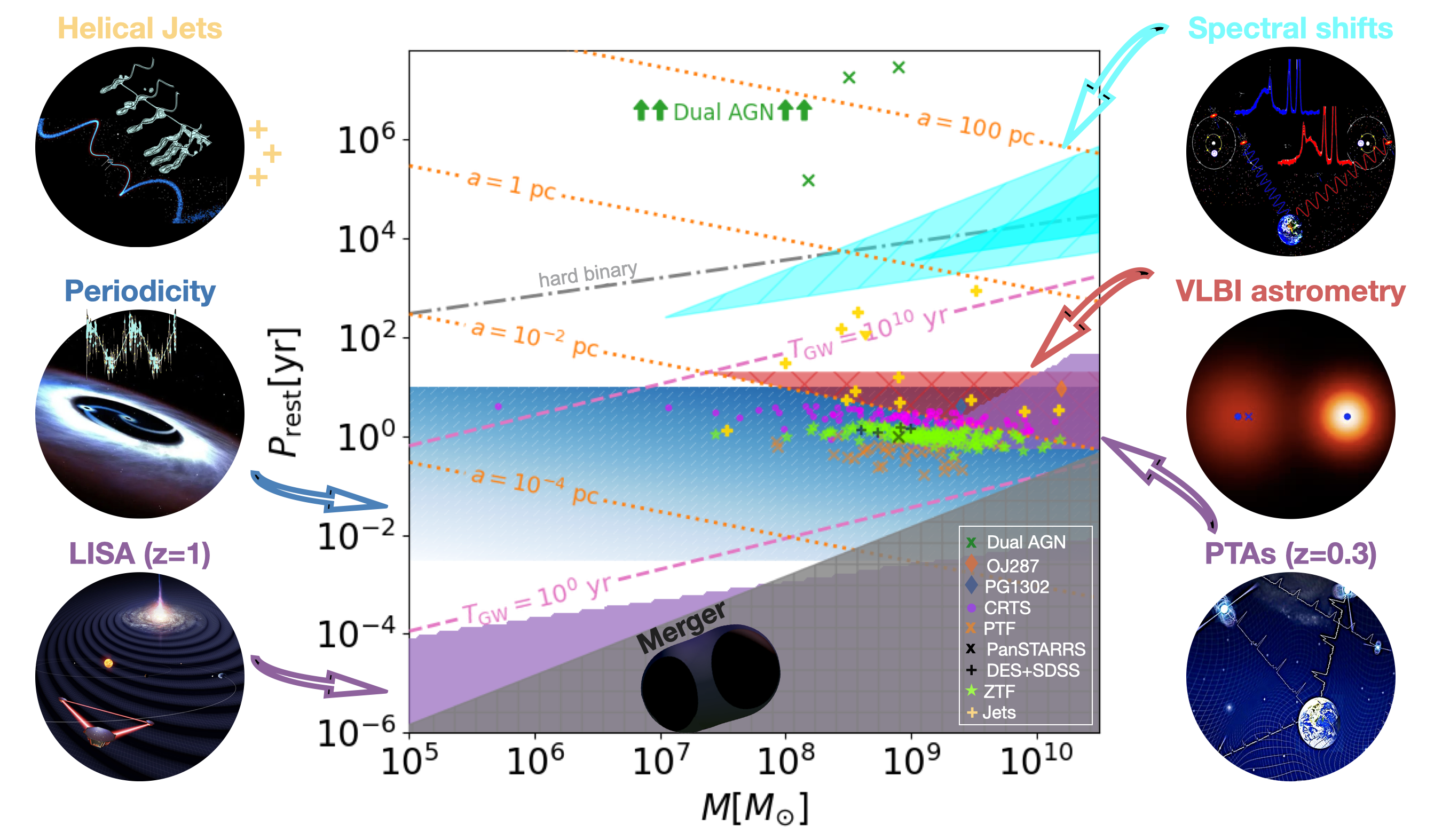
- スケールを超えた観測サインを議論する:デュアルAGN、コア欠損を伴う楕円銀河、スペクトル特徴、時系列信号。
- 千パーセクからパーセクスケールのアプローチ、スペクトル線解析、直接撮像/視線測定を含む検出手法を説明・比較する。
- SMBHB発見の将来の観測経路を強調する(例:LSST、Roman、ngVLA、EHT、GRAVITY+)。
実験結果
リサーチクエスチョン
- RQ1さまざまなスケールにおいて、SMBHBとして普遍的でかつ固有に同定可能な観測サインは何か。
- RQ2電磁観測によってSMBHB母集団と軌道減衰過程をどのように制約できるか。
- RQ3周期、質量、赤方偏移に対して、SMBHBをホストするクエーサーの期待分率はどれくらいか。
- RQ4マクロスケール(デュアルAGN、コア欠損楕円銀河)とミクロスケール(スペクトル、光度、視線測定、ジェットベース)SMBHB探索法の相対的長所と限界は何か。
- RQ5今後の電磁波観測およびGW施設はサブパーセクSMBHBの決定的検出をどのように向上させるか。
主な発見
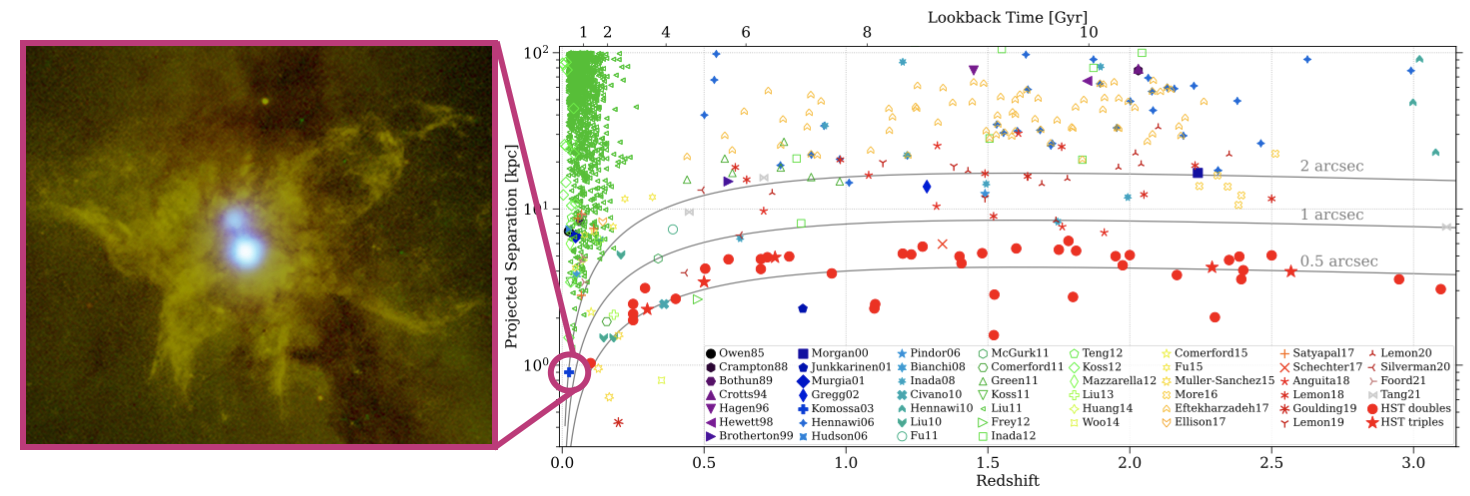
- 複数の波長領域にわたってデュアルAGNが多数観測され、高解像度の画像やIFU分光によって確認されている。
- コアを欠く楕円銀河は質量欠損とコア特性を示し、二値スカリングのシナリオと一致している。
- VLBIは局所宇宙でデュアルAGNを約10 pcまで分解能で解像できる一方、X線・光学法はより広範だが浅い調査を提供する。
- 直接的な軌道追跡は近傍系のごく一部でのみ実現可能(例:記録的な7.3 pc separations)で、観測上の限界を強調している。
- 合成的母集団モデルはSMBHBをクエーサー集団に結びつけ、在留時間とクエーサー寿命(Eq. 6)からSMBHB分率の推定を可能にする。
- ファイナルパーセク問題は、サブパーセク分離でのSMBHBの決定的証拠と詳細な周囲環境との相互作用の必要性へと再定義されつつある。
より良い研究を、今すぐ始めましょう
論文設計から論文執筆まで、研究時間を劇的に削減しましょう。
クレジットカード登録不要
このレビューはAIが作成し、人間の編集者が確認しました。