
[論文レビュー] Pb$_9$Cu(PO4)$_6$(OH)$_2$: Phonon bands, Localized Flat Band Magnetism, Models, and Chemical Analysis
この論文は Pb10(PO4)6O と Pb10(PO4)6(OH)2 を Cuドーピングとともに分析し、高温超伝導性は示さない。代わりに Cu が支配する平坦バンドは原子レベルで局在化し磁性を促進する一方、欠陥とフォノンが安定性を難しくする。
In a series of recent reports, doped lead apatite (LK-99) has been proposed as a candidate ambient temperature and pressure superconductor. However, from both an experimental and theoretical perspective, these claims are largely unsubstantiated. To this end, our synthesis and subsequent analysis of an LK-99 sample reveals a multiphase material that does not exhibit high-temperature superconductivity. We study the structure of this phase with single-crystal X-ray diffraction (SXRD) and find a structure consistent with doped $ ext{Pb}_{10}( ext{PO}_4)_6( ext{OH})_2$. However, the material is transparent which rules out a superconducting nature. From ab initio defect formation energy calculations, we find that the material likely hosts $ ext{OH}^-$ anions, rather than divalent $ ext{O}^{2-}$ anions, within the hexagonal channels and that Cu substitution is highly thermodynamically disfavored. Phonon spectra on the equilibrium structures reveal numerous unstable phonon modes. Together, these calculations suggest it is doubtful that Cu enters the structure in meaningful concentrations, despite initial attempts to model LK-99 in this way. However for the sake of completeness, we perform ab initio calculations of the topology, quantum geometry, and Wannier function localization in the Cu-dominated flat bands of four separate doped structures. In all cases, we find they are atomically localized by irreps, Wilson loops, and the Fubini-Study metric. It is unlikely that such bands can support strong superfluidity, and instead are susceptible to ferromagnetism (or out-of-plane antiferromagnetism) at low temperatures, which we find in ab initio studies. In sum, $ ext{Pb}_{9} ext{Cu}( ext{PO}_4)_6( ext{OH})_2$ could more likely be a magnet, rather than an ambient temperature and pressure superconductor.
研究の動機と目的
- Cuドーピングされた鉛アパタイト構造が常温超伝導性をホストできるかを明らかにする。
- Pb10(PO4)6O および Pb10(PO4)6(OH)2 への Cu含有の構造組成と実現性を決定する。
- Cuが支配するバンドの電子構造、位相、局在化を特徴づける。
- 提案相のフォノン安定性と格子ダイナミクスを評価する。
- 可能な磁性基底状態とそのエネルギーを調べる。
提案手法
- Pb10(PO4)6(OH)2 および関連相の構造を決定するための単結晶 X 線回折(SXRD)
- 純度と組成を評価するための粉末 X 線回折(PXRD)と EDS
- 欠陥形成エンタルピーと置換エネルギーを計算するための Hubbard U を含む密度汮動理論(DFT)計算(Cu の場合 U=4.0 eV)
- Cuドープバンドを解析するためのアブイニシオ バンド構造、 Wannier 関数、基礎帯表現
- Cu由来バンドの量子幾何と局在化を定量化する Fubini-Study 指標と非アーベル Wilson ループ
- CM、PM、FM 磁気配置に対する力学的安定性を評価するための調和近似によるフォノン計算
![Figure 1: The crystal structure for (a) \ch Pb10(PO4)6O [ 45 ] and (b) \ch Pb10(PO4)6(OH)2 [ 46 ] . The Wyckoff positions of atoms in space group 176 $P6_{3}/m$ are labelled, with their coordinates given in Table. 1 . The O atoms surrounding P atoms that form PO 4 are at $6h$ or generic positions an](https://ar5iv.labs.arxiv.org/html/2308.05143/assets/fig/crystal_struct.png)
実験結果
リサーチクエスチョン
- RQ1Pb10(PO4)6O および Pb10(PO4)6(OH)2 における Pb の格子サイトへの Cu置換は現実的な化学ポテンシャル下で熱力学的に実現可能か。
- RQ2Cu-doped Pb apatite 相はフェルミレベル付近に準平坦帯を形成し、超伝導を可能にするか。
- RQ3Cu-dominated バンドの局在化と量子幾何学(EBR、 Wannier 局在化、Wilson ループ)の性質はどうか。
- RQ4提案された Cu-doped 構造はフォノンと共に動的に安定か、磁性は安定性に影響を与えるか。
- RQ5どの磁気基底状態(FM vs AFM vs PM)がエネルギー的に有利で、スピン偏極の大きさはどれくらいか。
主な発見
- Pb サイトへの Cu 実置換は豊富/貧しいポテンシャル下でエネルギー的に不利であり、Cu の不足組成の取り込みはありそうにない。
- Cu-doped Pb10(PO4)6O および Pb10(PO4)6(OH)2 はフェルミレベル付近に 2 つの Cu由来の準平坦帯を示し、帯幅は約 100 meV、基本帯表示を形成する。
- これらの Cu バンドは irrep、Wilson ループ、Fubini-Study 指標から原子レベルで局在しており、強い超伝導性は起こりにくい。
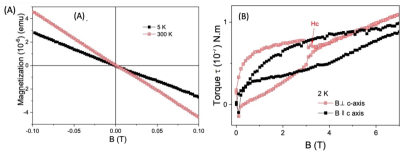
- スピン偏極計算は Cu由来バンドに顕著なスピン分裂(約 0.6 eV)を示し、FM および AFM 相は PM よりもエネルギー的に有利だが、FM と AFM の総エネルギーは非常に近い。
- 名目上の 1x1x1 セルのフォノンスペクトルは虚数モードを示し、動的不安定性を示唆する。安定性を確定するにはより大きなスーパーセルの緩和とさらなる安定化が必要。
- 合成材料は透明であり、欠陥エネルギーと組み合わせて Cu が格子に意味のある濃度で入り込む可能性を低くするため、常温超伝導性の可能性は低いが、磁性挙動の可能性は残る。
- 総じて Pb9Cu(PO4)6(OH)2 は室温超伝導体というよりは磁性を持つ材料としての性格が高い。
より良い研究を、今すぐ始めましょう
論文設計から論文執筆まで、研究時間を劇的に削減しましょう。
クレジットカード登録不要
このレビューはAIが作成し、人間の編集者が確認しました。