
[論文レビュー] Perceptions of Sentient AI and Other Digital Minds: Evidence from the AI, Morality, and Sentience (AIMS) Survey
本研究は、2021年から2023年までの縦断的AIMS調査(N=3,500)を用いて、米国における感受性を持つAI(AIセンティエンス)に関する一般世論の最初の全国的代表的データを提示する。調査では、AIに対する心の認識と道徳的配慮の増加、先進的AIの禁止を支持する広範な世論、感受性を持つAIの到着時期を短いと予測する傾向が明らかになった。これらは、人間とAIの相互作用およびAIの安全性に向けた社会的・設計的影響を示している。
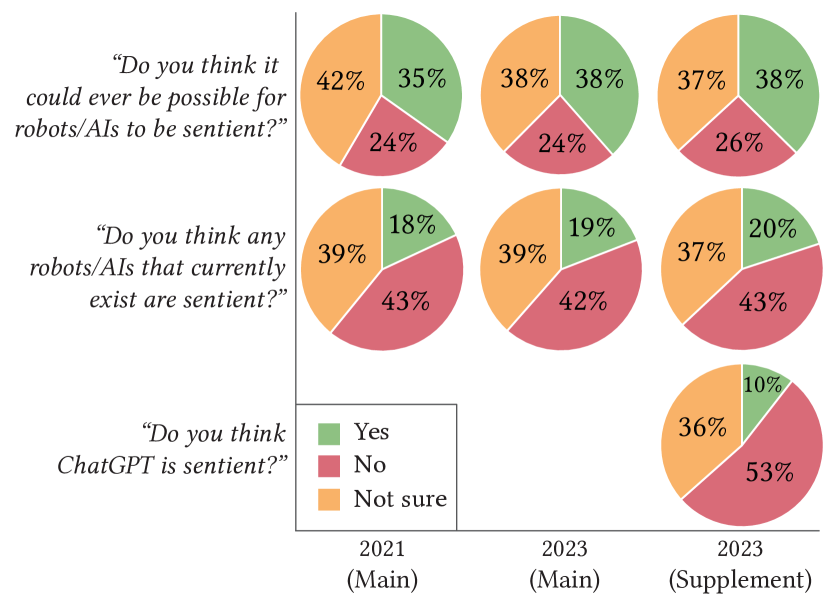
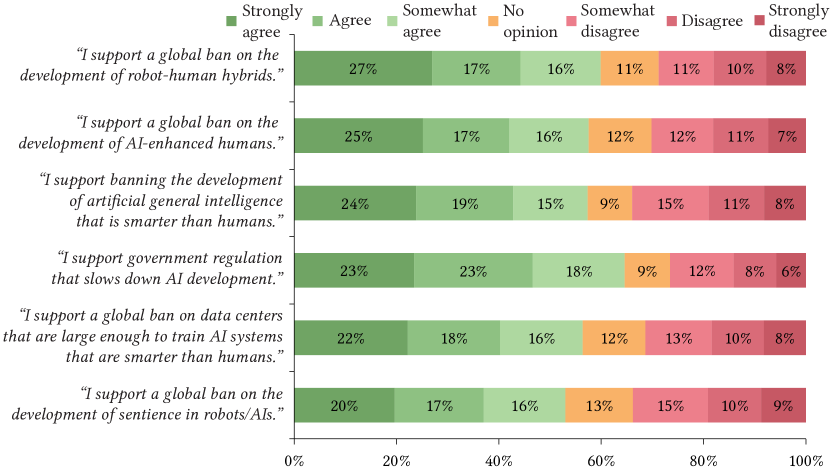
Humans now interact with a variety of digital minds, AI systems that appear to have mental faculties such as reasoning, emotion, and agency, and public figures are discussing the possibility of sentient AI. We present initial results from 2021 and 2023 for the nationally representative AI, Morality, and Sentience (AIMS) survey (N = 3,500). Mind perception and moral concern for AI welfare were surprisingly high and significantly increased: in 2023, one in five U.S. adults believed some AI systems are currently sentient, and 38% supported legal rights for sentient AI. People became more opposed to building digital minds: in 2023, 63% supported banning smarter-than-human AI, and 69% supported banning sentient AI. The median 2023 forecast was that sentient AI would arrive in just five years. The development of safe and beneficial AI requires not just technical study but understanding the complex ways in which humans perceive and coexist with digital minds.
研究の動機と目的
- 人工知能システムにおける感受性や心的機能に関する一般世論を理解すること。
- 人々がAIを道徳的配慮の対象(道徳的患者)として、あるいは脅威となる存在(否定的道徳的主体)としてどのように道徳的に認識しているかを検討すること。
- 人間とAIの相互作用を規制する政策、特に禁止や権利に関する支持を評価すること。
- 感受性を持つAIおよび汎用人工知能(AGI)の到着時期に関する一般の期待を予測すること。
- 縦断的・事前登録済みの調査デザインを通じて、AI感受性に関する世論の変化を追跡すること。
提案手法
- 2021年、2023年、2023年の3波にわたり、米国成人の全国的代表的調査を実施(合計N=3,500名の回答者)。
- AI感受性および関連する態度の変化を追跡するため、縦断的・事前登録済みの調査デザインを採用した。
- 心の認識、道徳的配慮、脅威認識、政策志向、予測に関する標準化された調査質問を用いた。
- 長期的な関連性を確保し、フレーミングバイアスを低減するため、特定のAI名前や具体例を避けていた。
- 社会的望ましさバイアスを軽減するために逆転質問を導入したが、フレーミングごとに一貫して変動させたわけではない。
- 一般大衆の直感的認識に焦点を当て、抽象的で理解しやすい言語を用いて、広範な理解と時間的安定性を確保した。
実験結果
リサーチクエスチョン
- RQ1人々はどれほどAIに感受性や他の心的機能を認識しているのか。
- RQ2人々はどれほど感受性を持つAIに対して道徳的配慮(道徳的患者として)を示し、またAIに対して脅威を感じているのか(否定的道徳的主体として)。
- RQ3人間と感受性を持つAIの相互作用を規制するために支持される政策は何か。
- RQ4人々は感受性を持つAIがいつ到着すると予想しているのか。また、そのとき何が起こると考えているのか。
主な発見
- 2023年には、71%の回答者が感受性を持つAIが尊重されるべきだと回答し、2021年と比べ有意に増加した。
- 38%の回答者が感受性を持つAIに法的権利を付与することを支持しており、AIが道徳的患者としての認識が高まっていることを示している。
- 63%の回答者が人間を上回る知能を持つAIの禁止を支持し、69%が感受性を持つAIの禁止を支持しており、広範な公的な懸念がうかがえる。
- 感受性を持つAIの中央予測到着時期は2023年から5年後であり、汎用人工知能(AGI)はわずか2年後に到着すると予想されている。
- 2021年から2023年にかけて、AIに対する心の認識と道徳的配慮が有意に増加したが、重大な技術的進歩はなかった。
- 世論は、AIが心を持っていると認識されていることが、実際に感受性があるかどうかに関わらず、すでに人間とAIの相互作用のダイナミクスを変容させている可能性を示唆している。
より良い研究を、今すぐ始めましょう
論文の読解から最終レビューまで、研究時間を劇的に削減しましょう。
クレジットカード登録不要
このレビューはAIが作成し、人間の編集者が確認しました。