
[論文レビュー] Popularity Bias Is Not Always Evil: Disentangling Benign and Harmful Bias for Recommendation
本稿では、時間的ダイナミクスを活用することで、推薦における良性のポピュラーさバイアス(好ましい)と有害なコンフォーマティー駆動バイアス(有害)を分離する時間に敏感な分離フレームワークTIDEを提案する。静的アイテム品質は時間経過とともに安定するが、コンフォーマティーは時間に敏感である。推論時にコンフォーマティー成分に干渉することで、TIDEは品質信号を保持しながらグループコンフォーマティー効果を軽減し、3つの実世界データセットで妥当性が確認された。
Recommender system usually suffers from severe popularity bias -- the collected interaction data usually exhibits quite imbalanced or even long-tailed distribution over items. Such skewed distribution may result from the users' conformity to the group, which deviates from reflecting users' true preference. Existing efforts for tackling this issue mainly focus on completely eliminating popularity bias. However, we argue that not all popularity bias is evil. Popularity bias not only results from conformity but also item quality, which is usually ignored by existing methods. Some items exhibit higher popularity as they have intrinsic better property. Blindly removing the popularity bias would lose such important signal, and further deteriorate model performance. To sufficiently exploit such important information for recommendation, it is essential to disentangle the benign popularity bias caused by item quality from the harmful popularity bias caused by conformity. Although important, it is quite challenging as we lack an explicit signal to differentiate the two factors of popularity bias. In this paper, we propose to leverage temporal information as the two factors exhibit quite different patterns along the time: item quality revealing item inherent property is stable and static while conformity that depends on items' recent clicks is highly time-sensitive. Correspondingly, we further propose a novel Time-aware DisEntangled framework (TIDE), where a click is generated from three components namely the static item quality, the dynamic conformity effect, as well as the user-item matching score returned by any recommendation model. Lastly, we conduct interventional inference such that the recommendation can benefit from the benign popularity bias while circumvent the harmful one. Extensive experiments on three real-world datasets demonstrated the effectiveness of TIDE.
研究の動機と目的
- 既存手法がすべてのポピュラーさバイアスを有害とみなして完全に排除しようとするという限界に対処すること。
- ポピュラーさバイアスが二つの異なる要因に起因することを認識すること:アイテム品質(良性)とユーザーのコンフォーマティー(有害)であり、これらは別々に扱われるべきである。
- アイテム品質は時間不変であるのに対し、コンフォーマティーは時間に依存するという時間的パターンを用いて、これらの二要因を分離する手法を開発すること。
- 推論時に、良性バイアス(品質)を活用しながら有害バイアス(コンフォーマティー)を抑制する干渉戦略を設計すること。
- 社会的影響による人気の拡大を抑える一方で、内在するアイテム品質信号を保持することで、推薦性能を向上させること。
提案手法
- クリック生成を、静的アイテム品質、動的コンフォーマティー効果、およびユーザ-アイテムマッチングスコアという3つの成分の組み合わせとしてモデル化する時間に敏感な分離フレームワーク(TIDE)を提案する。
- 最近のクリックの集計を用いて、一時的でグループ駆動の性質を捉える時間に依存する関数を用いてコンフォーマティー効果をモデル化する。
- 因果グラフを仮定し、アイテム品質は時間不変、コンフォーマティーは時間変動的、ユーザ-アイテムマッチングは人気バイアスとは独立であるとみなす。
- 予測時にコンフォーマティーモジュールに干渉する干渉的推論を採用し、その影響を効果的に排除しながら品質信号とマッチング信号を保持する。
- 最近のクリックの数と新鮮さに基づいて、コンフォーマティー効果をモデル化するための和指数構造を用いる。
- モデルをエンドツーエンドで訓練し、推薦損失を用いるが、アーキテクチャ的設計と推論時の干渉によって成分を分離する。
実験結果
リサーチクエスチョン
- RQ1時間的ダイナミクスを活用して、アイテム品質によって引き起こされる良性のポピュラーさバイアスと、コンフォーマティーによって引き起こされる有害なポピュラーさバイアスを区別できるか?
- RQ2これらの二要因を分離することで、すべてのポピュラーさバイアスを有害とみなすか、無視する手法と比較して、推薦性能が向上するか?
- RQ3干渉的推論は、有害なコンフォーマティー効果を効果的に抑制しながら、アイテム品質からの有益な信号を保持できるか?
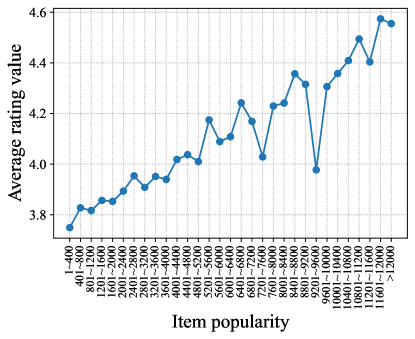
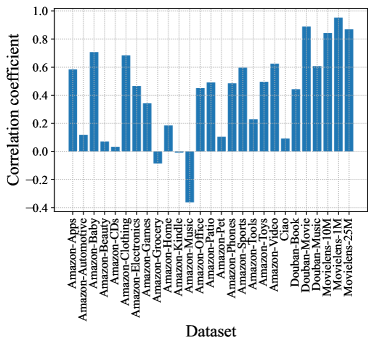
- RQ4アイテムレーティングと人気の時間的パターンにはどのような相関関係があるか?また、これらはポピュラーさバイアスの二重性について何を示唆するか?
- RQ5提案されたTIDEフレームワークは、人気の偏りが異なる実世界の推薦データセットにおいても頑健であるか?
主な発見
- 実証的分析により、より人気のあるアイテムは平均レーティングが高くなる傾向にあり、これは高人気と高いアイテム品質が関連する良性のポピュラーさバイアスが存在することを示している。
- 多くのアイテムにおいて、アイテムレーティングは現在の人気と負の相関関係にあることが判明し、時間経過とともに変動的で有害なコンフォーマティーバイアスの性質が明らかになった。
- TIDEは3つの実世界データセット(例:Amazon、Yelp、MovieLens)で最先端の性能を達成し、人気バイアスを排除するか、直接人気スコアを組み込む手法を上回った。
- TIDEにおける干渉的推論により、コンフォーマティー効果を抑制しながら品質信号とユーザープreferences信号を保持することで、顕著な性能向上が達成された。
- アブレーションスタディにより、時間に敏感なコンフォーマティーモデリングと分離された干渉メカニズムの両方が、性能向上に不可欠であることが確認された。
- 人気の偏りが異なるデータセットにおいても、フレームワークは頑健であることが示され、実世界の推薦シナリオにおける一般化可能性が裏付けられた。
より良い研究を、今すぐ始めましょう
論文の読解から最終レビューまで、研究時間を劇的に削減しましょう。
クレジットカード登録不要
このレビューはAIが作成し、人間の編集者が確認しました。