
[論文レビュー] Predicting and Enhancing the Fairness of DNNs with the Curvature of Perceptual Manifolds
本稿では、埋め込み空間におけるクラス特徴を表す幾何的構造(パーセプトゥアル多様体)の曲率のバランスを取ることで、深層ニューラルネットワークにおける公平性を向上させるための曲率正則化を提案する。曲率の不均衡を最小化することで、モデルバイアスを低減し、長尾分布およびバランスの取れたデータセットにおいて最先端の性能を達成する。非長尾データに対しても顕著な精度向上が見られる。
To address the challenges of long-tailed classification, researchers have proposed several approaches to reduce model bias, most of which assume that classes with few samples are weak classes. However, recent studies have shown that tail classes are not always hard to learn, and model bias has been observed on sample-balanced datasets, suggesting the existence of other factors that affect model bias. In this work, we first establish a geometric perspective for analyzing model fairness and then systematically propose a series of geometric measurements for perceptual manifolds in deep neural networks. Subsequently, we comprehensively explore the effect of the geometric characteristics of perceptual manifolds on classification difficulty and how learning shapes the geometric characteristics of perceptual manifolds. An unanticipated finding is that the correlation between the class accuracy and the separation degree of perceptual manifolds gradually decreases during training, while the negative correlation with the curvature gradually increases, implying that curvature imbalance leads to model bias.Building upon these observations, we propose curvature regularization to facilitate the model to learn curvature-balanced and flatter perceptual manifolds. Evaluations on multiple long-tailed and non-long-tailed datasets show the excellent performance and exciting generality of our approach, especially in achieving significant performance improvements based on current state-of-the-art techniques. Our work opens up a geometric analysis perspective on model bias and reminds researchers to pay attention to model bias on non-long-tailed and even sample-balanced datasets.
研究の動機と目的
- 深層ニューラルネットワークにおけるモデルバイアスに影響を与える要因として、クラスのサンプル頻度以外の幾何的要因を調査すること。
- パーセプトゥアル多様体における曲率の不均衡が分類バイアスの主な要因であることを同定すること。
- より平坦でバランスの取れた特徴多様体を促進するための曲率正則化法を開発すること。
- 曲率正則化が長尾分布およびサンプルがバランスの取れたデータセットの両方において汎用的であることを示すこと。
提案手法
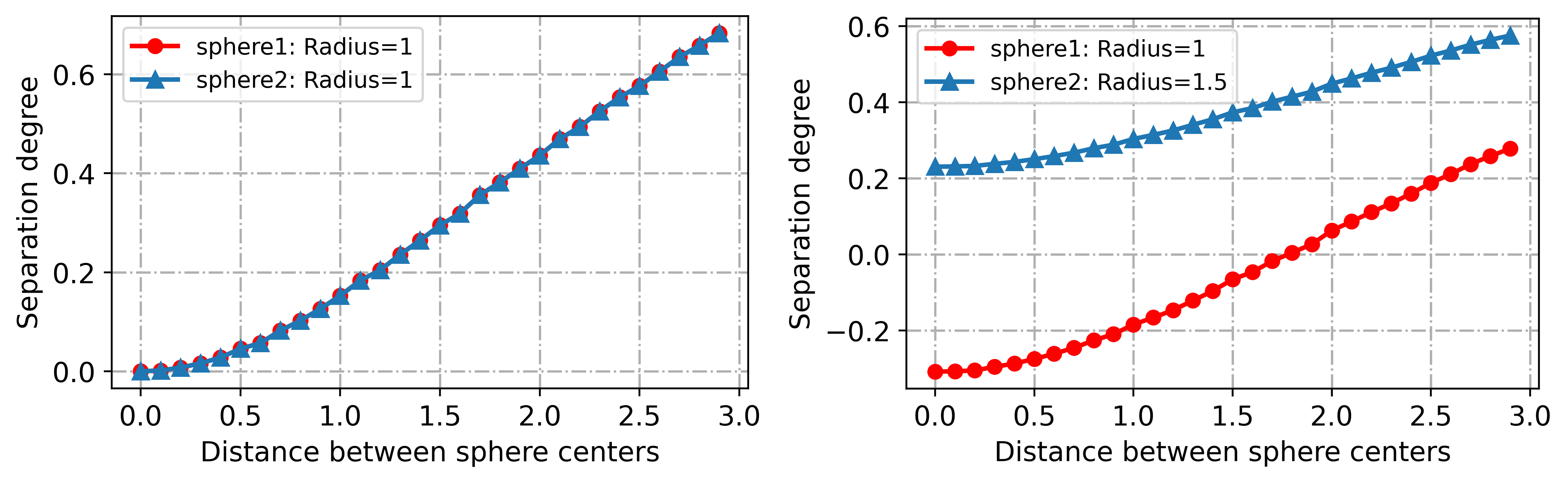
- パーセプトゥアル多様体のための幾何的測定法(分離度および平均ガウス曲率など)を提案する。
- 平均ガウス曲率を多様体の複雑さとその分類困難度への影響の代理指標として用いる。
- 訓練中にクラス間での曲率の分散を最小化するための曲率正則化(CR)を導入する。
- 標準的なクロスエントロピー損失にCRを組み合わせ、幾何的バランスの向上を実現するエンドツーエンドの訓練を可能にする。
- 訓練済みネットワークからの特徴抽出を用いて、実際のデータセット上で曲率および分離メトリクスを計算する。
- ImageNet-LTおよびCIFAR-100-LTにおいて、ResNet-18およびVGG-16を用い、アブレーションおよび比較研究を通じて手法の有効性を検証する。
実験結果
リサーチクエスチョン
- RQ1長尾分布のない環境下でも、パーセプトゥアル多様体の曲率不均衡がモデルバイアスに寄与するのか?
- RQ2訓練の過程で、クラスの正解率とパーセプトゥアル多様体の幾何的構造との相関関係はどのように変化するか?
- RQ3曲率正則化が多様なデータ分布においてモデルバイアスを効果的に低減し、公平性を向上させることができるか?
- RQ4曲率正則化は、最先端のモデルにおいて長尾分布およびバランスの取れた設定の両方で、どの程度性能を向上させるか?
- RQ5分類困難度に及ぼす曲率の幾何的影響は、サンプル頻度やモデルの信頼度とは独立しているのか?
主な発見
- 訓練の過程で、クラス正解率と平均ガウス曲率との負の相関が強まる。これは、高曲率の多様体が誤分類にかかりやすいことを示している。
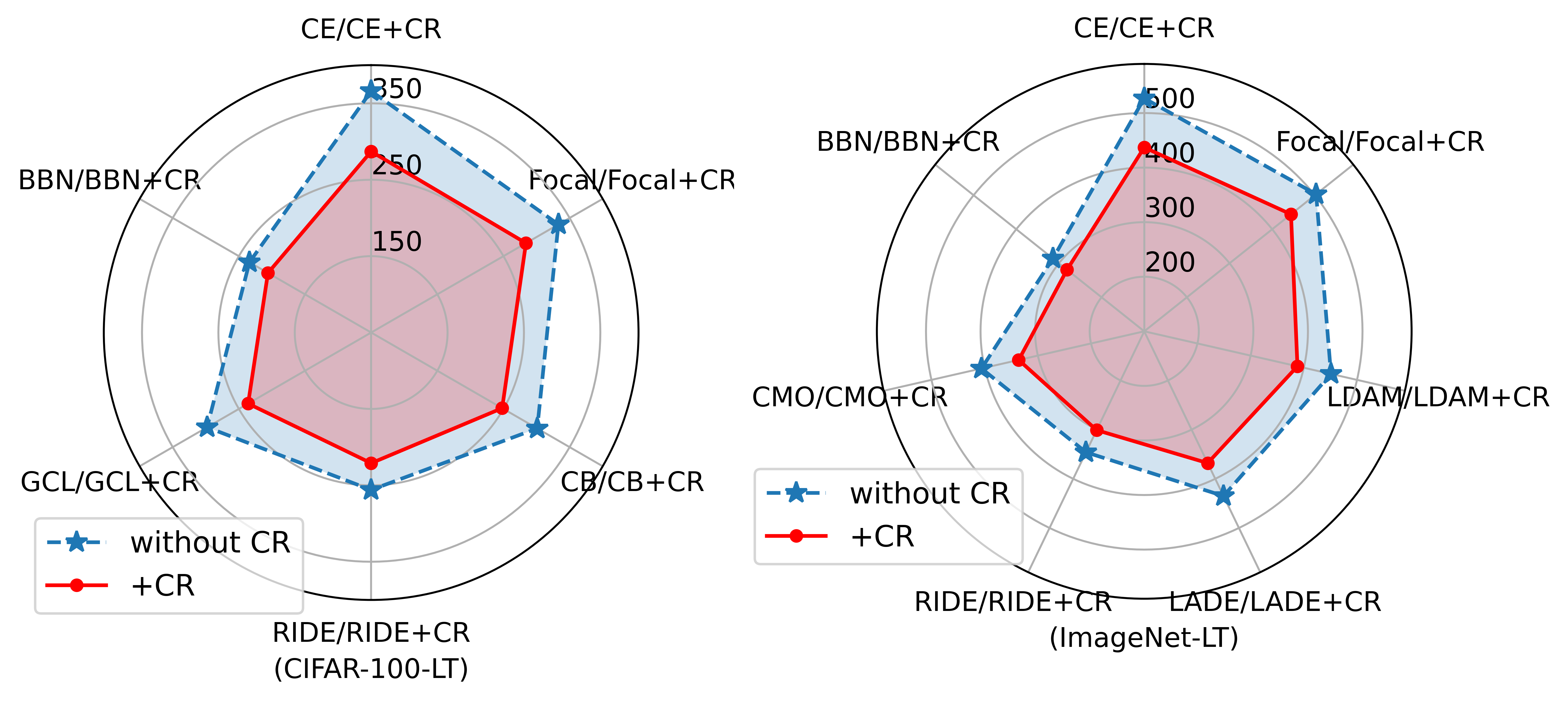
- ImageNet-LTでは曲率の分散を45%、CIFAR-100-LTでは50%低減し、より平坦でバランスの取れた多様体を実現した。
- ImageNetでは、曲率とクラス正解率のピアソン相関係数が、CE(-0.583)からCE + CR(-0.257)に低下し、バイアスが低減した。
- ImageNet-LTでは、標準的なCE損失よりも平均正解率が2.1%向上し、最先端のベースラインよりも1.3%向上した。
- 非長尾データセットに対しても顕著な向上が得られ、長尾シナリオにとどまらない汎用性を示した。
- CRによって学習された曲率がバランスの取れた多様体は、バランスの取れたデータ設定下でもすべてのクラスにわたる性能の均一性を高める。
この論文を読む
Nubintのビューアで原文を開き、読みながら気になる箇所をすぐに質問できます。
Nubintでこの論文を読むこのレビューはAIが論文の原文をもとに作成しました。引用する前に原文をご確認ください。