
[論文レビュー] Predicting Patient COVID-19 Disease Severity by means of Statistical and Machine Learning Analysis of Blood Cell Transcriptome Data
本研究では、日常的血液トランスクリプトームデータを用いた機械学習フレームワークを開発し、COVID-19の病態重症度および死亡リスクを90%以上の精度で予測した。CRP、D-ダイマー、ラクタートなどの臨床パラメータを統計解析と多様な機械学習アルゴリズム(ランダムフォレスト、勾配ブースティング、SVMを含む)で統合することで、重症な結果を予測するための重要なバイオマーカーを同定し、リソースが限られた環境でも早期のリスク評価が可能になった。
Introduction: For COVID-19 patients accurate prediction of disease severity and mortality risk would greatly improve care delivery and resource allocation. There are many patient-related factors, such as pre-existing comorbidities that affect disease severity. Since rapid automated profiling of peripheral blood samples is widely available, we investigated how such data from the peripheral blood of COVID-19 patients might be used to predict clinical outcomes. Methods: We thus investigated such clinical datasets from COVID-19 patients with known outcomes by combining statistical comparison and correlation methods with machine learning algorithms; the latter included decision tree, random forest, variants of gradient boosting machine, support vector machine, K-nearest neighbour and deep learning methods. Results: Our work revealed several clinical parameters measurable in blood samples, which discriminated between healthy people and COVID-19 positive patients and showed predictive value for later severity of COVID-19 symptoms. We thus developed a number of analytic methods that showed accuracy and precision for disease severity and mortality outcome predictions that were above 90%. Conclusions: In sum, we developed methodologies to analyse patient routine clinical data which enables more accurate prediction of COVID-19 patient outcomes. This type of approaches could, by employing standard hospital laboratory analyses of patient blood, be utilised to identify, COVID-19 patients at high risk of mortality and so enable their treatment to be optimised.
研究の動機と目的
- 標準的な病院血液検査を用いて、COVID-19の病態重症度および死亡リスクを早期に予測すること。
- 入院患者における重症な結果を強く予測できる臨床的測定可能な血液パラメータを同定すること。
- 特にリソースが限られた環境においても、ICUリソースの割り当てに向けた堅牢で自動化された意思決定支援システムを構築すること。
- 複数の機械学習モデルの性能を、日常的な臨床データ上で評価することで、手法の安定性および一般化可能性を確認すること。
提案手法
- 健康な個人とCOVID-19患者との間で有意に差が見られる血液パラメータを特定するため、統計的比較および相関分析を実施した。
- 意思決定木、ランダムフォレスト、勾配ブースティング(XGBoost、LightGBM)、サポートベクターマシン(SVM)、K近傍法(KNN)、ディープラーニングモデルを含む多様な機械学習アルゴリズムを採用した。
- 入院中のCOVID-19患者の末梢血液パラメータを含む臨床データセットを用い、モデルの学習および検証を実施した。
- C反応性たんぱく質(CRP)、D-ダイマー、プロカルシトニンなどの個々のバイオマーカーの予測能を評価するため、特徴量の重要度分析を実施した。
- 正解率、適合率、受信者リポーチ特性曲線(AUC)といった標準的な指標を用いて、モデルの性能を評価した。
- 同じデータセット上で複数のアルゴリズムをテストすることで、モデルの堅牢性を確保し、さまざまな手法において一貫した高い性能が得られることを確認した。
![Figure 1: Proposed methodology and workflow of this research for machine learning analysis. [NCD = Non-Communicable Disease]](https://ar5iv.labs.arxiv.org/html/2011.10657/assets/blood.png)
実験結果
リサーチクエスチョン
- RQ1どの日常的血液パラメータが、重症COVID-19の予後および死亡リスクと最も強く関連しているか?
- RQ2標準的な臨床血液検査に基づいて学習した機械学習モデルは、疾患重症度を高い精度で予測できるか?
- RQ3同じ臨床データセットを用いて、異なる機械学習アルゴリズムはCOVID-19重症度の予測においてどのように比較されるか?
- RQ4入手可能な血液検査に基づくモデルは、臨床現場における早期のリスク評価をどの程度改善できるか?
- RQ5炎症性および凝固マーカー(CRP、D-ダイマー、フェリチンなど)の予測的価値は、疾患重症度の分類においてどの程度か?
主な発見
- 標準的な血液検査データを用いて、疾患重症度および死亡リスクの両方において、予測精度と適合率が90%を超えた。
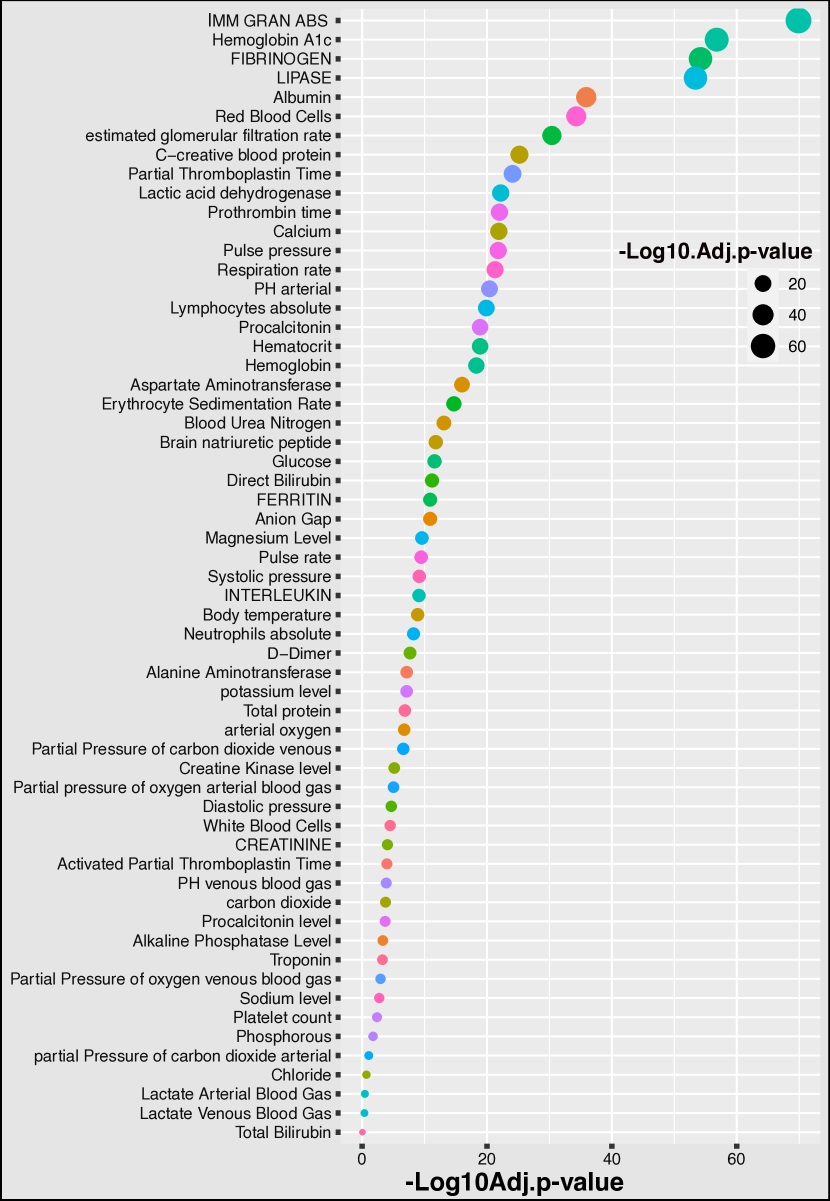
- C反応性たんぱく質(CRP)が最も予測能の高いバイオマーカーとして浮き彫りになった。続くのはD-ダイマー、プロカルシトニン、フェリチン、脳ナトリウム利尿ペプチドである。
- ヘモグロビン、赤沈、血小板数、ラクタート濃度も重症例で顕著な乖離を示し、予測能に寄与した。
- 呼吸数、血圧(収縮期および拡張期)、ヘマトクリット、ベースエクセス(静脈およびArterial)、好中球数、アルブミン、尿素濃度についても、やや顕著でないが依然として有意な乖離と予測的価値が認められた。
- ランダムフォレスト、XGBoost、SVMなどの多様な機械学習アルゴリズムにおいて一貫した高い性能が得られたことから、モデルの堅牢性が示され、モデル選択への感受性が低いことが示された。
- 本研究では、既存の低コストの病院ラボ検査を活用することで、特にICUの容量が限られた医療システムにおいて、高リスク患者の早期同定が可能である可能性が示された。
より良い研究を、今すぐ始めましょう
論文の読解から最終レビューまで、研究時間を劇的に削減しましょう。
クレジットカード登録不要
このレビューはAIが作成し、人間の編集者が確認しました。