
[論文レビュー] Production of Alternate Realizations of DESI Fiber Assignment for Unbiased Clustering Measurement in Data and Simulations
本論文は Alternate Merged Target Ledgers (AMTL) 手法を提示して、複数の現実的な DESI ターゲット実現例を生成し、DESI データとモックの小規模クラスタリングの不完全性を補正するための対ペアワイズ逆確率(PIP)ウェイティングを可能にします。AMTL を実際の観測条件で DESI SV3 および Year 1 のデータとモックで検証することを示します。
A critical requirement of spectroscopic large scale structure analyses is correcting for selection of which galaxies to observe from an isotropic target list. This selection is often limited by the hardware used to perform the survey which will impose angular constraints of simultaneously observable targets, requiring multiple passes to observe all of them. In SDSS this manifested solely as the collision of physical fibers and plugs placed in plates. In DESI, there is the additional constraint of the robotic positioner which controls each fiber being limited to a finite patrol radius. A number of approximate methods have previously been proposed to correct the galaxy clustering statistics for these effects, but these generally fail on small scales. To accurately correct the clustering we need to upweight pairs of galaxies based on the inverse probability that those pairs would be observed (Bianchi & Percival 2017). This paper details an implementation of that method to correct the Dark Energy Spectroscopic Instrument (DESI) survey for incompleteness. To calculate the required probabilities, we need a set of alternate realizations of DESI where we vary the relative priority of otherwise identical targets. These realizations take the form of alternate Merged Target Ledgers (AMTL), the files that link DESI observations and targets. We present the method used to generate these alternate realizations and how they are tracked forward in time using the real observational record and hardware status, propagating the survey as though the alternate orderings had been adopted. We detail the first applications of this method to the DESI One-Percent Survey (SV3) and the DESI year 1 data. We include evaluations of the pipeline outputs, estimation of survey completeness from this and other methods, and validation of the method using mock galaxy catalogs.
研究の動機と目的
- DESI クラスタリング解析のためのファイバー割り当ての不完全性の正確な補正を、特に小さなスケールで推進する。
- ターゲットペアの観測確率を推定する実用的なモンテカルロ法(AMTL)を開発する。
- AMTL を既存の PIP および角度重み付けと統合して、偏りのない二点統計を生成する。
- DESI SV3/Y1 データと AbacusSummit のモックを用いて方法を検証し、完全性とゼロ確率問題を評価する。
提案手法
- ほぼ最大モンテカルロ実現からペアワイズの観測確率を推定するための Alternate Merged Target Ledgers (AMTL) を導入する。
- MTL のサブ優先度をランダム化し、BGS/ELG の昇格を適用して代替優先度の実現を作成する。
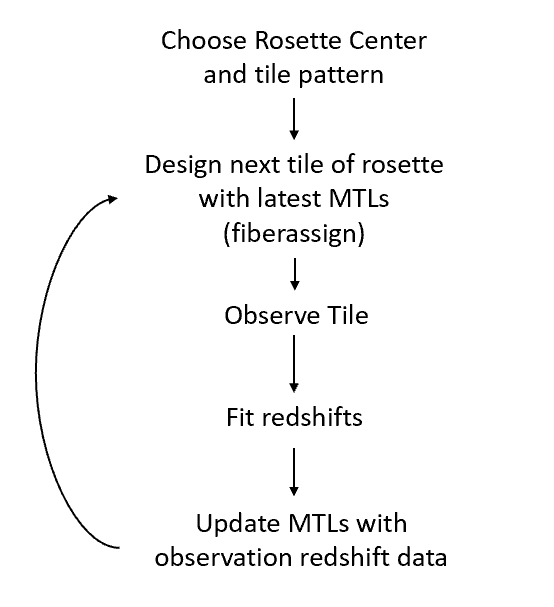
- 実際の DESI パイプラインを写し取る観測ループを実行し、代替観測を実際のファイバー割り当てへマッピングし、実機の状態を組み込む。
- AMTL 実現を用いて角度重み付けPB17を用いた PIP 重みを計算し、モックとデータでクラスタリングを <=0.1 Mpc/h まで回復する。
- 出力には AMTL のN個の実現(SV3 では128、モックでは128–256)と、各 TARGETID の観測頻度をエンコードするビットウェイトファイルが含まれる。
- AbacusSummit 由来のモックを用いて検証し、観測測定を比較して小規模スケールの非偏り補正を実証する。
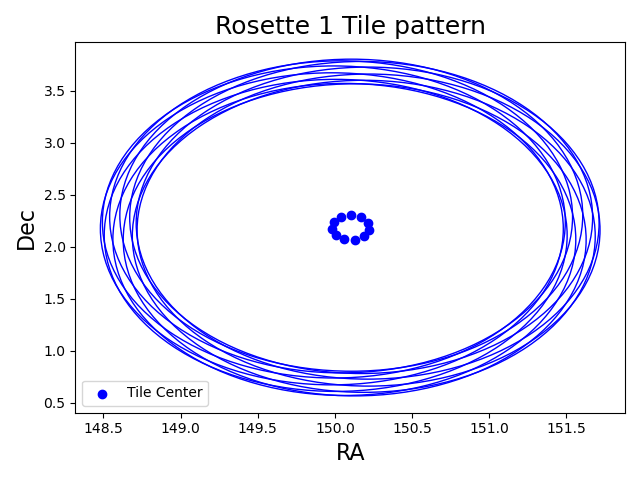
実験結果
リサーチクエスチョン
- RQ1AMTL ベースの PIP 重みは DESI データとモックにおける小規模クラスタリングの不偏推定を回復できるか。
- RQ2代替ターゲット実現による完全性推定およびゼロ確率ペアへの影響はどうか。
- RQ3AMTL 生成重みは DESI の既存の不完全性補正手法とどう比較されるか。
- RQ4AMTL アプローチはゼロ確率問題を緩和するために既存の角度重み付けと統合できるか。
- RQ5SV3 および Year 1 データの実用的な計算要件と検証結果はどうか。
主な発見
- AMTL は実現間のモンテカルロ推定により対ペアウェイトをほぼ偏りなく実現可能にする。
- SV3 では QSOs および BGS_BRIGHT に対してゼロ確率ペアは小さく、LRGs と ELGs で小さな割合、Year 1 ではゼロ確率の割合は非ゼロだが管理可能である。
- AMTL は BP17 PIP 重み付けと PB17 角度重み付けと統合して、モックとデータで 0.1 Mpc/h までのスケール全体の不完全性を補正する。
- 観測ループは代替観測を実機の状態とタイルのシーケンスを用いて現実的に伝播させ、完全性モデリングの忠実度を向上させる。
- AMTL の出力には 128 実現と観測頻度をマッピングするビットウェイトファイルが含まれ、LSS パイプラインへの組み込みを円滑にする。
より良い研究を、今すぐ始めましょう
論文設計から論文執筆まで、研究時間を劇的に削減しましょう。
クレジットカード登録不要
このレビューはAIが作成し、人間の編集者が確認しました。