
[論文レビュー] Quantum Circuit Synthesis and Compilation Optimization: Overview and Prospects
N/A
Quantum computing is a promising paradigm that may overcome the current computational power bottlenecks. The increasing maturity of quantum processors provides more possibilities for the development and implementation of quantum algorithms. As the crucial stages for quantum algorithm implementation, the logic circuit design and quantum compiling have also received significant attention, which covers key technologies, e.g., quantum logic circuit synthesis (also widely known as quantum architecture search) and optimization, as well as qubit mapping and routing. Recent studies suggest that the scale and precision of related algorithms are steadily increasing, especially with the integration of artificial intelligence methods. In this survey, we systematically review and summarize a vast body of literature, exploring the feasibility of an integrated design and optimization scheme that spans from the algorithmic level to quantum hardware, combining the steps of logic circuit design and compilation optimization. Leveraging the exceptional cognitive and learning capabilities of AI algorithms, it becomes more possible to reduce manual design costs, enhance the precision and efficiency of execution, and facilitate the implementation and validation of the superiority of quantum algorithms on hardware.
研究の動機と目的
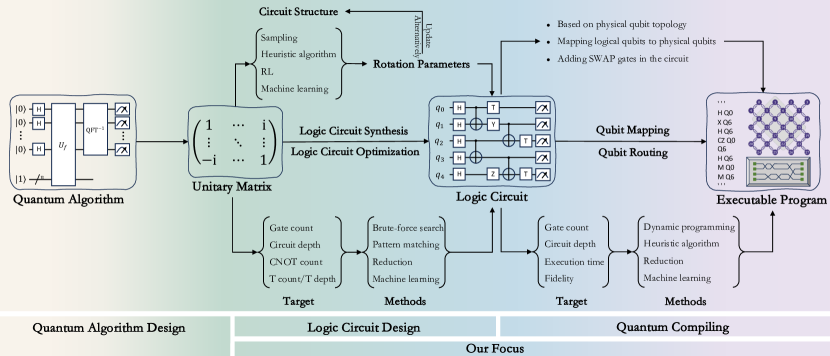
- 量子アルゴリズム設計から量子ハードウェア上の実行可能なプログラムまでのエンドツーエンドのワークフローをレビューする。
- 回路表現、合成、最適化、および量子ビットマッピング技術を体系的に分類する。
- NISQ期およびフォールトトレラント時代の現実的な制約を分析し、統合的なAI支援設計とコンパイル戦略を提案する。
- ハードウェアクラウド上での自動的な量子回路設計とコンパイルの課題・機会・展望を強調する。
提案手法
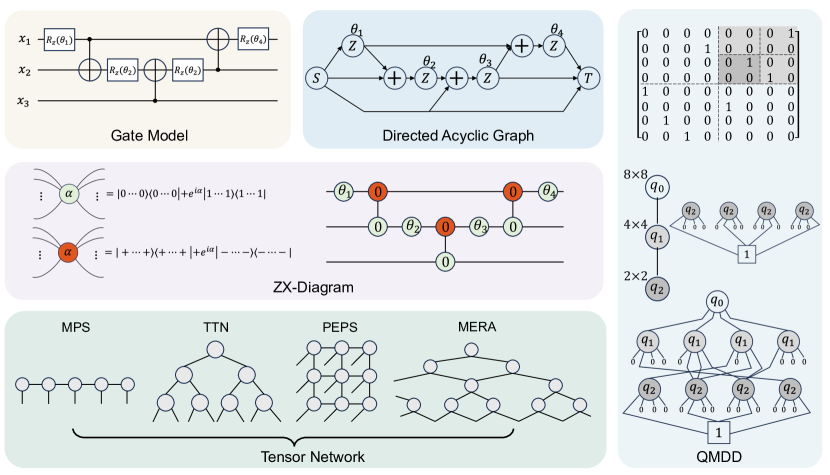
- 量子回路表現の調査と分類法(ゲートモデル、DAG、位相多項式、ZX図、テンソルネットワーク)に関する調査。
- 合成アプローチをユニタリ対象と非ユニタリ対象の問題に分類(例:オラクル構築、VQE、QNN、誤り訂正)。
- パターンマッチング、peephole最適化、データベースベースのサブ回路、強化学習、MLベースの探索を含む最適化目的と手法の議論。
- ハードウェアの接続性制約とSWAPゲートコストの下での量子ビットマッピングとルーティングの分析。
- 自動化されたハードウェア対応最適化のためにAIを活用する統合的な量子回路設計・コンパイルパラダイムの提案。
実験結果
リサーチクエスチョン
- RQ1量子回路の合成と最適化における主要な表現とそれらの役割は何か?
- RQ2AI/ML技術をどのように統合して、ハードウェアプラットフォームを横断して量子回路設計とコンパイルを自動化できるか?
- RQ3NISQおよびフォールトトレラント制約の下でハードウェア性能を最大化するために、回路設計、最適化、量子ビットマッピングを橋渡しする統合パイプラインとは何か?
主な発見
- 量子回路表現(ゲートモデル、DAG、位相多項式、ZX図、テンソルネットワーク)は、回路構造に合わせて合成と最適化の手法を調整することを可能にする。
- 合成問題は、ユニタリ対象(例:オラクル実装)と非ユニタリ対象(例:VQE、QNN、誤り訂正)に分かれ、異なる目的式を持つ。
- AIおよび機械学習アプローチ(強化学習、ニューラルアーキテクチャ検索の類似手法)は、従来のヒューリスティックを超えた効率的な回路やサブ回路の発見に有望である。
- 接続性とSWAPゲートコストのため、量子ビットマッピングとルーティングは依然として重要であり、精度とノイズのバランスを取る統合最適化を促す。
- この調査は、AIを用いてハードウェア対応の制約を横断的に自動化・最適化する統合的な量子回路設計・コンパイルフレームワークを提案する。
より良い研究を、今すぐ始めましょう
論文設計から論文執筆まで、研究時間を劇的に削減しましょう。
クレジットカード登録不要
このレビューはAIが作成し、人間の編集者が確認しました。