
[論文レビュー] Quantum machine learning for image classification
この論文はMNISTの数字分類のための2つのハイブリッド量子-古典ニューラルネットワークを提案する:HQNN-Parallelは並列VQCsを用いて99.21%のテスト精度を達成し、HQNN-Quanvは量子クオンベクション層を用いて67%の精度を達成。いずれも古典的 counterparts よりはるかに少ない学習可能パラメータ数で。
Image classification, a pivotal task in multiple industries, faces computational challenges due to the burgeoning volume of visual data. This research addresses these challenges by introducing two quantum machine learning models that leverage the principles of quantum mechanics for effective computations. Our first model, a hybrid quantum neural network with parallel quantum circuits, enables the execution of computations even in the noisy intermediate-scale quantum era, where circuits with a large number of qubits are currently infeasible. This model demonstrated a record-breaking classification accuracy of 99.21% on the full MNIST dataset, surpassing the performance of known quantum-classical models, while having eight times fewer parameters than its classical counterpart. Also, the results of testing this hybrid model on a Medical MNIST (classification accuracy over 99%), and on CIFAR-10 (classification accuracy over 82%), can serve as evidence of the generalizability of the model and highlights the efficiency of quantum layers in distinguishing common features of input data. Our second model introduces a hybrid quantum neural network with a Quanvolutional layer, reducing image resolution via a convolution process. The model matches the performance of its classical counterpart, having four times fewer trainable parameters, and outperforms a classical model with equal weight parameters. These models represent advancements in quantum machine learning research and illuminate the path towards more accurate image classification systems.
研究の動機と目的
- 量子効果の活用を動機づけ、従来の深層学習を超える画像分類の向上を目指す。
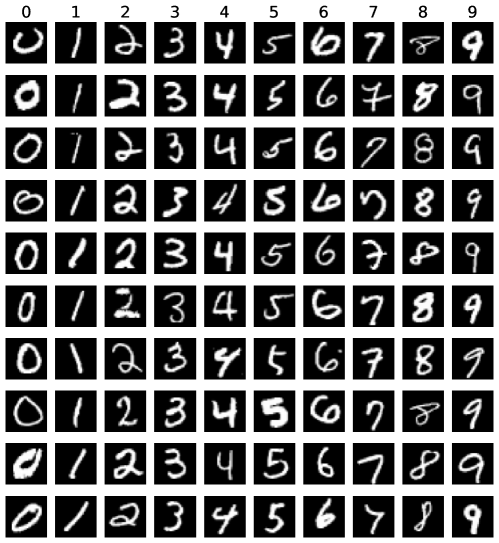
- MNISTの数字認識のための2つのハイブリッド量子-古典モデル(HQNN-ParallelとHQNN-Quanv)を提案する。
- 古典的CNNのベースラインと比較して、性能とパラメータ効率を評価する。
提案手法
- 特徴抽出のために古典的な畳み込みフロントエンドを使用し、続いて並列VQCを備えた量子デンスブロック(HQNN-Parallel)を用いる。
- 角埋め込みを用いて古典的特徴を量子状態にエンコードし、パラメータシフト則を用いて可変パラメータを訓練する。VQC出力を結合して最終的な古典的全結合層へ接続。
- 量子フィルターサイズn×nが畳み込みカーネルとして機能するクオンベクショナル層(HQNN-Quanv)を導入。角埋め込み、可変ゲート、測定を介して出力チャネルを生成し、それを全結合層へ入力。
- 古典部はクロスエントロピー損失とバックプロパゲーションを用いてエンドツーエンドで全パラメータを訓練する。量子勾配にはPennyLane(パラメータシフト則)を適用し、古典部にはPyTorchを用いる。
- HQNN-Parallelを等価なアーキテクチャでパラメータ数が少ないCNNと比較する。HQNN-Quanvを小さなカーネルと大きなカーネルを持つCNNと比較し、学習可能パラメータ数を統制する。
実験結果
リサーチクエスチョン
- RQ1類似のアーキテクチャとパラメータ数を持つ古典的CNNと比較して、ハイブリッド量子-古典ネットワークはMNISTの画像分類精度を改善できるか。
- RQ2並列VQCとクオンベクショナル層の違いが分類性能とパラメータ効率に与える影響は何か。
- RQ3量子回路パラメータの訓練可能性はどの程度か、エンドツーエンド訓練で画像データの学習を向上させられるか。
- RQ4制約されたデータセットサイズと簡略化されたアーキテクチャで量子ニューラルネットワークはどのように性能を発揮するか。
主な発見
| Model | train loss | test loss | test acc | param num |
|---|---|---|---|---|
| CNN | 0.0205 | 0.0449 | 98.71 | 372234 |
| HQNN | 0.0204 | 0.0274 | 99.21 | 45194 |
- HQNN-ParallelはMNISTで99.21%のテスト精度を達成し、約8倍のパラメータを持つCNNを上回る(98.71%)。
- HQNN-Parallelは比較対象の古典CNNよりパラメータ数を8分の1に抑える。
- HQNN-Quanvは67% ±1%のテスト精度を達成し、CNN4(66% ±2%)と同等だが、第一層の学習可能パラメータ数は4分の1である。
- HQNN-Quanvはフィルターのパラメータ数で一致させた場合、CNN1(53% ±2%)を上回る。
- 両モデルのすべてのパラメータは訓練可能であり、画像分類におけるハイブリッド量子-古典アプローチの可能性を示している。
より良い研究を、今すぐ始めましょう
論文設計から論文執筆まで、研究時間を劇的に削減しましょう。
クレジットカード登録不要
このレビューはAIが作成し、人間の編集者が確認しました。