
[論文レビュー] RealTime Health Monitoring Using 5G Networks: A Deep Learning-Based Architecture for Remote Patient Care
リアルタイム遠隔患者モニタリングシステムを提案。ハイブリッドCNN-LSTM深層学習モデルと5G URLLCを融合し、複数のバイタルサインでサブ秒遅延と高精度を実現。1000名のICU患者データで評価
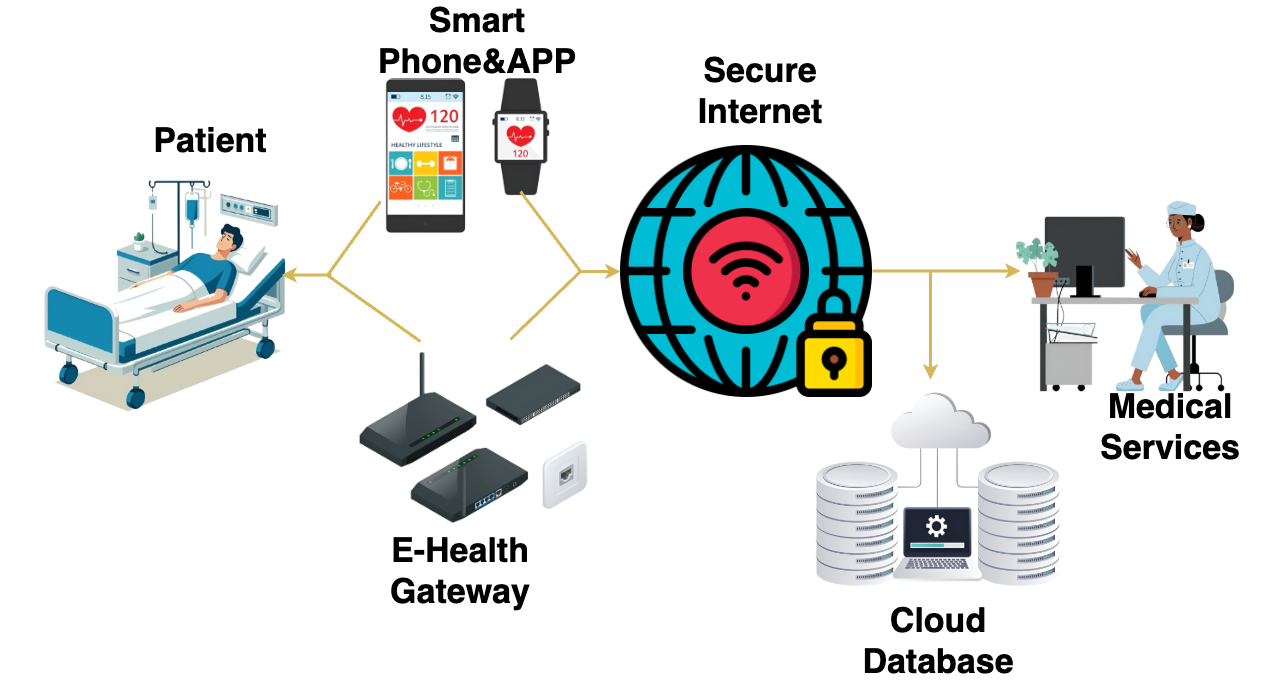
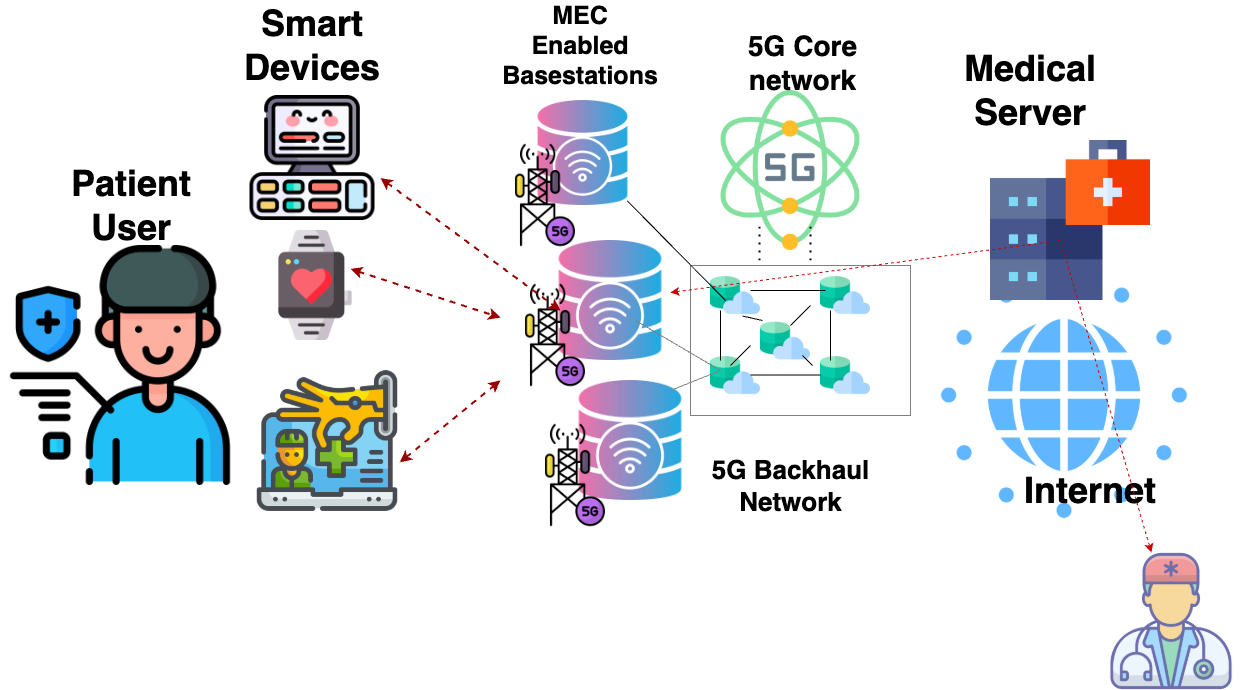
Remote patient monitoring is crucial in modern healthcare, but current systems struggle with real-time analysis and prediction of vital signs. This paper presents a novel architecture combining deep learning with 5G network capabilities to enable real-time vital sign monitoring and prediction. The proposed system utilizes a hybrid CNN-LSTM model optimized for edge deployment, paired with 5G Ultra-Reliable Low-Latency Communication (URLLC) for efficient data transmission. The architecture achieves end-to-end latency of 14.4ms while maintaining 96.5% prediction accuracy across multiple vital signs. Our system shows significant improvements over existing solutions, reducing latency by 47% and increasing prediction accuracy by 4.2% compared to current state-of-the-art systems. Performance evaluations conducted over three months with data from 1000 patients validate the system's reliability and scalability in clinical settings. The results demonstrate that integrating deep learning with 5G technology can effectively address the challenges of real-time patient monitoring, leading to early detection of deteriorating conditions and improved clinical outcomes. This research establishes a framework for reliable, real-time vital sign monitoring and prediction in digital healthcare.
研究の動機と目的
- 既存のリモート患者モニタリング(RPM)システムのリアルタイムバイタルサイン分析と予測の限界を解消する。
- エッジデプロイメントに最適化された深層学習フレームワークを開発し、複数のバイタルサインをリアルタイムで処理する。
- 伝送遅延を最小化し信頼性を向上させるため、ネットワークスライシングを用いた5G URLLCを活用する。
- サブ秒遅延と高予測精度を持つエンドツーエンドのリアルタイム性能をバイタルサイン全体で実証する。
- 大規模臨床データを用いてアプローチを検証し、臨床現場でのスケーラビリティと実用性を評価する。
提案手法
- マルチバイタルサイン分析のためのアテンション機構を備えたハイブリッドCNN-LSTMニューラルネットワークを開発。
- リアルタイム制約を満たすためのエッジデプロイメントとモデル量子化を実装。
- QoSとサブミリ秒遅延を保証するための5G URLLCとネットワークスライシングを統合。
- 信号品質のためのスライディングウィンドウ(500サンプル、ストライド100)と適応フィルタリングを備えたデータ処理パイプラインを採用。
- ベイズ最適化(Optuna)によるモデル訓練と、コサインアニーリング学習率スケジュールを用いた最適化。
- 3か月のデプロイメントで1000名のICU患者データを用いてエンドツーエンドの遅延と精度を評価。
実験結果
リサーチクエスチョン
- RQ1アテンションを備えたCNN-LSTMアーキテクチャは複数のバイタルサインのリアルタイム予測精度を提供できるか?
- RQ25G URLLCとエッジコンピューティングの統合によりRPMの遅延はどれくらい削減できるか?
- RQ3提案システムの臨床現場でのエンドツーエンドの性能(精度と遅延)は1000人の患者でどうなるか?
- RQ4既存のRPMソリューションと比較して、精度、遅延、リソース効率はどうなるか?
- RQ5現実世界の医療環境でソリューションを拡張するために必要なデプロイメントとデータ処理戦略は何か?
主な発見
| Processing Stage | Average (ms) | Peak (ms) | Standard Deviation (ms) |
|---|---|---|---|
| データ収集 | 2.3 | 3.1 | 0.4 |
| ネットワーク伝送 | 0.8 | 1.2 | 0.2 |
| エッジ処理 | 4.2 | 5.7 | 0.6 |
| モデル推論 | 7.1 | 8.9 | 0.8 |
| Total Pipeline | 14.4 | 18.9 | 1.2 |
- エンドツーエンドの遅延は14.4 ms、ステージ別にサブ10 msの処理、ピークは18.9 ms。
- 予測MAE: 心拍数1.82%、血圧2.14%、呼吸数1.95%。
- 全体のシステム精度は、クリティカルケアで96.5%、術後で95.8%、一般病棟で97.2%。
- 提案システムは遅延と精度の点でSystem A–Cを上回り、次点システムより遅延を47%削減、精度を4.2%向上。
- リソース使用率はCPU ~45%、GPU ~38%、メモリ ~52%、ネットワーク ~6.2 Mbps、10 Mbps配分下で効率的。
- エンドツーエンドの遅延内訳はサブミリ秒級のネットワーク伝送と顕著なエッジ処理を確認。
より良い研究を、今すぐ始めましょう
論文設計から論文執筆まで、研究時間を劇的に削減しましょう。
クレジットカード登録不要
このレビューはAIが作成し、人間の編集者が確認しました。