
[論文レビュー] Renewable energy communities: do they have a business case in Flanders?
本研究では、ブルージュ地域の再生可能エネルギー共同体(RECs)の経済的実現可能性を、156のシナリオを対象に混合整数線形プログラミング(MILP)モデルを用いて評価する。結果として、RECsは通常の運用状況と比較して電気料金を10–26%削減するが、個々のスマートホームと比較すると4–6%の削減にとどまる。容量課金制とシステムの柔軟性が、コスト削減と蓄電池の導入を顕著に促進する。
Renewable energy communities (RECs) are prominent initiatives to provide end consumers an active role in the energy sector, raise awareness on the importance of renewable energy (RE) technologies and increase their share in the energy system thus reducing greenhouse gas emissions. The economic viability of RECs though, depends on multiple interdependent factors that require careful examination for each individual context. This study aims at investigating the impact of electricity tariffs, ratio of electrification of heating and transportation sectors, prices of RE technologies and storage systems, and internal electricity exchange prices on the annual cost for electricity provision of a REC. A mixed-integer linear model is developed to minimize energy provision costs for a representative REC in Flanders, Belgium. The results indicate that RECs have the potential to reduce these costs by 10 to 26% compared to business-as-usual. This cost reduction depends on the type of electricity tariffs and the level of uptake of flexible assets such as heat pumps and electric vehicles. The shift towards a higher power component in the electricity tariff makes electricity storage systems more attractive, which leads to higher electricity self-consumption. The introduction of flexible assets adds the possibility to shift demand when tariffs are lower and makes larger sizes of photovoltaic systems economically viable due to the increase in the total electricity demand. However, RECs cost reduction compared to individual smart-homes amounts to only 4% - 6% in the best cases. Uncertainties stemming from the regulation and the costs of setting up a REC may reduce the estimated benefits.
研究の動機と目的
- 異なる課税制度および技術シナリオ下でのFlanders地域における再生可能エネルギー共同体(RECs)の経済的実現可能性を評価すること。
- 電気料金制度、電気化水準、および柔軟性を持つ資産が、RECのコスト効率と再生可能エネルギー統合に与える影響を分析すること。
- 蓄電池エネルギー貯蔵システム(BESS)および太陽光発電(PV)システムが、RECs内での電気料金削減に果たす役割を評価すること。
- RECのパフォーマンスを個々のスマートホームと比較し、純経済的利点を特定すること。
- RECのコスト削減および技術導入に影響を与える主な要因(課税制度構造やシステムの柔軟性など)を同定すること。
提案手法
- Flanders地域の代表的RECの年間電気供給コストを最小化するため、混合整数線形プログラミング(MILP)モデルを構築した。
- 電気料金制度(体積課金対比容量課金)、PVおよびBESSの容量、および暖房・輸送分野の電気化水準を変化させることで、合計156の異なるシナリオをシミュレーションした。
- 蓄電池(BESS)、ヒートポンプ、電気自動車充電器の動的制御を組み込み、需要シフトとピーク負荷低減を可能にした。
- エネルギー効率を評価する指標として、自己消費率と自己充足率を用いた。
- 構造的要因および価格要因の影響を明確にするために、負荷および日射量プロファイルの完全な予測を仮定した。
- 異なる課税制度と柔軟性水準の下で結果を検証し、感度および妥当性を評価した。
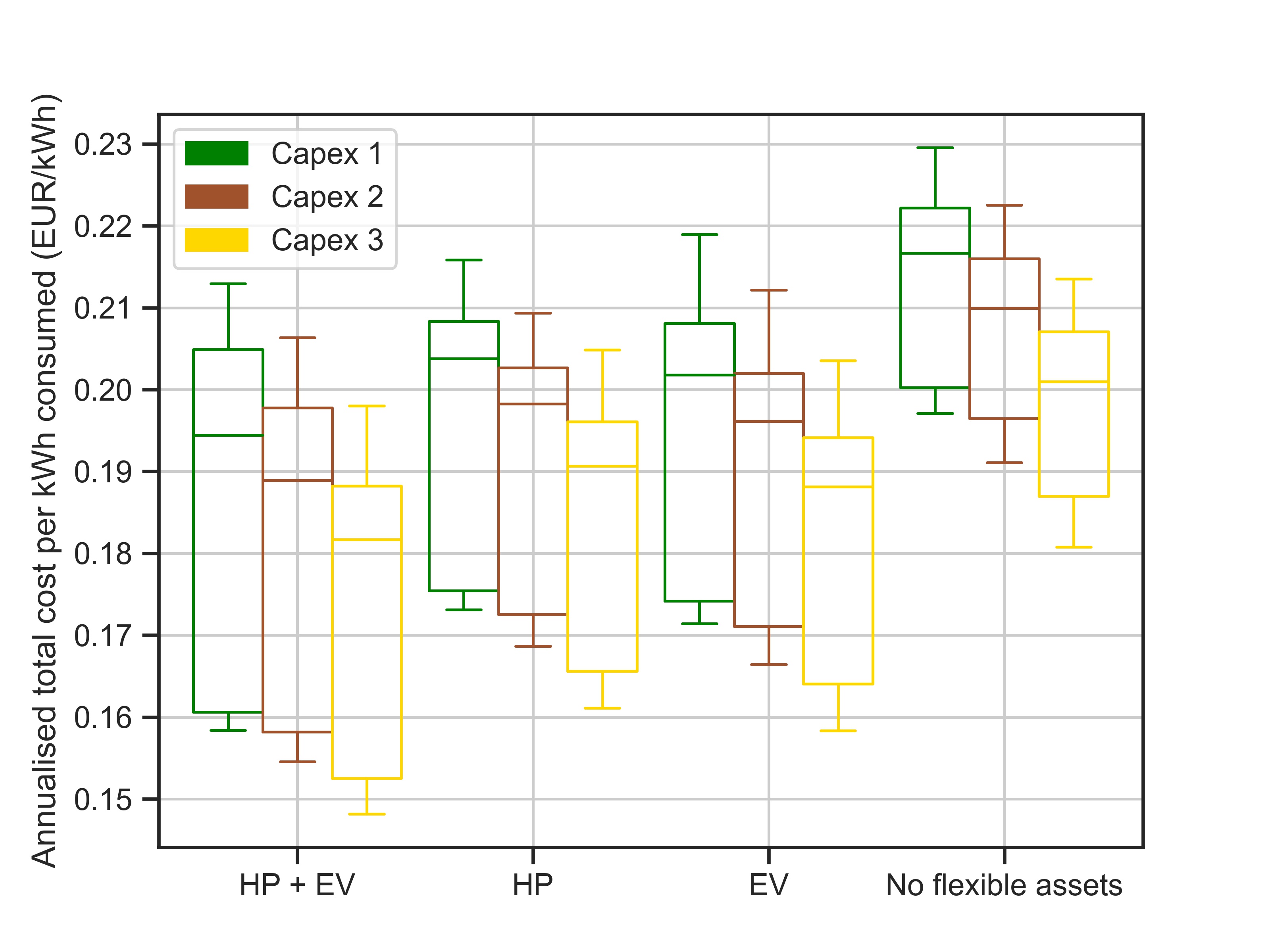
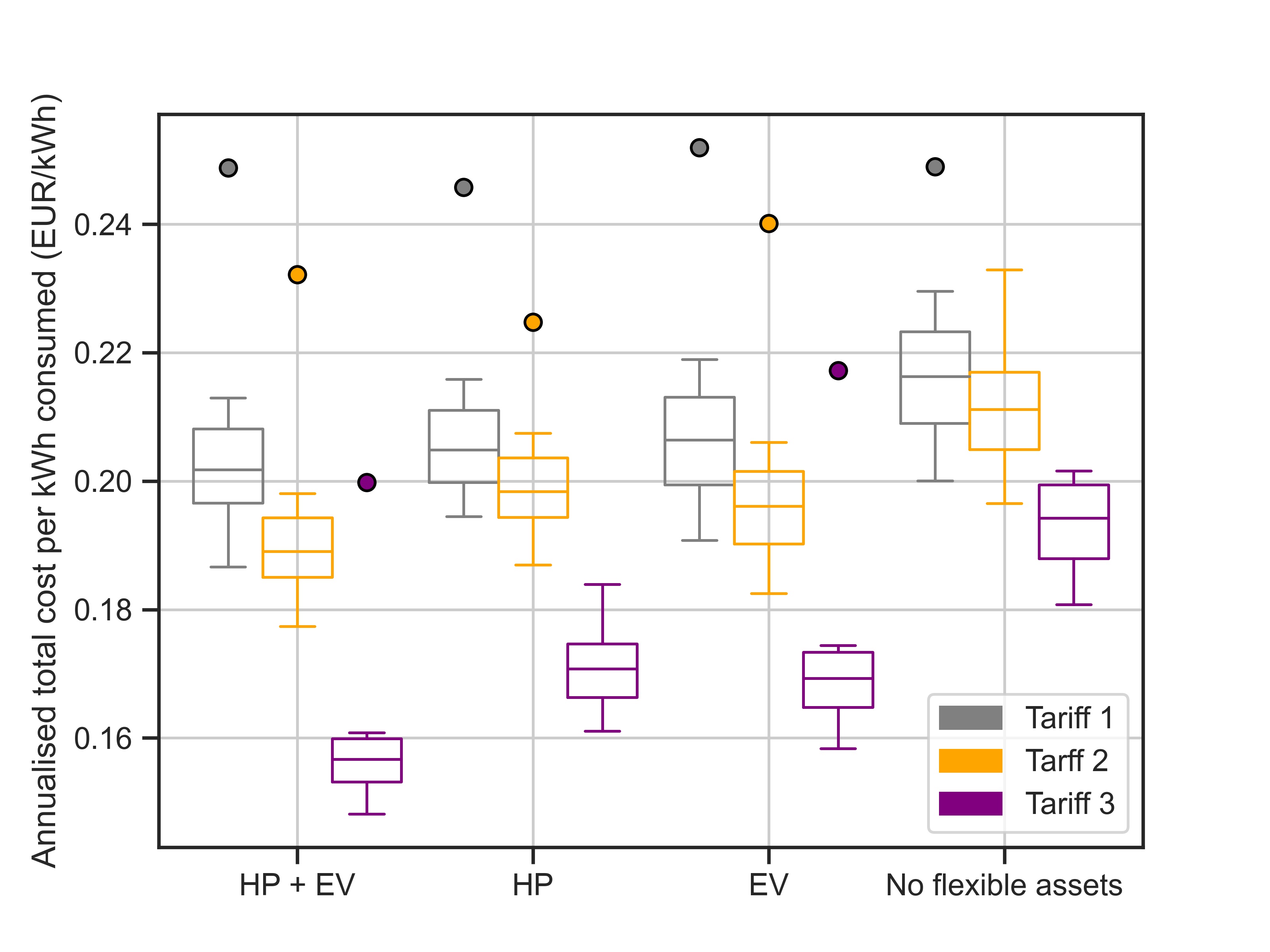
実験結果
リサーチクエスチョン
- RQ1Flanders地域において、RECsは通常の電気供給と比較して、どの程度コスト優位性を有するか?
- RQ2異なる電気料金制度(体積課金対比容量課金)が、RECsの経済的パフォーマンスにどのように影響するか?
- RQ3暖房および輸送分野の電気化が、RECのコスト削減および技術導入にどの程度影響を与えるか?
- RQ4柔軟性を持つ資産(例:BESS、ヒートポンプ、EV)の導入が、RECの経済的実現可能性および自己消費に与える影響は?
- RQ5個々のスマートホーム(自家発電付き)と比較した場合、RECを結成する際の純経済的利点は何か?
主な発見
- RECsは、課税制度構造や柔軟性の水準に応じて、通常の運用状況と比較して年間電気料金を10–26%削減する。
- 個々のスマートホームと比較した場合、RECsのコスト優位性は最良ケースにおいてもわずかに4–6%にとどまり、純経済的利点は限定的である。
- 容量課金制は、蓄電池エネルギー貯蔵システム(BESS)の経済的魅力を顕著に高め、体積課金制よりも導入が容易になる。
- 暖房および輸送分野の電気化水準が高いほど、全体の電気需要が増加し、これにより大容量の太陽光発電(PV)システムのコスト効率が向上する。
- システムの柔軟性により、より効果的な需要シフトが可能となり、ピーク負荷が低減し、特に動的課金または容量課金制の下で全体コストが低下する。
- 規制の不確実性や、管理および技術的初期費用(行政的・技術的コスト)が考慮されていないことにより、REC形成による推定利益が希釈される可能性がある。
より良い研究を、今すぐ始めましょう
論文の読解から最終レビューまで、研究時間を劇的に削減しましょう。
クレジットカード登録不要
このレビューはAIが作成し、人間の編集者が確認しました。