
[論文レビュー] Scientific Talent Leaks Out of Funding Gaps
本研究は、米国国勢調査の納税記録とNIH助成金データを用いて、30日を超える助成金支払いの遅延が科学的労働力に著しい影響を及ぼすことを示している。単一のR01助成金に依存する研究室の研究者では、米国外での就労の可能性が40%高くなる。全国的な非就労の5%が助成金の空白に起因している。研究訓練を受けている人材は収入と論文発表数の両方でより顕著な低下を示し、学術的研究助成の制度的不安定性が顕著に表れている。
We study how delays in NIH grant funding affect the career outcomes of research personnel. Using comprehensive earnings and tax records linked to university transaction data along with a difference-in-differences design, we find that a funding interruption of more than 30 days has a substantial effect on job placements for personnel who work in labs with a single NIH R01 research grant, including a 3 percentage point (40%) increase in the probability of not working in the US. Incorporating information from the full 2020 Decennial Census and data on publications, we find that about half of those induced into nonemployment appear to permanently leave the US and are 90% less likely to publish in a given year, with even larger impacts for trainees (postdocs and graduate students). Among personnel who continue to work in the US, we find that interrupted personnel earn 20% less than their continuously-funded peers, with the largest declines concentrated among trainees and other non-faculty personnel (such as staff and undergraduates). Overall, funding delays account for about 5% of US nonemployment in our data, indicating that they have a meaningful effect on the scientific labor force at the national level.
研究の動機と目的
- NIH R01助成金の支払い遅延が、研究者職員のキャリア形成に与える影響を評価すること。
- 助成金の中断が、科学者における就労場所、収入、論文発表活動に与える影響を数量的に評価すること。
- 特に単一のR01助成金に依存する研究室において、助成金の不安定さが人材流出と労働市場の混乱を引き起こすかどうかを評価すること。
- 年次予算編成サイクルと助成金の不確実性が、科学的人材資本の維持に与える広範な影響を検討すること。
提案手法
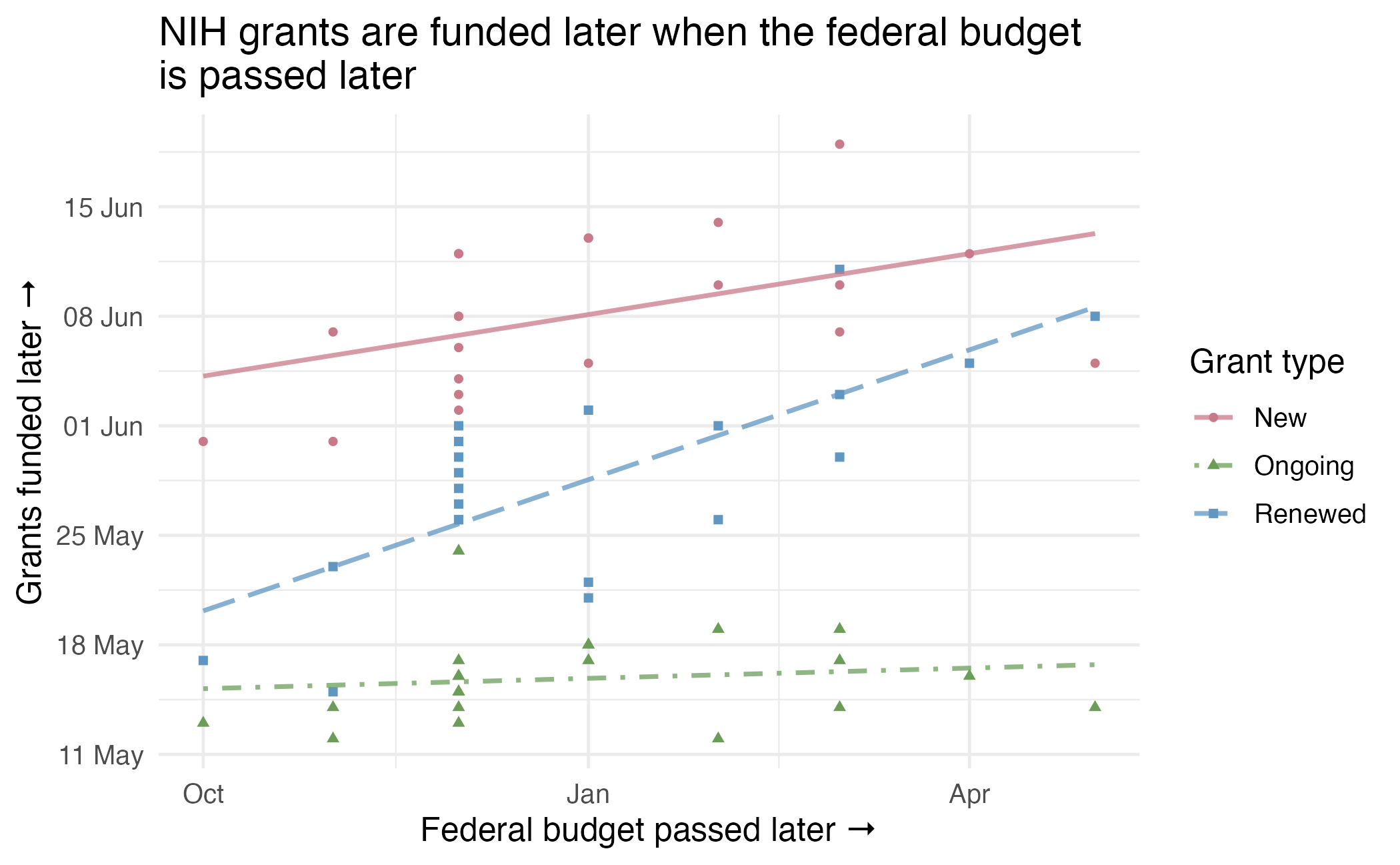
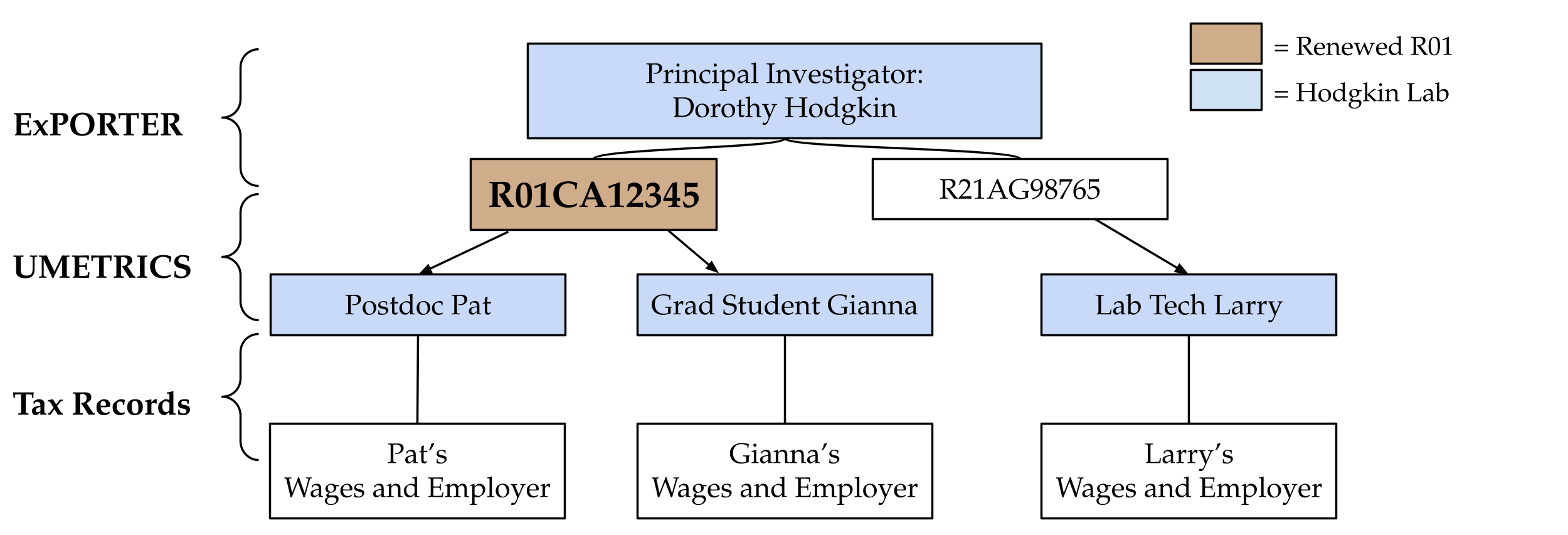
- 米国国勢局の収入および納税記録と、大学のNIH R01助成金取引データを連携して使用する。
- 助成金支払いが遅延した研究室と継続的に助成金を受けている研究室を比較する差の差(difference-in-differences)設計を採用する。
- 2020年の十年に一度の国勢調査データと論文記録を統合し、国際的移住や研究生産性といった長期的結果を評価する。
- 研究者種別(例:ポスドク、大学院生、スタッフ、教員)ごとに助成金遅延の影響を別々に分析する。
- 助成金遅延が非就労や労働市場の結果に与える全国的規模の影響を推定する。
- 出身国、訓練レベル、機関特性などの交絡要因を制御する。
実験結果
リサーチクエスチョン
- RQ130日を超える助成金遅延は、単一のR01助成金に依存する研究室の研究者にとって、米国労働市場から離脱する確率にどのように影響するか?
- RQ2助成金の中断は、影響を受ける研究者の収入と論文発表数にどのような影響を与えるか?
- RQ3助成金遅延の影響は、研究者種別(例:訓練生 vs. 教員)によってどのように異なるか?
- RQ4助成金遅延は、科学的労働力における全国的非就労にどの程度寄与しているか?
- RQ5助成金の不安定さに起因する労働市場の混乱の背後にあるメカニズムは何か?
主な発見
- 30日を超える助成金の中断は、単一のR01助成金に依存する研究室の研究者において、米国で働かない確率を3パーセンテージポイント(相対的に40%増加)上昇させる。
- 非就労に追い込まれた者の約半数が永続的に米国を離脱し、1年間に論文を発表する可能性は90%低い。
- 米国に留まる者についても、助成金が中断された研究者は継続的に助成金を受けている同僚に比べて収入が20%低い。特に訓練生および非教員スタッフで収入の低下が顕著である。
- 助成金遅延は、研究対象サンプル内での科学的労働力における非就労の約5%を占めており、全国的規模での影響が顕著であることを示している。
- 負の影響は特に訓練生(ポスドクおよび大学院生)に顕著で、収入と論文発表数の両方が著しく低下する。
- 本研究の結果は、とりわけ単一助成金に依存する研究室における助成金の不安定さが、科学的人材の維持と生産性に顕著かつ測定可能な影響を及ぼしていることを示唆している。
より良い研究を、今すぐ始めましょう
論文の読解から最終レビューまで、研究時間を劇的に削減しましょう。
クレジットカード登録不要
このレビューはAIが作成し、人間の編集者が確認しました。