
[論文レビュー] SENSEI: First Direct-Detection Results on sub-GeV Dark Matter from SENSEI at SNOLAB
SENSEIはSNOLABで六つのSkipper-CCDsを用いてサブGeVのダークマターの初の直接検出結果を報告し、DM-電子散乱、MigdalベースのDM-核散乱、暗黒フォトンDM吸収に関する世界をリードする制限を提供する。露出は534.9 g-daysで、背景低減分析を詳述。
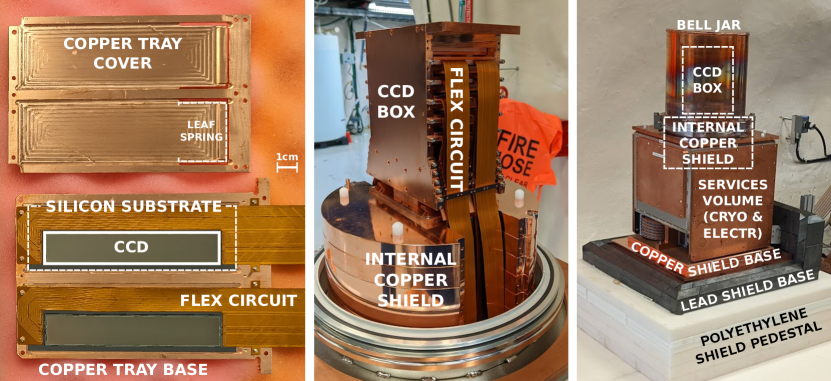
We present the first results from a dark matter search using six Skipper-CCDs in the SENSEI detector operating at SNOLAB. We employ a bias-mitigation technique of hiding approximately 46% of our total data and aggressively mask images to remove backgrounds. Given a total exposure after masking of 100.72 gram-days from well-performing sensors, we observe 55 two-electron events, 4 three-electron events, and no events containing 4 to 10 electrons. The two-electron events are consistent with pileup from one-electron events. Among the 4 three-electron events, 2 appear in pixels that are likely impacted by detector defects, although not strongly enough to trigger our "hot-pixel" mask. We use these data to set world-leading constraints on sub-GeV dark matter interacting with electrons and nuclei.
研究の動機と目的
- 地下実験施設での地下環境下で、サブ電子閾値検出器を用いてサブGeVダークマターを探索する動機づけ。
- SNOLABでのSENSEIの六つのSkipper-CCDと534.9 g-days露出からの初結果を提示。
- 潜在的なDM信号を分離するための背景低減マスクの一連の開発と適用。
- 分析に基づくLikelihoodフレームワークを用いて、DM-電子散乱、Migdal介在のDM核散乱、暗黒フォトンDM吸収の制限を定量する。
提案手法
- 単一電子分解能を持つ六つのSkipper-CCDセンサーを用いて低エネルギーの電子ホール対を検出。
- ピクセルごとのしきい値電荷を定義し、クラスターを非零ピクセルの連続グループとして同定。
- 複数段階の背景マスキング戦略を適用(ホット画像、リードアウトノイズ、欠陥ピクセル/カラム、フルウェルイベント、低エネルギークラスタ半径、クラスタ形状、水平クラスタ)を用いてクリーンなデータセットを構築。
- 拡散と誤同定効率をモデル化してマスキング後の有効露出を計算。
- 1e-イベントからのピルアップ背景を推定し、露出と背景の不確実性をリミット設定手順へ伝搬。
- 尤度比検定を実施し、既知のピルアップ背景を組み込み、さまざまなDM相互作用仮説に対して90%信頼区間の限界を導出。
実験結果
リサーチクエスチョン
- RQ1SNOLABでのSkipper-CCD技術を用いてシリコン中のサブGeVダークマターが電子とどのように相互作用するかの制約は?
- RQ2Migdal効果ベースのDM核散乱と暗黒フォトンDM吸収はSENSEI SNOLABデータで探れますか?
- RQ3背景低減戦略はSkipper-CCDの低質量DM信号に対する感度にどのように影響しますか?
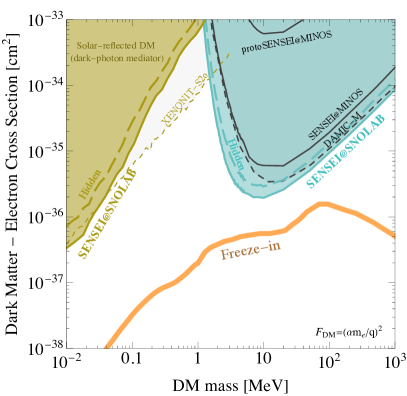
- RQ4分析露出に対して、光/重媒介子搭載のDM-電子散乱、Migdal効果によるDM核散乱、暗黒フォトン吸収の90%CL上限はどうなるか?
- RQ5観測された低エネルギーの2eおよび3eイベントは、期待背景と整合するか、または検出器特有の効果の示唆か?
主な発見
- マスキング後に2eで55イベント、3eで4イベントを観測。2eはピルアップ背景と一致、3eは検出器効果と一致。
- 4–10eのイベントは観測されず、26-e-イベントを観測したがCompton背景と一致(一つ注目の高エネルギーイベント)。
- ハローDM-電子散乱の世界最先端90%CLを設定、Light/HV mediators、Migdal効果によるDM核散乱、暗黒フォトンDM吸収に対して、複数の質量/媒介ギャップで従来のSENSEI限界を改善。
- 結合データは前回より厳しい限界、例えば最大尤度2e-レート: 8.57×10^-2 g^-1 day^-1 (隠れデータ) で90%CL上限3.25×10^-1 g^-1 day^-1; 3e-: 最大尤度6.85×10^-2 g^-1 day^-1 で90%CL上限1.49×10^-1 g^-1 day^-1。
- 解析は背景モデリング、象限ベースのホットイメージマスキング、低エネルギークラスタマスキングを強調し、系統誤差を抑え潜在的DM信号を分離。
- 将来のデータセット拡大とマスキング改善で低質量DMの感度をさらに高める見込み。
より良い研究を、今すぐ始めましょう
論文設計から論文執筆まで、研究時間を劇的に削減しましょう。
クレジットカード登録不要
このレビューはAIが作成し、人間の編集者が確認しました。