
[論文レビュー] Socioeconomic biases in urban mixing patterns of US metropolitan areas
本研究は、20の米国大都市圏における都市移動の社会経済的バイアスを、Foursquareのチェックインデータとアメリカン・コミュニティ・サーベイ(ACS)データを統合することで分析した。上行きバイアスの強い移動パターンが明らかになった——個人は主に自身の社会経済的階層に属する場所を訪問するが、まれに上位階層の施設へもアクセスする——これは、単なる居住地のパターンだけから予想されるよりも深刻な移動に基づく分離が生じていることを示している。
Urban areas serve as melting pots of people with diverse socioeconomic backgrounds, who may not only be segregated but have characteristic mobility patterns in the city. While mobility is driven by individual needs and preferences, the specific choice of venues to visit is usually constrained by the socioeconomic status of people. The complex interplay between people and places they visit, given their personal attributes and homophily leaning, is a key mechanism behind the emergence of socioeconomic stratification patterns ultimately leading to urban segregation at large. Here we investigate mixing patterns of mobility in the twenty largest cities of the United States by coupling individual check-in data from the social location platform Foursquare with census information from the American Community Survey. We find strong signs of stratification indicating that people mostly visit places in their own socioeconomic class, occasionally visiting locations from higher classes. The intensity of this `upwards bias' increases with socioeconomic status and correlates with standard measures of racial residential segregation. Our results indicate an even stronger socioeconomic segregation in individual mobility than one would expect from system-level distributions, shedding further light on uneven mobility mixing patterns in cities.
研究の動機と目的
- 社会経済的地位が都市空間における個人の移動パターンおよび混在にどのように影響するかを調査すること。
- 上行きバイアスの度合いを定量化し、多様な米国大都市圏における居住地分離との相関関係を明らかにすること。
- 居住地分離の指標が捉えきれない、移動パターンが示す社会経済的分層の強さを評価すること。
- 同質性(ホモフィリー)と空間的制約が、社会経済的階層間での都市施設へのアクセス格差をどのように形成しているかを検討すること。
- 移動バイアス、居住地分離、民族的クラスタリングの相互作用が、都市格差をどのように形作っているかを検討すること。
提案手法
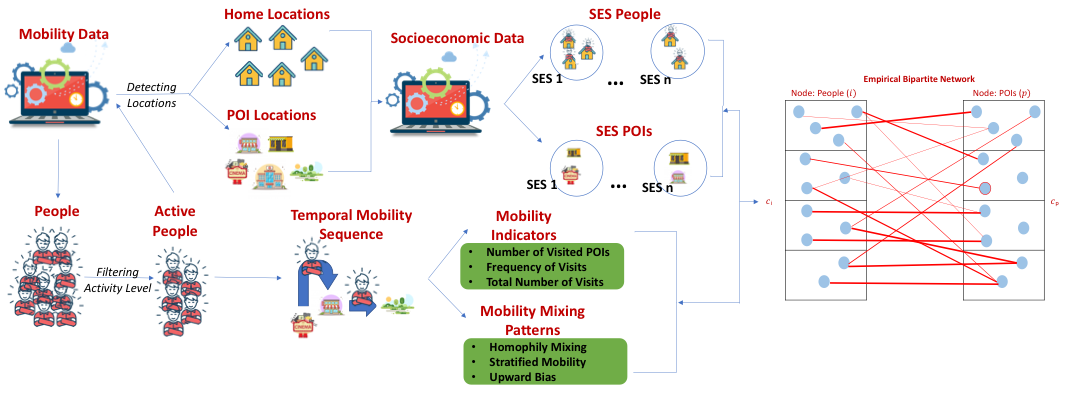
- 匿名化されたFoursquareのチェックイン軌跡を、アメリカン・コミュニティ・サーベイ(ACS)の集計地域レベルの詳細な社会経済的データと統合した。
- 異なる社会経済的階層に属する個人が、どの場所をどれだけ訪問するかを定量化するための階層化マトリクスを構築した。
- 個人および階層レベルの移動バイアススコアを計算し、上位または下位への訪問傾向の強さを測定した。
- 地理的距離の影響を制御するため、個人の自宅集計地域への訪問を除外して再計算し、距離バイアスとは独立した社会経済的要因の影響を分離した。
- 個人の移動バイアスを中央値のバイアスなし基準と比較するためにzスコアを用い、都市間での訪問パターンの比較を可能にした。
- 民族的および社会経済的クラスタを可視化し、居住地の民族的分離と移動分離の相関関係を探った。
実験結果
リサーチクエスチョン
- RQ1米国大都市圏の住民は、予想よりも高い社会経済的階層の場所を訪問する程度はどの程度か?
- RQ2居住地分離度合いが異なる都市間で、移動バイアスの大きさはどのように変化するか?
- RQ3移動に基づく分離は、民族的居住地分離や他の社会経済的指標とどの程度相関しているか?
- RQ4自宅集計地域の訪問を除外した後も、観察された移動バイアスのパターンが変化するか。距離そのものが分離を説明する要因ではないことを示唆するか?
- RQ5人種や収入といった個人的属性が、移動パターンおよび都市内での混在ダイナミクスにどのように作用するか?
主な発見
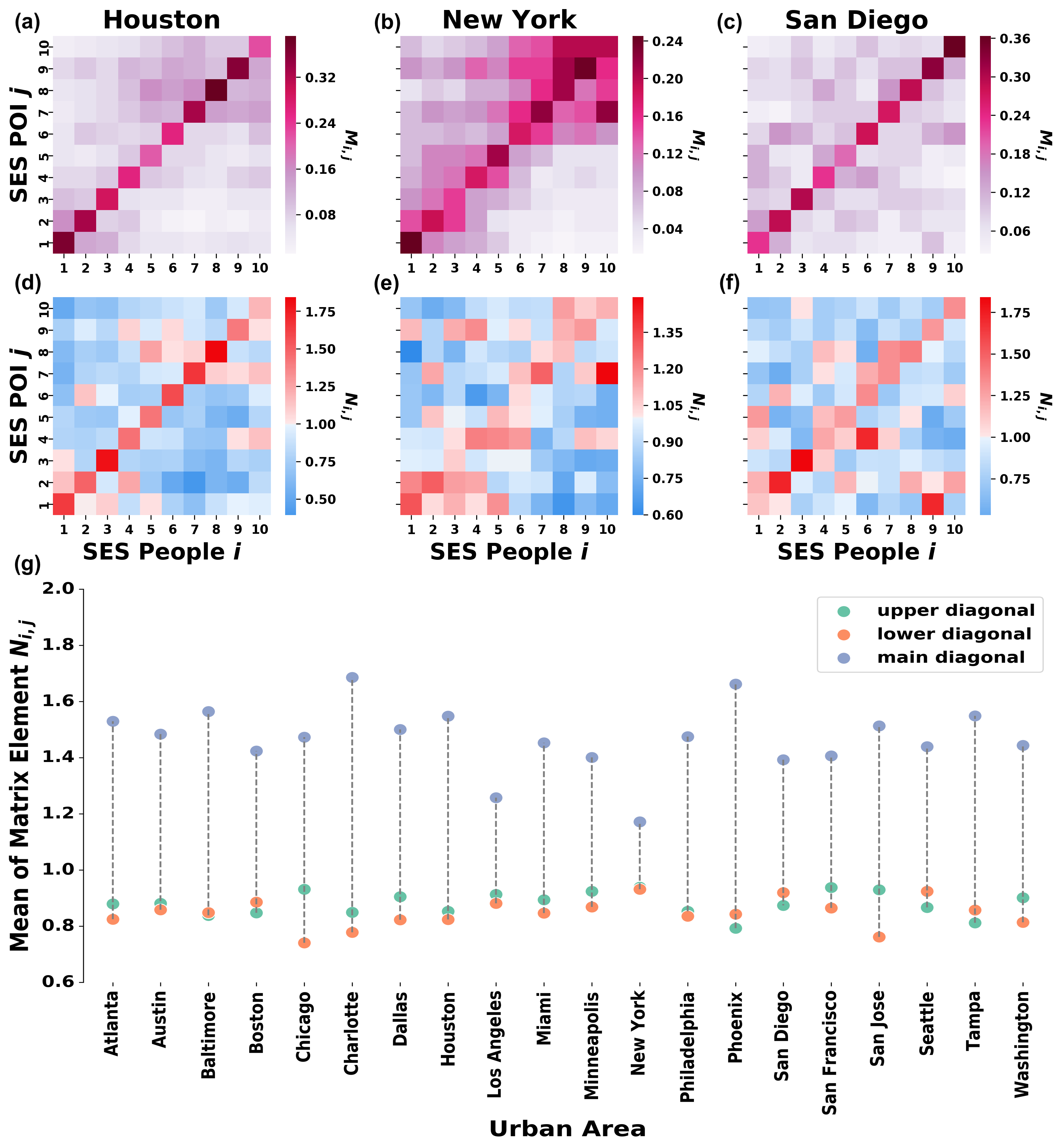
- 米国の大都市圏20か所すべてで、上行きバイアスの移動が見られ、上位社会経済的階層に属する人々が裕福な場所を訪問する傾向が強いことが明らかになった。
- 上行きバイアスの強度は、個人自身の社会経済的階層が高くなるにつれて増大し、上位階層の都市施設へのアクセスの勾配が存在することが示された。
- 自宅集計地域の訪問を除外した後も、移動バイアスのzスコアは一貫して中央値を上回り、距離ではなく社会経済的階層が訪問パターンを決定づけていることを裏付けた。
- ヒューストンやサンディエゴのような都市では、ニューヨークに比べて移動パターンにおける分離度が顕著に強く、階層間の統合が薄いことが判明した。
- 可視化分析から、移動データにおける民族的および社会経済的クラスタが、居住地分離のパターンと密接に一致しており、居住地と移動に基づく格差の間には体系的な関連があることが示唆された。
- 本研究では、居住地分離の指標だけから予測されるよりも、移動に基づく分離が顕著であることが判明し、都市格差の動的な側面が浮き彫りになった。
より良い研究を、今すぐ始めましょう
論文の読解から最終レビューまで、研究時間を劇的に削減しましょう。
クレジットカード登録不要
このレビューはAIが作成し、人間の編集者が確認しました。