
[論文レビュー] Stacking disorder and thermal transport properties of $α$-RuCl$_3$
本研究は、高品質なα-RuCl₃単結晶において、わずかな積層不全でさえも構造転移温度、磁気秩序化温度(T_N)および格子熱伝導率を顕著に抑制することを明らかにした。同じような振動的熱伝導度および熱ホール抵抗度の特徴が複数の試料で観察されるにもかかわらず、わずかな積層不全を有する結晶はより高い熱伝導度を示し、熱ホール伝導度を半整数量子化値に近づける。これは、このキタエフ量子スピン液体候補において、層間結合が果たす重要な役割を示している。
$α$-RuCl$_3$, a well-known candidate material for Kitaev quantum spin liquid, is prone to stacking disorder due to the weak van der Waals bonding between the honeycomb layers. After a decade of intensive experimental and theoretical studies, the detailed correlation between stacking degree of freedom, structure transition, magnetic and thermal transport properties remains unresolved. In this work, we reveal the effects of a small amount of stacking disorder inherent even in high quality $α$-RuCl$_3$ crystals. This small amount of stacking disorder results in the variation of the magnetic ordering temperature, suppresses the structure transition and thermal conductivity. Crystals with minimal amount of stacking disorder have a T$_N>$7.4\,K and exhibit a well-defined structure transition around 140\,K upon cooling. For those with more stacking faults and a T$_N$ below 7\,K, the structure transition occurs well below 140\,K upon cooling and is incomplete, manifested by the diffuse streaks and the coexistence of both high temperature and low temperature phases down to the lowest measurement temperature. Both types of crystals exhibit oscillatory field dependent thermal conductivity and a plateau-like feature in thermal Hall resistivity in the field-induced quantum spin liquid state. However, $α$-RuCl$_3$ crystals with minimal amount of stacking disorder have a higher thermal conductivity that pushes the thermal Hall conductivity to be closer to the half-integer quantized value. These findings demonstrate a strong correlation between layer stacking, structure transition, magnetic and thermal transport properties, underscoring the importance of interlayer coupling in $α$-RuCl$_3$ despite the weak van der Waals bonding.
研究の動機と目的
- 高品質なα-RuCl₃単結晶における内在的積層不全が構造的・磁気的・熱輸送特性に与える影響を調査すること。
- α-RuCl₃における積層順序、構造転移、磁気秩序化、熱輸送の間に未解決の相関関係が存在する理由を解明すること。
- 測定可能な物理量に基づいて、最小限の積層不全を有するα-RuCl₃結晶を特定するための信頼できる実験的基準を確立すること。
- 振動的熱伝導度および熱ホール効果の特徴が内在的か外部要因由来かを明らかにし、積層不全がそれらに与える影響を解明すること。
- ヴァン・デル・ワールス結合のもとでも、弱い層間結合が巨視的輸送および磁気的挙動を決定づける役割を果たすかどうかを評価すること。
提案手法
- さまざまな積層不全度を有する高品質なα-RuCl₃単結晶の合成と特性評価。
- 磁気秩序化温度(T_N)の特定および複数の異常の検出を目的とした温度依存磁化測定。
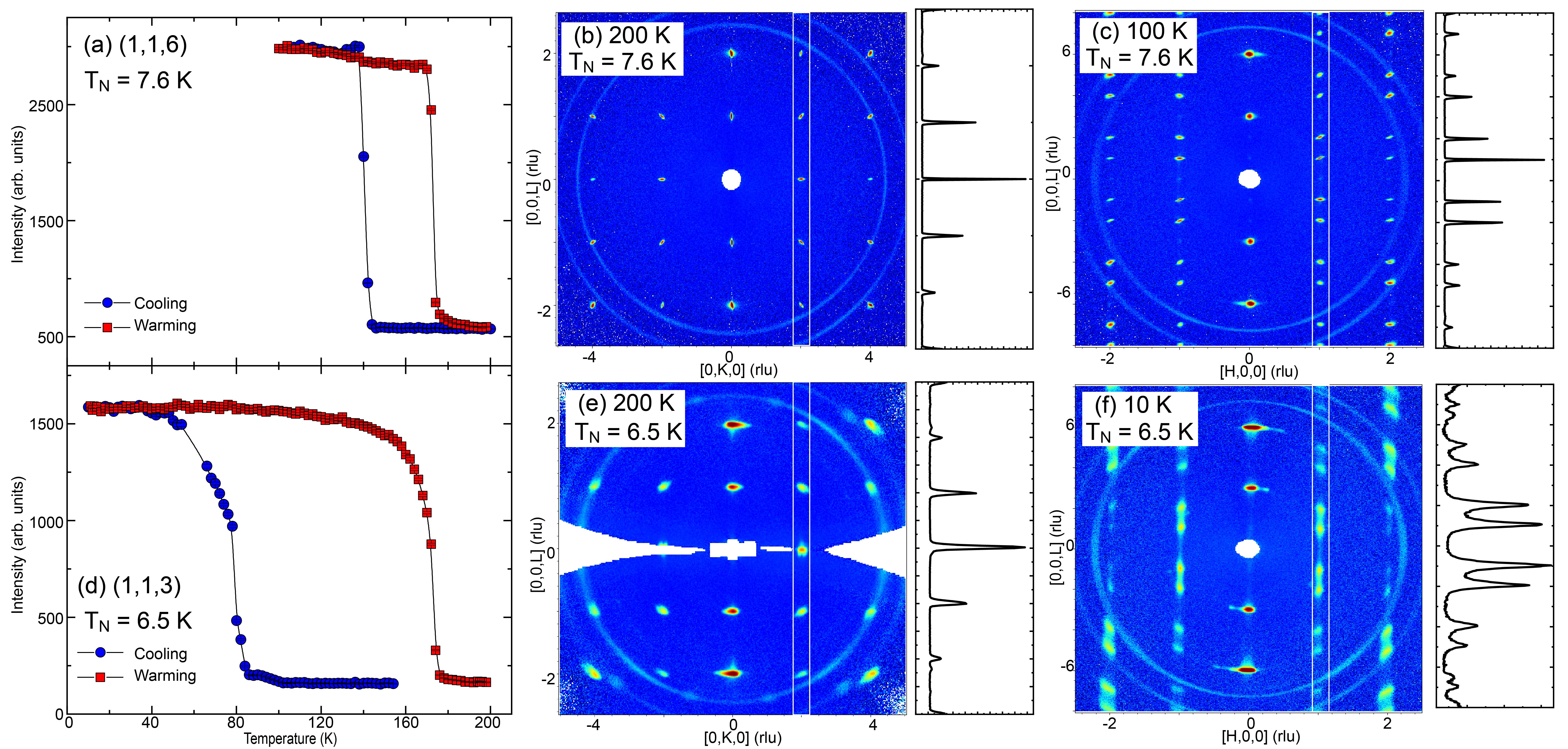
- X線および中性子回折を用いた構造転移のモニタリングおよび積層欠陥の特徴の検出。
- 磁場下での熱伝導度の定量的分析により、振動的特徴および磁場依存挙動の同定。
- 磁場誘起量子スピン液体状態における量子化挙動および磁場依存性の評価を目的とした熱ホール抵抗度の測定。
- 積層不全度とT_N、構造転移温度、熱伝導度の相関関係を分析し、選別基準を導出すること。
実験結果
リサーチクエスチョン
- RQ1α-RuCl₃におけるわずかな積層不全が冷却時の構造転移温度に与える影響は何か?
- RQ2積層不全とα-RuCl₃における磁気秩序化温度(T_N)の低下の関係は何か?
- RQ3積層不全はα-RuCl₃単結晶における格子熱伝導率にどのように影響するか?
- RQ4なぜ熱ホール伝導度の値が試料間で異なるのか?これは積層不全とどのように関係するか?
- RQ5最小限の積層不全を有するα-RuCl₃結晶を特定するための明確な実験的基準を確立できるか?
主な発見
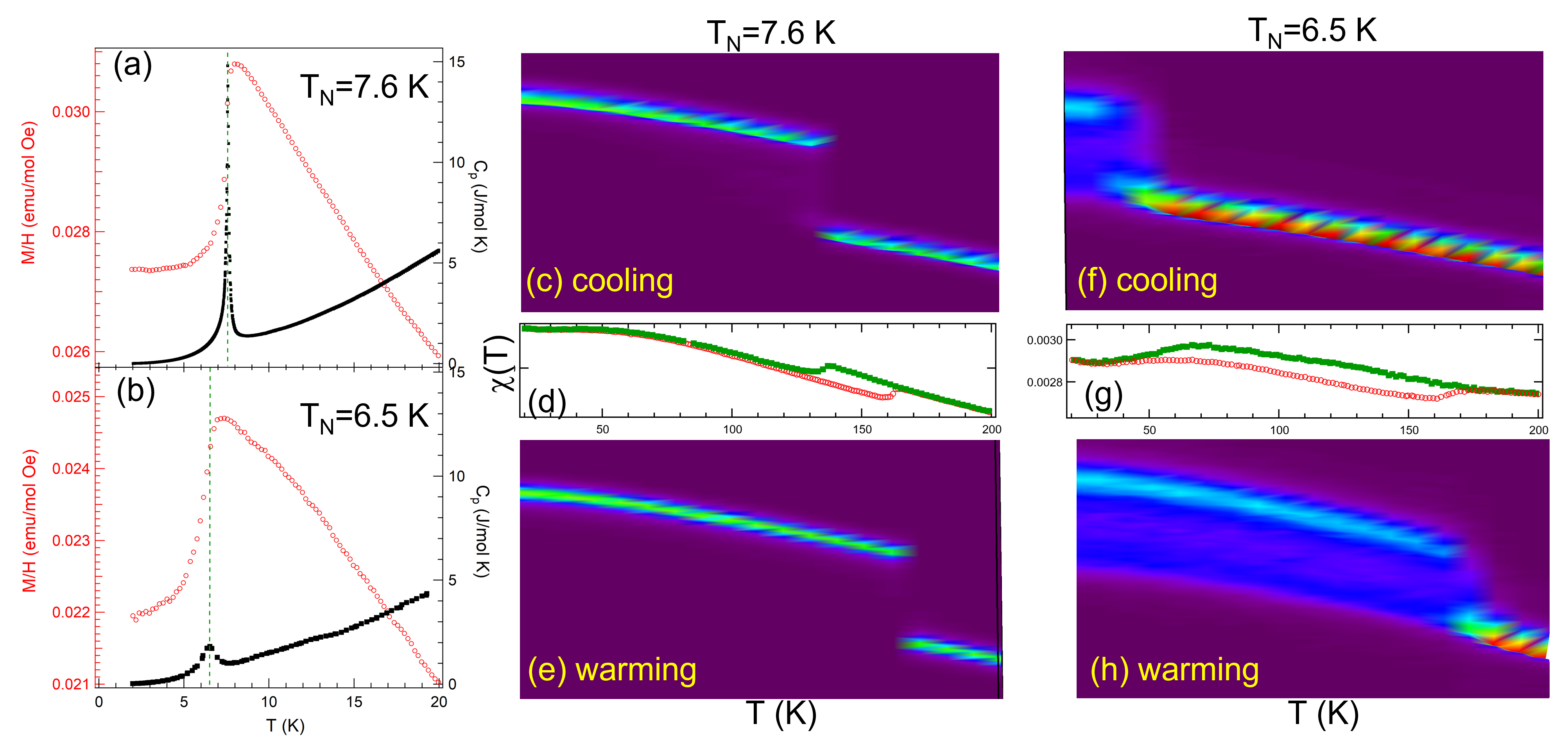
- わずかな積層不全を有するα-RuCl₃結晶は冷却時に140 K付近で明確な構造転移を示すが、不全度の高い結晶では140 K未塔で抑制され不完全な転移を示す。
- 磁気秩序化温度T_Nは積層不全度と強く相関しており、最小限の不全を有する結晶ではT_N > 7.4 K、不全度の高い結晶ではT_N < 7 Kである。
- 積層不全は構造転移温度および格子熱伝導率をともに低下させる。最小限の積層不全を有する結晶でより高い熱伝導度が観察された。
- T_Nおよび熱伝導度にばらつきがあるにもかかわらず、すべての結晶で磁場依存的熱伝導度の振動的特徴および磁場誘起量子スピン液体状態におけるプラトー様の特徴を有する熱ホール抵抗度を示した。
- 最小限の積層不全を有する結晶は、その高い縦方向熱伝導度のおかげで、熱ホール伝導度が半整数量子化値に近づいた。
- 本研究により、冷却時に140 K付近の構造転移および比熱における約7.6 K付近の単一の磁気異常は、α-RuCl₃において最小限の積層不全を示す信頼できる指標であることが判明した。
より良い研究を、今すぐ始めましょう
論文の読解から最終レビューまで、研究時間を劇的に削減しましょう。
クレジットカード登録不要
このレビューはAIが作成し、人間の編集者が確認しました。