
[論文レビュー] Status Report on the Chicago-Carnegie Hubble Program (CCHP): Measurement of the Hubble Constant Using the Hubble and James Webb Space Telescopes
本論文は、TRGB、JAGB、Cepheids の3つの独立した JWST ベースのハッブル定数の決定値と、NGC 4258 を用いてキャリブレーションした結合 H0 を報告しており、TRGB と JAGB は約1% で一致する一方、Cepheids は約2.5–4% 異なる。
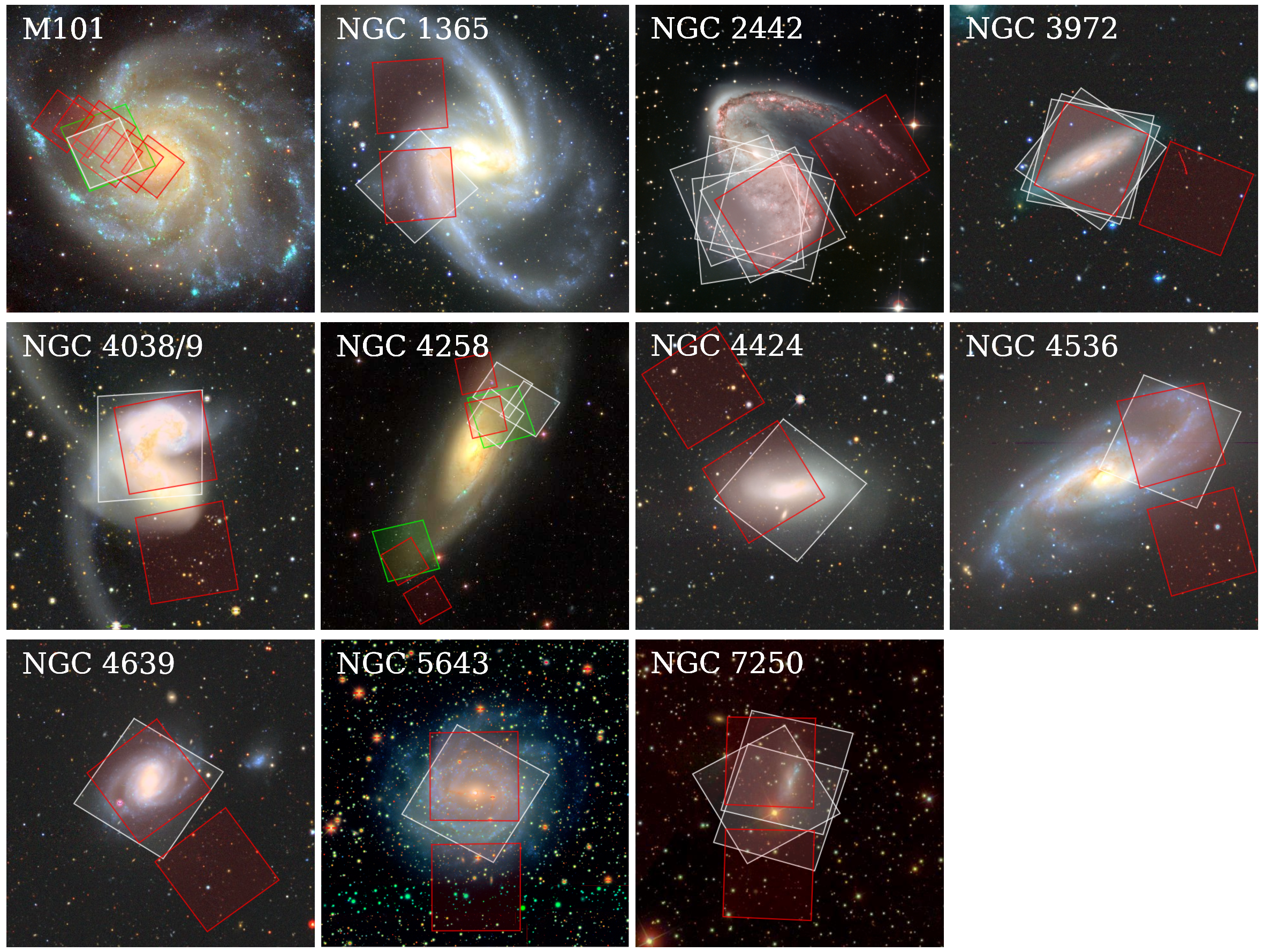
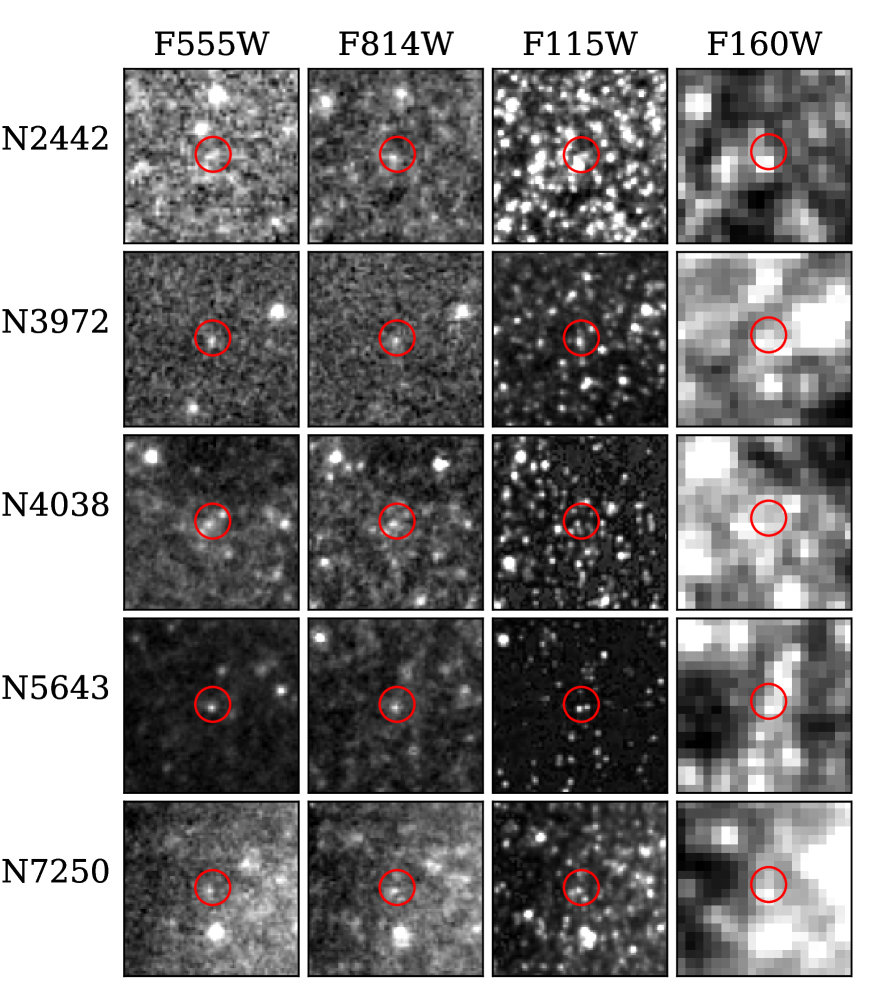
We present the latest results from the Chicago-Carnegie Hubble Program (\cchp) to measure the Hubble constant, using data from the James Webb Space Telescope (JWST). The overall program aims to calibrate three independent methods: (1) Tip of the Red Giant Branch (TRGB) stars, (2) JAGB (J-Region Asymptotic Giant Branch) stars, and (3) Cepheids. To date, our program includes 10 nearby galaxies, hosting 11 Type Ia supernovae (SNe Ia) suitable for measuring the Hubble constant ($H_0$). It also includes the galaxy NGC 4258, whose geometric distance provides the zero-point calibration. In this paper we discuss our results from the TRGB and JAGB methods. Our current best (highest precision) estimate is $H_0$ = 70.39 $\pm$ 1.22 (stat) $\pm$ 1.33 (sys) $\pm$ 0.70 ($σ_{SN}$), based on the TRGB method alone, with a total of 24 SN Ia calibrators from both HST and JWST data. Based on our new JWST data only, and tying into SNe Ia, we find values of $H_0$ = 68.81 $\pm$ 1.79 (stat) $\pm$ 1.32 (sys) for the TRGB, and $H_0$ = 67.80 $\pm$ 2.17 (stat) $\pm$ 1.64 (sys) km/s/Mpc for the JAGB method. The distances measured using the TRGB and the JAGB method agree, on average, at a level better than 1%, and with the SH0ES Cepheid distances at just over the 1% level. Our results are consistent with the current standard LambdaCDM model, without the need for the inclusion of additional new physics. Future JWST data will be required to increase the precision and accuracy of the local distance scale.
研究の動機と目的
- 局所距離尺度の系統誤差を低減して H0 を精緻化する。
- SN Ia の較正のために TRGB、JAGB、Cepheids の3つの独立した距離決定を提供する。
- 混雑と消光効果を最小化するため、JWST の高い分解能と赤外線能力を活用する。
- 幾何的基準点として NG C 4258 を用いて距離を較正する。
- 方法間で金属量や塵の影響を評価する。
提案手法
- JWST NIRCam 画像法(F115W、F356W、F444W)を用いて、10 個の SN Ia ホスト銀河と NGC 4258 における TRGB、JAGB、Cepheids の距離を取得する。
- ソース抽出のための暖機スタート方式を用いた統一的なフォトメトリック処理フレームワーク(DOLPHOT、DAOPHOT)を適用する。
- Cepheid 専有場での混雑補正を定量化するために人工星テストを実施し、ソフトウェア間での還元を比較する。
- 距離決定のバイアスを防ぐためのブラインド手順を採用し、特に JAGB と TRGB に対してブラインド化を行う(Cepheids は部分的にブラインド)。
- NGC 4258 の maser ベースの幾何学距離を用いて絶対距離規模を較正し、[O/H] を介して金属量の考慮を伝搬させる。
- 3つの距離指標を組み合わせて SN Ia キャリブレータに結びつけた後、フラットな事前分布で H0 を推定する。
実験結果
リサーチクエスチョン
- RQ1JWST 時代の TRGB、JAGB、Cepheids から得られる独立した H0 の値はいくらか?
- RQ23つの方法における JWST ベースの距離は、統計的および系統的不確実性の観点からどう比較されるか?
- RQ3TRGB と JAGB はどの程度一致し、Cepheid ベースの距離はこれらと比べてどう異なるか?
- RQ4JWST データを使用する際、距離指標に対する金属量と塵の補正はどの程度影響するか?
- RQ53つの JWST 指標を SN Ia キャリブレータに結びつけ、フラットな事前分布で得られる H0 はいくつか?
主な発見
- H0(TRGB) = 69.85 ± 1.75 (stat) ± 1.54 (sys) km s−1 Mpc−1.
- H0(JAGB) = 67.96 ± 1.85 (stat) ± 1.90 (sys) km s−1 Mpc−1.
- H0(Cepheids) = 72.05 ± 1.86 (stat) ± 3.10 (sys) km s−1 Mpc−1.
- Combined H0 (three methods with flat prior) = 69.96 ± 1.05 (stat) ± 1.12 (sys) km s−1 Mpc−1.
- TRGB と JAGB の距離は約1%レベルで一致する一方、Cepheid の距離はこれらと約2.5–4%異なる。
- JWST のみの二法(TRGB/JAGB)データからの H0 は 69.03 ± 1.75 total (km s−1 Mpc−1)。
- 結果は標準的な ΛCDM モデルと一致し、新しい物理は不要である。
- より高精度を得るには将来の JWST データが必要である。
より良い研究を、今すぐ始めましょう
論文設計から論文執筆まで、研究時間を劇的に削減しましょう。
クレジットカード登録不要
このレビューはAIが作成し、人間の編集者が確認しました。