
[論文レビュー] Tackling Cyberattacks through AI-based Reactive Systems: A Holistic Review and Future Vision
本論文は、2017年以降の進展を分析し、AI駆動の反応型システムによるサイバー攻撃対応について包括的なサーベイを提示している。機械学習やニューラルネットワークを含むAI技術が脅威検出および自動対策選定にどのように活用されているかを評価し、自律的で適応的かつ標準化されたAI駆動の防御システムのための今後の研究方向性を特定・提案している。
There is no denying that the use of Information Technology (IT) is undergoing exponential growth in today's world. This digital transformation has also given rise to a multitude of security challenges, notably in the realm of cybercrime. In response to these growing threats, public and private sectors have prioritized the strengthening of IT security measures. In light of the growing security concern, Artificial Intelligence (AI) has gained prominence within the cybersecurity landscape. This paper presents a comprehensive survey of recent advancements in AI-driven threat response systems. To the best of our knowledge, the most recent survey covering the AI reaction domain was conducted in 2017. Since then, considerable literature has been published, and therefore, it is worth reviewing it. In this comprehensive survey of the state of the art reaction systems, five key features with multiple values have been identified, facilitating a homogeneous comparison between the different works. In addition, through a meticulous methodology of article collection, the 22 most relevant publications in the field have been selected. Then each of these publications has been subjected to a detailed analysis using the features identified, which has allowed for the generation of a comprehensive overview revealing significant relationships between the papers. These relationships are further elaborated in the paper, along with the identification of potential gaps in the literature, which may guide future contributions. A total of seven research challenges have been identified, pointing out these potential gaps and suggesting possible areas of development through concrete proposals.
研究の動機と目的
- 2017年の主要なサーベイ以降のAI駆動の脅威対応システムにおける最近の進展をレビューすることで、増加する複雑さと頻度の高いサイバー攻撃に対処すること。
- 反応型サイバーセキュリティシステムに用いられる多様なAI技術を分析・比較し、脅威の検出・防止および自律的対応の能力に焦点を当てる。
- モデルの適応性、リアルタイム対応、システム標準化を含む、AI統合における重要な研究的課題を特定する。
- 強固で協働的かつスケーラブルなAI駆動のサイバーデフェンスプラットフォームの開発のための今後の研究ロードマップを提示する。
- 動的脅威環境におけるオペレータインターフェースのための生成AIや自動モデル更新のための新たな機会を検討する。
提案手法
- AIベースの脅威対応システムに関する最近の研究論文を系統的にレビューし、共通する特徴や一般的な評価基準に注目した。
- 教師あり学習や強化学習、ニューラルネットワーク、ハイブリッドアーキテクチャなどのAI技術別に研究を分類・比較した。
- 脅威検出能力、適切な対策選定能力、および進化する攻撃パターンにリアルタイムで適応する能力の観点から、システムを評価した。
- AI技術と対応メカニズムを結びつける概念的フレームワークを提案し、自動化、正確性、システムのレジリエンスに重点を置いた。
- モデルの解釈可能性、データ品質、セキュリティスタック全体におけるシステム相互運用性を含む、統合の主な課題を同定した。
- 今後の研究方向性の間の関連性を可視化するため、研究課題グラフ(図7)を導入した。
実験結果
リサーチクエスチョン
- RQ12017年以降、サイバー脅威対応システムにおけるAI技術はどのように進化し、現在の文献で支配的であるアプローチは何か?
- RQ2実際のサイバーセキュリティ環境にAI駆動の反応型システムを展開するにあたり、直面する主な技術的および運用的課題は何か?
- RQ3リアルタイムの脅威データに応じてAIモデルを効果的に更新・適応させるにはどうすればよいか?長期的な有効性を維持するには?
- RQ4生成AIは、サイバーセキュリティオペレータとの人間-AIインタラクションをどのように改善できるか?
- RQ5AIベースの対応システムの相互運用性とベンチマーク評価を可能にするために、どのような標準化およびプラットフォームレベルのソリューションが必要か?
主な発見
- 最近のAI駆動の反応型システムは、脅威検出の正確性と応答速度を向上させるために、機械学習やニューラルネットワークの利用が増加している。
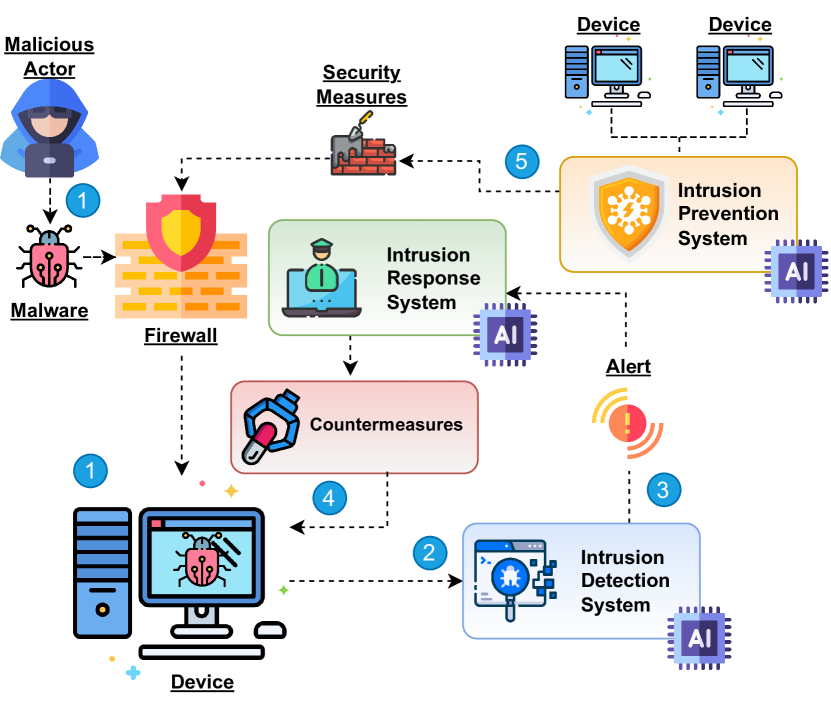
- 顕著なトレンドとして、SIEM、IDS、IPSなどの既存のセキュリティツールとAIを統合し、自動的でリアルタイムの応答ワークフローを実現している。
- 進展は見られるものの、モデルの解釈可能性、敵対的攻撃に対する耐性、動的脅威状況下でのシステムパフォーマンス維持といった課題は依然として残っている。
- 異なるAI技術を脅威対応分野でテスト・比較できる標準化されたプラットフォームの必要性が高まっているが、現状では不足している。
- 生成AIは、サイバーセキュリティオペレータ向けの直感的なインターフェースの構築に有望であるが、この分野はまだ未開拓であり、さらなる研究が求められる。
- とりわけ公的・民間セクター間の連携が、AIベースのサイバーデフェンスシステムの発展を促進する重要な要因であると特定された。
より良い研究を、今すぐ始めましょう
論文の読解から最終レビューまで、研究時間を劇的に削減しましょう。
クレジットカード登録不要
このレビューはAIが作成し、人間の編集者が確認しました。