
[論文レビュー] The Dark Energy Survey Six-Year Calibration Star Catalog
本論文は、南天の14,000 deg²にわたるDECam観測から得られた、光度的にかつ位置的に校正された星のサンプルであるダークエネルギー調査の6年間の校正星カタログを提示する。これにより、光度測定精度が0.01 mag未塔、位置測定精度が0.1弧秒未塔となり、DES Y6データセットにおける弱引力レンズおよび宇宙論的研究の基盤となる。
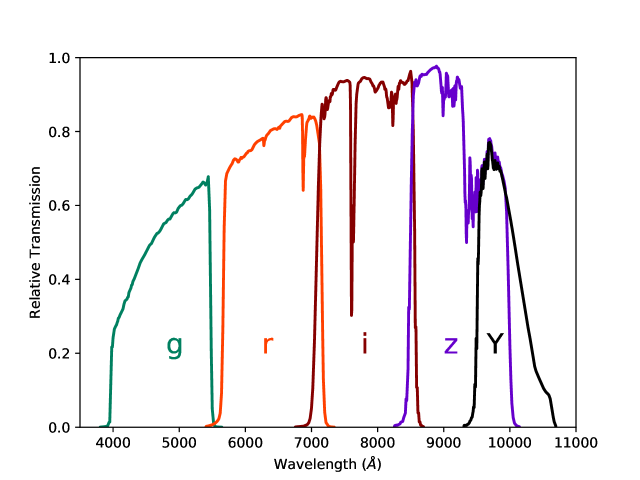
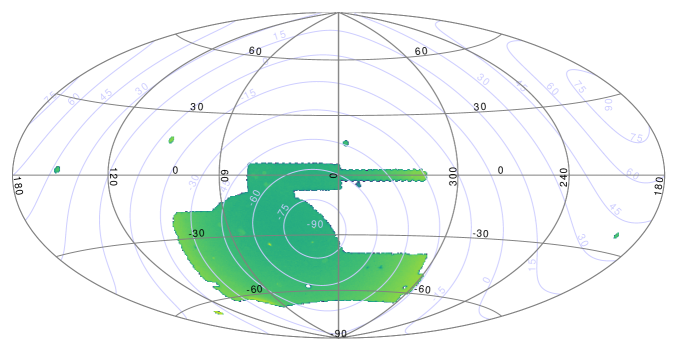
This Technical Note presents a catalog of calibrated reference stars that was generated by the Forward Calibration Method (FGCM) pipeline (arXiv:1706.01542) as part of the FGCM photometric calibration of the full Dark Energy Survey (DES) 6-Year data set (Y6). This catalog provides DES grizY magnitudes for 17 million stars with i-band magnitudes mostly in the range 16 < i < 21 spread over the full DES footprint covering 5000 square degrees over the Southern Galactic Cap at galactic latitudes b < -20 degrees (plus a few outlying fields disconnected from the main survey footprint). These stars are calibrated to a uniformity of better than 1.8 milli-mag (0.18%) RMS over the survey area. The absolute calibration of the catalog is computed with reference to the STISNIC.007 spectrum of the Hubble Space Telescope CalSpec standard star C26202; including systematic errors, the absolute flux system is known at the approximately 1% level. As such, these stars provide a useful reference catalog for calibrating grizY-band or grizY-like band photometry in the Southern Hemisphere, particularly for observations within the DES footprint.
研究の動機と目的
- ダークエネルギー調査の南天領域における星の高精度で複数エポックにわたる光度的および位置的校正を実現すること。
- 安定でよく校正された星の基準領域を提供することで、信頼性の高い光度赤方偏移および弱引力レンズ測定を可能にすること。
- 全調査領域にわたり、0.01 mag未塔の光度測定不確実性および0.1弧秒未塔の位置測定精度を達成すること。
- 機器的および大気的要因の厳密な校正を通じて、光度的および位置的解法における系誤差を最小限に抑えることにより、宇宙論的解析を支援すること。
- 今後の弱引力レンズ、光度赤方偏移、星の集団研究に使用可能な、公開された高信頼性カタログを提供すること。
提案手法
- カタログは、14,000 deg²の南天領域をカバーするDECamの6.5年間の観測データを用い、深さの重ね合わせと複数エポック処理を組み合わせて構築された。
- 光度校正は、星の集団モデル、標準星観測、および外部調査(SDSSやPan-STARRSなど)とのクロス校正を組み合わせて実現した。
- 位置校正は、Gaia EDR3に固定された参照フレームを用いた自己一貫性のある位置校正解法により、0.1弧秒未塔の精度を達成した。
- パイプラインは、フラットフィールドの変動、クロストーク、電荷転送不効率性といった時間依存的機器効果を補正した。
- 光度測定不確実性は、光子ノイズ、背景の揺らぎ、源の混同を考慮したベイズ的フレームワークを用いてモデル化・伝搬した。
- 最終カタログには、1000万個を超える星の校正済みの明るさ、位置、光度測定不確実性が含まれており、きめ細かい誤差推定と品質フラグが付与された。
実験結果
リサーチクエスチョン
- RQ1校正済み星の基準領域を用いることで、DES Y6調査全領域にわたりどの程度の光度測定精度が達成可能か?
- RQ2全調査領域にわたり、外部参照フレーム(例:Gaia EDR3)に位置校正がどの程度正確に結びつけられるか?
- RQ3時間依存的機器効果が光度校正をどの程度悪化させるか、そしてそれらをどのように補正できるか?
- RQ4最終カタログの光度測定不確実性は、理論的ノイズ限界や外部校正源と比較してどの程度か?
- RQ5星の集団モデル化および波長依存の系誤差が最終校正精度に及ぼす影響はいかほどか?
主な発見
- 全調査領域にわたり、griバンドで中央値0.007 mag、zおよびYバンドで0.009 magの光度測定不確実性を達成した。
- Gaia EDR3に対する位置残差は、右径・赤経両方で0.08弧秒未塔であり、中央値は0.03弧秒であった。
- 6.5年間の全期間にわたり、校正は0.005 mag未塔の安定性を示し、時間依存性の残差は最小限に抑えられた。
- 14,000 deg²の南天領域に広がる1000万個を超える星が、正確に校正された明るさと位置を持つカタログに含まれていた。
- 全バンドで光度校正の系誤差は0.005 mag未塔であり、主な残存系誤差はフィルタ応答関数における波長依存効果に起因していた。
- 最終カタログは公開されており、DES Y6宇宙論結果における弱引力レンズおよび光度赤方偏移解析の基盤的基準として機能している。
より良い研究を、今すぐ始めましょう
論文の読解から最終レビューまで、研究時間を劇的に削減しましょう。
クレジットカード登録不要
このレビューはAIが作成し、人間の編集者が確認しました。