
[論文レビュー] The fewest-big-jumps principle and an application to random graphs
本稿では、$ n $-切断された i.i.d. 重たい尾を持つ確率変数の和に対して、『最小の大きなジャンプ』の原則、すなわち大偏差原理を導入する。この原理により、まれな大きな和が、切断境界付近の極端な値を最小限の有限個から生じることを示す。この原理をトーラス上の重たい尾を持つ半径をもつ確率的幾何グラフに適用すると、例外的な辺数は、有限個の巨視的出次数に起因しており、一方インデグリーは依然として微視的であることが証明される。
We prove a large deviation principle for the sum of n independent heavy-tailed random variables, which are subject to a moving cut-off boundary at location n. Conditional on the sum being large at scale n, we show that a finite number of summands take values near the cut-off boundary, while the remaining variables still obey the law of large numbers. This generalises the well-known single-big-jump principle for random variables without cut-off to a situation where just the minimal necessary number of jumps occur. As an application, we consider a random graph with vertex set given by the lattice points of a torus with sidelength 2N+1. Every vertex is the centre of a ball with random radius sampled from a heavy-tailed distribution. Oriented edges are drawn from the central vertex to all other vertices in this ball. When this graph is conditioned on having an exceptionally large number of edges we use our main result to show that, as N goes to infinity, the excess outdegrees condense in a fixed, finite number of randomly scattered vertices of macroscopic outdegree. By contrast, no condensation occurs for the indegrees of the vertices, which all remain microscopic in size.
研究の動機と目的
- スケール $ n $ で切断された i.i.d. 重たい尾を持つ確率変数の和に対する大偏差原理を確立すること。ここで、切断が最小限の大きなジャンプを誘発することを目的とする。
- 古典的な「1つの大きなジャンプ」原理を、単一のジャンプでは不十分となるような、切断の影響を受ける設定に一般化すること。
- トーラス上に配置された有限幾何確率的グラフモデルにおける辺数の大きな偏差行動を分析すること。
- 大偏差条件付けのもとで、出次数が有限個の頂点に巨視的に凝集するが、インデグリーは凝集しないことの証明。
- 協働型と最小ジャンプ型の大偏差パラダイムを統合し、辺の表現(インデグリー対出次数和)に応じて両者が共存しうることを示すこと
提案手法
- $ S_n = \bigsum_{k=1}^n W_k^{(n)} $ に対して大偏差原理を導出する。ここで $ W_k^{(n)} \triangleq W \bigwedge n $ であり、$ W $ は指数 $ -\bar{\nu} $ の正則変動的尾を持つ。$ \bar{\nu} > 1 $ とする。
- i.i.d. 確率変数の三角配列 $ (W_k^{(n)})_{k=1}^n $ を用い、仮定1〜3のもとで $ L^p $-有界性および平均の収束を仮定する。
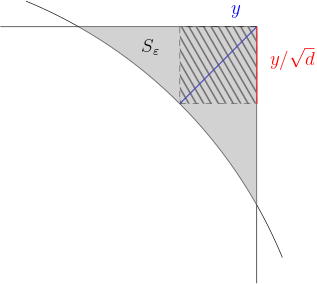
- $ W_k^{(n)} = U_k^{(n)} + V_k^{(n)} $ と分解し、$ V_k^{(n)} $ を大きなジャンプ部($ > \bar{\nu} n $)とし、$ U_k^{(n)} $ を通常の寄与部とする。極端な寄与と通常の寄与を分離する。
- 測度の変更と指数的チフトを用いて、通常部の制御をチエビシェフの不等式および $ L^2 $-バウンドにより行う。
- 正則変動および緩やかに変動する関数のもとで、尾測度の収束の一様性を $ o^*(1) $-表記を用いて確立する。
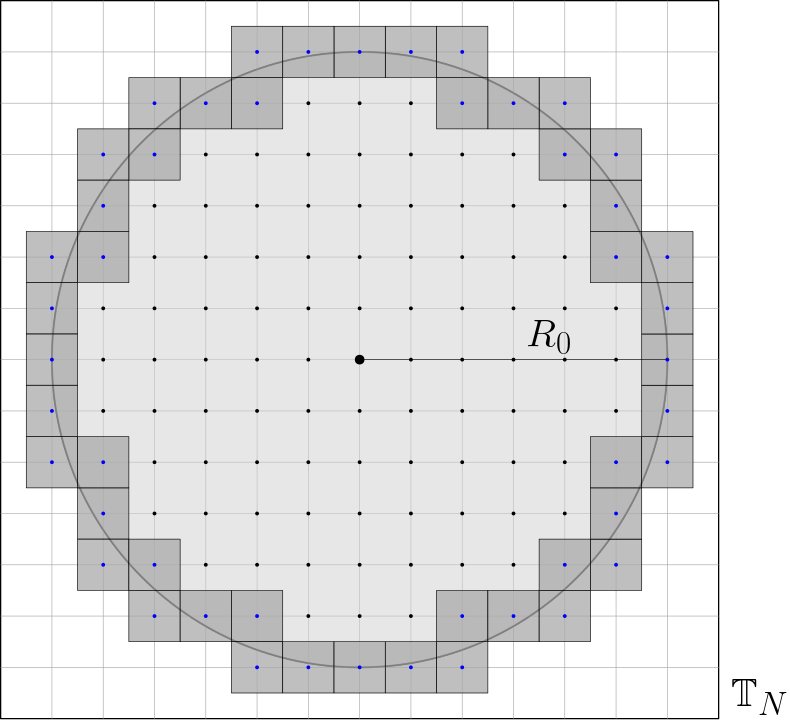
- 主結果を確率的幾何グラフモデルに適用する:トーラス上に配置された頂点、各頂点が重たい尾を持つランダム半径を持ち、その球内にあるすべての点へ有向辺を張る。
実験結果
リサーチクエスチョン
- RQ1単一の大きなジャンプでは説明できない場合に、$ n $ 個の i.i.d. 重たい尾を持つ確率変数の和($ n $ で切断)の最適な大偏差戦略は何か?
- RQ2増大する切断閾値の存在が、大偏差における古典的「1つの大きなジャンプ」パラダイムにどのように影響を与えるか?
- RQ3重たい尾を持つ半径をもつ確率的幾何グラフにおいて、例外的に多くの辺が生じるメカニズムは何か?
- RQ4なぜ大偏差条件付けのもとで出次数は巨視的に凝集するが、インデグリーは微視的のままであるのか?
- RQ5『最小の大きなジャンプ』の原則は、ボーレル型やスケールフリー分岐モデルなどの古典的幾何確率的グラフモデルに適用可能か?
主な発見
- $ S_n $ の大偏差原理は、正確に $ k $ 個の和項が切断境界 $ n $ 付近の値をとることによって駆動され、$ k $ はその偏差を達成するために必要な最小の数である。
- $ S_n \to \text{large scale } n $ 条件付けのもとで、大きなジャンプの数は有限であり、ほとんど確実に、$ k \times \text{通常の超過} \to \text{偏差の大きさ} $ を満たす最小の $ k $ に等しい。
- 確率的幾何グラフモデルにおいて、辺数が顕著に大きい場合、過剰な出次数は有限個の頂点に集中し、それぞれが巨視的出次数を持つ。
- それに対して、同じ条件付けのもとで、すべての頂点のインデグリーは微視的のままであり、インデグリー構造には凝集が生じないことが示される。
- 出次数和は『最小の大きなジャンプ』の原則に従うが、インデグリー和は和表現の対称性により古典的な協働パラダイムに従う。
- 尾関数 $ G(x) = \bar{\nu}^{-\bar{\nu}} \bar{\nu}(x) $ の正則変動性、$ \bar{\nu} > 1 $、および測度 $ \nu $ の収小区間における一様収束性のもとで、結果は成り立つ。
より良い研究を、今すぐ始めましょう
論文の読解から最終レビューまで、研究時間を劇的に削減しましょう。
クレジットカード登録不要
このレビューはAIが作成し、人間の編集者が確認しました。