
[論文レビュー] The Foundation Model Transparency Index
本論文は、2023 Foundation Model Transparency Index (FMTI) を導入し、upstream、model、downstream ドメインにわたる100 の指標を用いて、旗艦モデルを対象とする10 の主要デベロッパーを評価し、透明性を評価し、ガバナンスを導く。
Foundation models have rapidly permeated society, catalyzing a wave of generative AI applications spanning enterprise and consumer-facing contexts. While the societal impact of foundation models is growing, transparency is on the decline, mirroring the opacity that has plagued past digital technologies (e.g. social media). Reversing this trend is essential: transparency is a vital precondition for public accountability, scientific innovation, and effective governance. To assess the transparency of the foundation model ecosystem and help improve transparency over time, we introduce the Foundation Model Transparency Index. The Foundation Model Transparency Index specifies 100 fine-grained indicators that comprehensively codify transparency for foundation models, spanning the upstream resources used to build a foundation model (e.g data, labor, compute), details about the model itself (e.g. size, capabilities, risks), and the downstream use (e.g. distribution channels, usage policies, affected geographies). We score 10 major foundation model developers (e.g. OpenAI, Google, Meta) against the 100 indicators to assess their transparency. To facilitate and standardize assessment, we score developers in relation to their practices for their flagship foundation model (e.g. GPT-4 for OpenAI, PaLM 2 for Google, Llama 2 for Meta). We present 10 top-level findings about the foundation model ecosystem: for example, no developer currently discloses significant information about the downstream impact of its flagship model, such as the number of users, affected market sectors, or how users can seek redress for harm. Overall, the Foundation Model Transparency Index establishes the level of transparency today to drive progress on foundation model governance via industry standards and regulatory intervention.
研究の動機と目的
- 基盤モデルのアップストリーム資源、モデルの詳細、ダウンストリームの使用にわたる透明性を測定するための、包括的で細部まで分解されたフレームワークを定義する。
- 標準化された指標セットに対して、10の主要基盤モデルデベロッパーの透明性の実践を評価する。
- 開発者、導入者、政策立案者が基盤モデルのガバナンスを改善するための実証的な発見と実用的な推奨を提供する。
提案手法
- 透明性を三つのドメイン(アップストリーム、モデル、ダウンストリーム)に分解し、各ドメイン32–35の指標、計100個の決定可能な指標とする。
- 旗艦モデルに対して公開情報を用いて10の主要デベロッパーを指標で評価する。
- デベロッパーがスコアに異議を申し立てられるようにし、スコアリングの信頼性と透明性を確保する。
- コア資料、指標、スコア、および正当化を公表可能にして再現性を担保する。
実験結果
リサーチクエスチョン
- RQ1アップストリーム、モデル、ダウンストリームのドメイン全体で、主要な基盤モデルデベロッパーの透明性の現状はどうか。
- RQ2エコシステム全体でオープン性(オープン対クローズド)は透明性スコアとどのように相関するか。
- RQ3透明性の最も強い側面と最も弱い側面は何で、どこで改善が最も必要か。
- RQ4この発見は基盤モデルのガバナンス、政策、業界実践にどのように情報を提供できるか。
主な発見
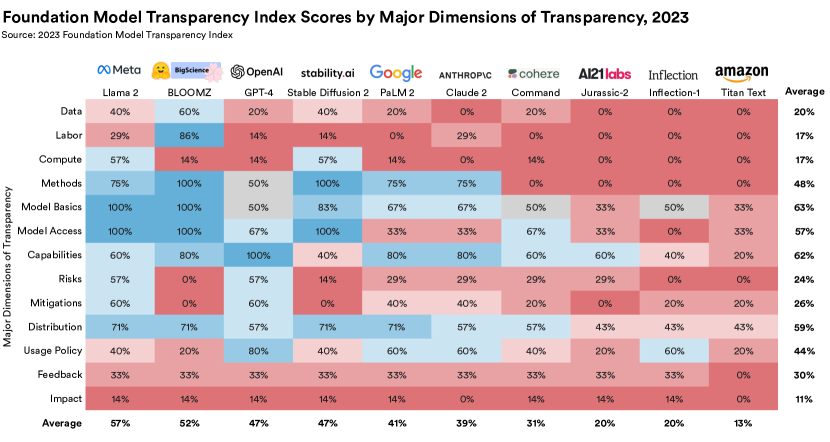
- 透明性には高い余地があり、最高スコアは54/100、平均は37/100。
- スコアには大きな非対称性があり、デベロッパーを高〜低の三つのグループにクラスタリングする。
- アップストリームの透明性は最も低く、データ作成、データ労働、計算がゼロ点となることが多い。
- モデル情報とダウンストリームの流通は透明性が比較的高いが、モデルサイズのような基本的な詳細は未公表であることが多い。
- オープンなデベロッパーはクローズドなデベロッパーに比べて多くのサブドメインで優れており、特にアップストリームの透明性において顕著である。しかし、ダウンストリームの透明性は両グループにとって依然として限られている。
- いくつかのデベロッパーのペアはスコアが高度に相関している一方で、Metaは外れ値として際立っている。
より良い研究を、今すぐ始めましょう
論文設計から論文執筆まで、研究時間を劇的に削減しましょう。
クレジットカード登録不要
このレビューはAIが作成し、人間の編集者が確認しました。