
[論文レビュー] The GALAH Survey: Chemical Clocks
本稿では、XGBoostを用いた機械学習手法を提示し、化学組成のみを用いて星の年齢を推定するもので、GALAH DR3調査に含まれる約25万顆の星に対して1–2 Gyrの精度を達成した。この手法により、銀河のディスク全域にわたり大規模な年齢決定が可能となり、主な年齢・運動学的傾向を再現できるとともに、弱い化学的タグ付けを可能にするが、現在の組成精度の限界により強い化学的タグ付けには課題が残る。
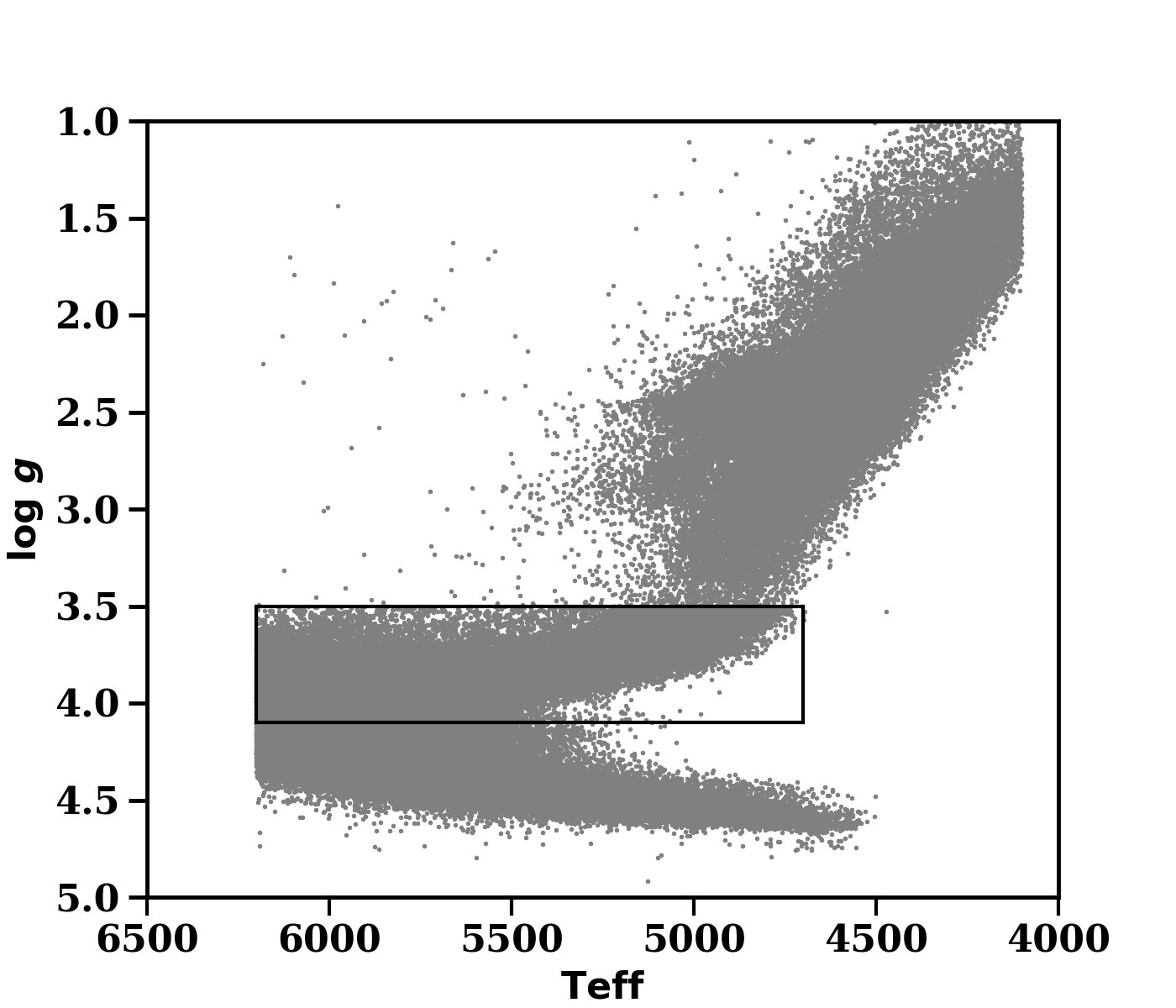
Previous studies have found that the elemental abundances of a star correlate directly with its age and metallicity. Using this knowledge, we derive ages for a sample of 250,000 stars taken from GALAH DR3 using only their overall metallicity and chemical abundances. Stellar ages are estimated via the machine learning algorithm $XGBoost$, using main sequence turnoff stars with precise ages as our input training set. We find that the stellar ages for the bulk of the GALAH DR3 sample are accurate to 1-2 Gyr using this method. With these ages, we replicate many recent results on the age-kinematic trends of the nearby disk, including the age-velocity dispersion relationship of the solar neighborhood and the larger global velocity dispersion relations of the disk found using $Gaia$ and GALAH. The fact that chemical abundances alone can be used to determine a reliable age for a star have profound implications for the future study of the Galaxy as well as upcoming spectroscopic surveys. These results show that the chemical abundance variation at a given birth radius is quite small, and imply that strong chemical tagging of stars directly to birth clusters may prove difficult with our current elemental abundance precision. Our results highlight the need of spectroscopic surveys to deliver precision abundances for as many nucleosynthetic production sites as possible in order to estimate reliable ages for stars directly from their chemical abundances. Applying the methods outlined in this paper opens a new door into studies of the kinematic structure and evolution of the disk, as ages may potentially be estimated for a large fraction of stars in existing spectroscopic surveys. This would yield a sample of millions of stars with reliable age determinations, and allow precise constraints to be put on various kinematic processes in the disk, such as the efficiency and timescales of radial migration.
研究の動機と目的
- 等時曲線マッチングによる正確な年齢が得られる主系列回折星(MSTO)を用いて、従来の年齢決定手法に依存せずに、化学組成と金属量のみを用いて星の年齢を推定する手法を開発すること。
- 従来の年齢決定手法がスケール的に不適切であるGALAH調査の星に対して、大規模な年齢推定を可能にすること。
- 銀河のディスクにおける既知の年齢・運動学的傾向を再現することで、化学組成が星の年齢の代理指標として信頼できるかどうかを検証すること。
- 固定された形成半径における年齢-組成関係の分散を分析することで、強い化学的タグ付けの可能性を評価すること。
- 将来の分光調査を支援するため、複数の核合成サイトにおける高精度・高SN比の組成測定の必要性を特定すること。
提案手法
- XGBoost機械学習アルゴリズムを用いて、化学組成パターンと全金属量に基づいて星の年齢を予測する手法を採用する。
- トレーニングデータセットは、等時曲線マッチングにより正確な年齢が得られた主系列回折星(MSTO)から構成される。
- GALAH DR3に含まれる25万顆の星の化学組成が、年齢予測の入力特徴量として使用される。
- 太陽系近傍域および銀河ディスク全体における既知の年齢-速度分散関係を再現することで、モデルの妥当性を検証する。
- 年齢推定の精度とGaiaに基づく運動学的傾向との整合性を評価することで、モデルの性能を評価する。
- 信号対ノイズ比、効果的温度、表面重力の影響を分析することで、系統的不確実性を考慮する。
実験結果
リサーチクエスチョン
- RQ1等時曲線や星振動学的解析に依存せずに、化学組成のみを用いて星の年齢を信頼性高く推定できるか?
- RQ2Gaiaが観測した銀河ディスクにおける年齢-速度分散関係が、化学組成に基づく年齢推定を用いた場合に、どの程度再現されるか?
- RQ3特定の形成半径における年齢-組成関係の分散は、強い化学的タグ付けの可能性をどの程度制限するか?
- RQ4微細な銀河化学進化の効果を検出できるほどの精度を達成するには、どの程度の組成精度が求められるか?
- RQ5この手法は、今後の他の大規模分光調査に一般化可能であり、数百万顆の星の年齢決定を可能にするか?
主な発見
- XGBoostモデルは、化学組成のみを用いて年齢を推定する場合、GALAH DR3サンプルの大部分に対して中央値で1–2 Gyrの精度を達成した。
- この手法は、太陽系近傍域における年齢-速度分散関係およびGaiaデータで観測されたグローバルディスク傾向をうまく再現した。
- 固定された形成半径における年齢-組成関係に最小限の分散が見られ、時間的・空間的変動が小さく、現在の精度では強い化学的タグ付けが制限されることを示した。
- 本研究では、現在の組成精度(約0.05 dex)では、小スケールの銀河化学進化効果が測定ノイズに埋もれてしまうため、強い化学的タグ付けには不十分であると判明した。
- より高い信号対ノイズ比のスペクトルと、特にs過程元素を含む広範な元素カバレッジが、年齢推定精度の向上と微細な化学進化シグネチャの検出に不可欠である。
- 本手法により、将来的な調査と組み合わせることで、銀河ディスク全域にわたり数百万顆の星に対して信頼性の高い年齢を提供する弱い化学的タグ付けが可能になる。
![Figure 2: The age-[ $\alpha$ /Fe] relation for the MSTO training set.](https://ar5iv.labs.arxiv.org/html/2011.13745/assets/Figures/mstoagealpha.png)
より良い研究を、今すぐ始めましょう
論文の読解から最終レビューまで、研究時間を劇的に削減しましょう。
クレジットカード登録不要
このレビューはAIが作成し、人間の編集者が確認しました。