
[論文レビュー] The geometry of hidden representations of large transformer models
論文は、固有次元と近傍構造が大規模な自己教師付きトランスフォーマー(タンパク質と画像)における層間でどのように進化するかを分析し、中間層が最も意味的内容を符号化し、IDの最小値を用いて教師なしに特定できる3相(場合によっては4相)のID軌道を示す。
Large transformers are powerful architectures used for self-supervised data analysis across various data types, including protein sequences, images, and text. In these models, the semantic structure of the dataset emerges from a sequence of transformations between one representation and the next. We characterize the geometric and statistical properties of these representations and how they change as we move through the layers. By analyzing the intrinsic dimension (ID) and neighbor composition, we find that the representations evolve similarly in transformers trained on protein language tasks and image reconstruction tasks. In the first layers, the data manifold expands, becoming high-dimensional, and then contracts significantly in the intermediate layers. In the last part of the model, the ID remains approximately constant or forms a second shallow peak. We show that the semantic information of the dataset is better expressed at the end of the first peak, and this phenomenon can be observed across many models trained on diverse datasets. Based on our findings, we point out an explicit strategy to identify, without supervision, the layers that maximize semantic content: representations at intermediate layers corresponding to a relative minimum of the ID profile are more suitable for downstream learning tasks.
研究の動機と目的
- 大規模な自己教師付けトランスフォーマーにおける隠れ表現の几何的性質(固有次元と近傍構成)が層を通じてどのように進化するかを理解する。
- タンパク質言語モデルと画像トランスフォーマー間で幾何を比較し、共通のパターンを特定する。
- 下流タスクのために最大の意味内容を持つ層を教師なしで特定する戦略を提案する。
提案手法
- 最近傍距離に基づくTwoNN推定器を用いて層表現の固有次元(ID)を推定する。
- 層間の局所近傍構造の変化を定量化するために、近傍オーバーラップ chi_k^{l,m} を測定する。
- 実データの意味ラベル(例:リモートホモロジー、ImageNetクラス)との整合性を評価するために chi_k^{l,gt} を計算する。
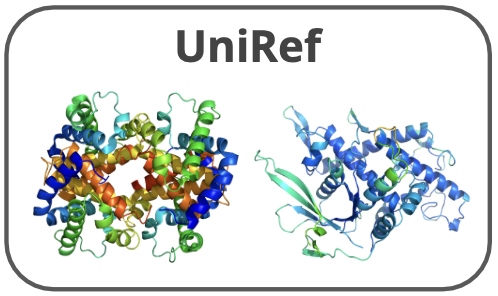
- 解析のために ESM-2 タンパク質言語モデルと iGPT 画像トランスフォーマーから中間層の表現を抽出する。
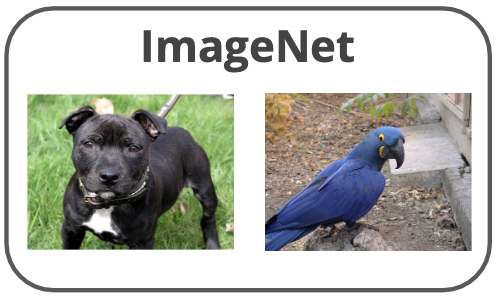
- モデルサイズ、タスク、データセット(ProteinNet、SCOPe、ImageNet)全体でIDおよび近傍指標を分析する。
- IDプロファイルの局所極小値を用いて意味的に豊かな層を教師なしで同定する。
実験結果
リサーチクエスチョン
- RQ1自己教師付けで訓練された大規模トランスフォーマーの層間で表現の固有次元はどのように変化するか。
- RQ2IDと近傍構造はタンパク質言語モデルと画像トランスフォーマーで一貫した相に現れるか。
- RQ3下流タスクのために意味内容を最大化する層を教師なしの指標で同定できるか。
- RQ4意味情報(リモートホモロジー、画像クラスラベル)はIDプロファイルと層位置とどのように関連するか。
- RQ5pLMsとiGPTsのIDダイナミクスの違いは何か、モデルサイズとタスクはそれらにどう影響するか。
主な発見
- 大規模トランスフォーマーのIDプロファイルはpLMsで3つのフェーズ(ピーク、プラトー、最終上昇)を示し、iGPTsでは第4相(第2ピーク)を示す。
- IDピークは初期に現れ、プラトーは低IDと安定した近傍構造を示し、意味的に意味のある表現を示している。
- 意味情報(タンパク質のリモートホモロジー、画像のImageNetラベル)は、IDが低いプラトー領域、またはIDプロファイルの相対的最小付近で最もよく表現される。
- ground-truthクラスとのオーバーラップ chi_k^{l,gt} はプラトー領域でピークに達する(またはiGPTではID最小付近)ことが多く、符号化中の半意味内容の集中を示唆する。
- IDプロファイルに基づく教師なし戦略は、下流学習タスクに最も適した層を特定できる。
- iGPTsでは、終盤近くのもう一つの浅いIDピークが最初のピークを鏡像のように再現し、デコード相の対称的な自己符号化の挙動を示している。
より良い研究を、今すぐ始めましょう
論文設計から論文執筆まで、研究時間を劇的に削減しましょう。
クレジットカード登録不要
このレビューはAIが作成し、人間の編集者が確認しました。