
[論文レビュー] The halo model for cosmology: a pedagogical review
この論文は、宇宙論におけるハロー・モデルについて包括的な教育的レビューを提供している。ハロー・モデルは、さまざまな質量のハローに存在するダークマターおよびそのトレーサー(例:銀河、X線、tSZ)をモデル化することで、非線形物質クラスタリングを記述するフレームワークである。ハロー質量関数、非線形ハロー不偏性、ハロー密度プロファイルを組み合わせることで、パワー スペクトルおよびクラスタリング統計を予測する方法を詳述し、標準のΛCDMモデルおよびΛCDMを超えるモデルへの応用を含む。また、柔軟なハロー・モデル計算が可能なオープンソース・ソフトウェア「pyhalomodel」のリリースも紹介している。
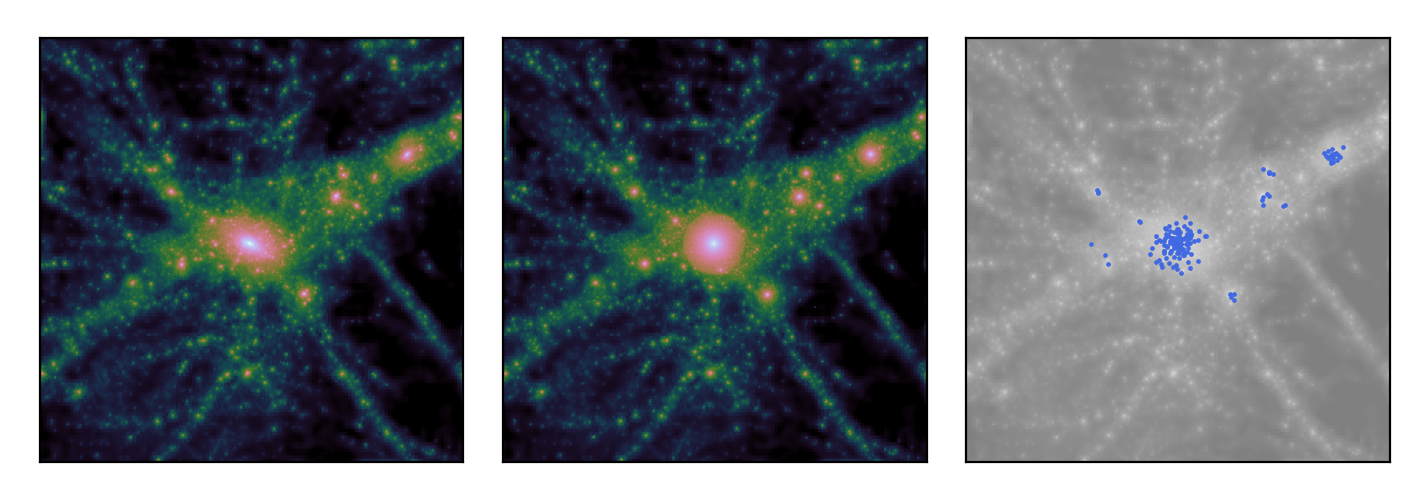
We present a pedagogical review of the halo model, a flexible framework that can describe the distribution of matter and its tracers on non-linear scales for both conventional and exotic cosmological models. We start with the premise that the complex structure of the cosmic web can be described by the sum of its individual components: dark matter, gas, and galaxies, all distributed within spherical haloes with a range of masses. The halo properties are specified through a series of simulation-calibrated ingredients including the halo mass function, non-linear halo bias and a dark matter density profile that can additionally account for the impact of baryon feedback. By incorporating a model of the galaxy halo occupation distribution, the properties of central and satellite galaxies, their non-linear bias and intrinsic alignment can be predicted. Through analytical calculations of spherical collapse in exotic cosmologies, the halo model also provides predictions for non-linear clustering in beyond-$Λ$CDM models. The halo model has been widely used to model observations of a variety of large-scale structure probes, most notably as the primary technique to model the underlying non-linear matter power spectrum. By documenting these varied and often distinct use cases, we seek to further coherent halo model analyses of future multi-tracer observables. This review is accompanied by the release of pyhalomodel: https://github.com/alexander-mead/pyhalomodel , flexible software to conduct a wide range of halo-model calculations.
研究の動機と目的
- 宇宙論および大規模構造分野の研究者向けに、ハロー・モデルの自己完結的で教育的な紹介を提供すること。
- 銀河、tSZ、X線、弱引力レンズなど、多様な宇宙論的プローブにわたるハロー・モデルの体系的かつ一貫した応用を体系化すること。
- マスを持つニュートリノ、f(R)重力、動的ダークエネルギーなど、ΛCDMを超える宇宙論的モデルへのハロー・モデルの拡張を図ること。
- Jupyter ノートブック例を併記した、幅広いハロー・モデル計算が可能な柔軟なオープンソース・ソフトウェアパッケージ「pyhalomodel」の提示およびリリース。
- 一貫したハローに基づく定式化を通じて、銀河形成やバリオン効果のフィードバックなど、天体物理学的モデリングと宇宙論的推論を統合すること。
提案手法
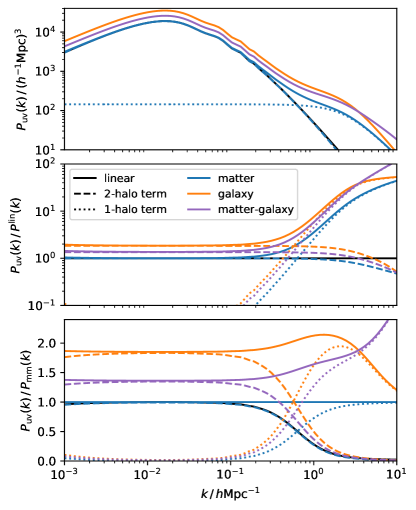
- ハロー・モデルは、物質パワー スペクトルを二つの成分に分解する:1ハロー項(ハロー内クラスタリング)と2ハロー項(ハロー間クラスタリング)。これらは球対称収縮とハロー統計に基づいて導出される。
- トレーサー(例:銀河)はハロー占有分布(HOD)を介してモデル化され、中心銀河と衛星銀河を区別し、非線形不偏性および内在的整列を組み込む。
- 主要な要素(ハロー質量関数、非線形ハロー不偏性、ダークマター密度プロファイル、バリオンフィードバック効果)は、N体シミュレーションおよび流体ダイナミクス的シミュレーションからキャリブレーションされる。
- 精度を向上させるために、非球形ハロー、空洞、ハローの排除効果、準位構造、アセンブリ・バイアスをフレームワークに組み込むことで、特定の2点関数に対する性能を向上。
- ΛCDMを超えるモデルでは、球対称収縮近似を用いて宇宙論依存のハロー特性を導出し、非線形パワー スペクトル比を1%レベルで予測可能となる。
- 反応形式(react formalism)が導入され、ハロー・モデルの柔軟性と解析的扱いやすさを活かして、特異な宇宙論における非線形クラスタリングを効率的にモデル化する手法が提供される。
実験結果
リサーチクエスチョン
- RQ1ハロー・モデルは、ΛCDMおよびΛCDMを超える宇宙論的モデルにおいて、非線形クラスタリングを体系的にどのようにモデル化できるか?
- RQ2パワー スペクトルを正確に予測するために必要な主要な要素(ハロー質量関数、不偏性、プロファイルなど)は何か?
- RQ3バリオンフィードバック、内在的整列、ハローの非球形性といった現実的な天体物理学的効果をハロー・モデルにどのように組み込むことができるか?
- RQ4弱引力レンズ、tSZ、X線信号など、多様な宇宙論的プローブに応用された際、ハロー・モデルはどのような点で正確かつ柔軟性を保っているか?
- RQ5修正重力やマスを持つニュートリノモデルにおいて、ハロー・モデルは非線形パワー スペクトル比をどの程度の高精度で予測できるか?
主な発見
- ハロー・モデルは、パワー スペクトルを1ハロー項と2ハロー項に分解することで、非線形物質クラスタリングを強固かつ柔軟にモデル化するフレームワークを提供する。
- ハロー占有分布(HOD)と非線形ハロー不偏性を組み合わせることで、銀河などの離散的トレーサーのクラスタリングを高い精度で予測できる。
- ハロー密度プロファイルにバリオンフィードバック効果を組み込むことで、X線やtSZ効果などのトレーサーに対する予測が著しく改善される。
- 線形パワー スペクトルが一致する条件下で、異なる宇宙論的モデル間の非線形パワー スペクトル比を1%レベルの精度で予測可能である。
- 球対称収縮近似により、f(R)重力や動的ダークエネルギーなどの特異なモデルにおける非線形クラスタリングの解析的予測が可能となる。
- Jupyter ノートブックを併記した pyhalomodel のリリースにより、広範な宇宙論的コミュニティが再現可能で柔軟かつアクセスしやすいハロー・モデル計算を実施できるようになった。
より良い研究を、今すぐ始めましょう
論文の読解から最終レビューまで、研究時間を劇的に削減しましょう。
クレジットカード登録不要
このレビューはAIが作成し、人間の編集者が確認しました。