
[論文レビュー] The HARPS search for southern extra-solar planets XL. Searching for Neptunes around metal-poor stars
本研究は、HARPS分光計の高精度径速度データを用いて、金属不足星の周囲におけるネプチューンおよびスーパーアースの周囲頻度を調査している。1つの確認済みネプチューン質量惑星と1つの候補が検出されたことから、金属不足環境でも低質量惑星の形成が依然として効率的に行われている可能性を示唆する、13.33%(68%信用区間:13.33%⁺⁵.⁸⁰%₋₈.₈⁴%)の惑星頻度推定値を報告している。
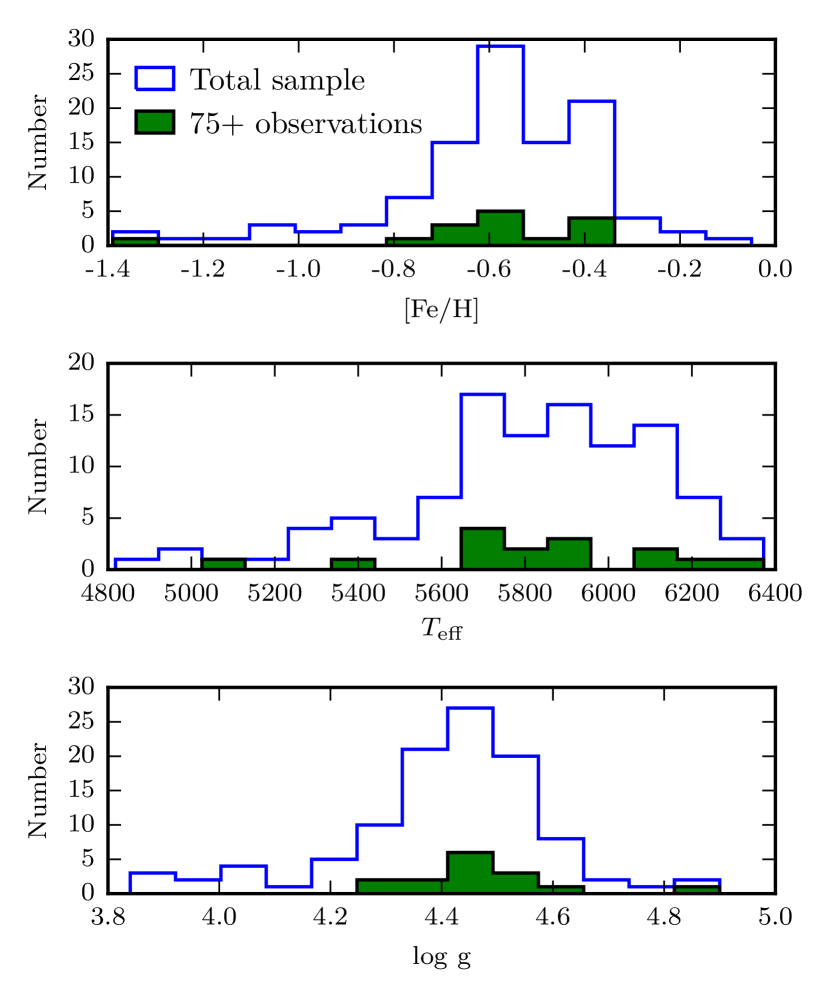
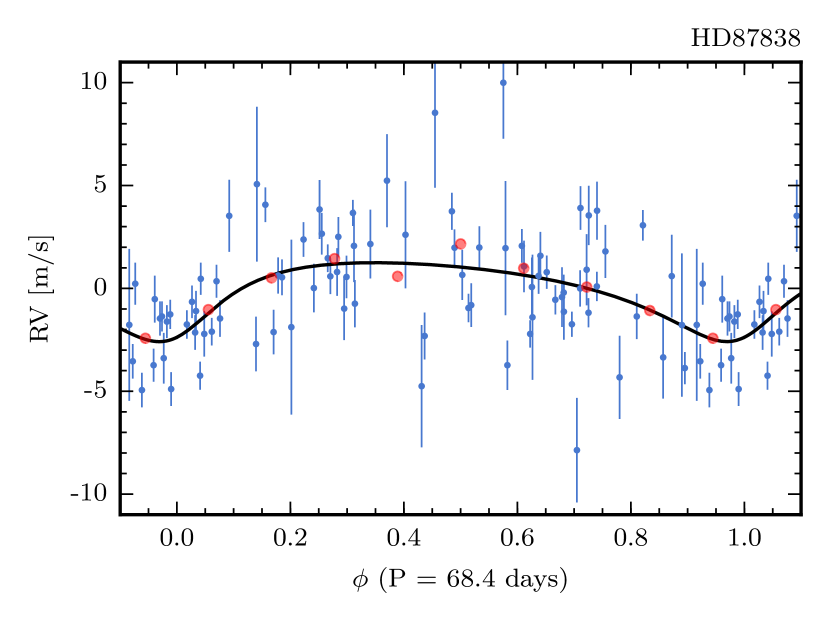
Stellar metallicity -- as a probe of the metallicity of proto-planetary disks -- is an important ingredient for giant planet formation, likely through its effect on the timescales in which rocky/icy planet cores can form. Giant planets have been found to be more frequent around metal-rich stars, in agreement with predictions based on the core-accretion theory. In the metal-poor regime, however, the frequency of planets, especially low-mass planets, and how it depends on metallicity are still largely unknown. As part of a planet search programme focused on metal-poor stars, we study the targets from this survey that were observed with HARPS on more than 75 nights. The main goals are to assess the presence of low-mass planets and provide a first estimate of the frequency of Neptunes and super-Earths around metal-poor stars. We perform a systematic search for planetary companions, both by analysing the periodograms of the radial-velocities and by comparing, in a statistically-meaningful way, models with an increasing number of Keplerians. A first constraint on the frequency of planets in our metal-poor sample is calculated considering the previous detection (in our sample) of a Neptune-sized planet around HD175607 and one candidate planet (with an orbital period of 68.42d and minimum mass $M_p \sin i = 11.14 \pm 2.47 M_{\oplus}$) for HD87838, announced in the present study. This frequency is determined to be close to 13% and is compared with results for solar-metallicity stars.
研究の動機と目的
- 金属不足星の周囲における低質量惑星、特にネプチューンおよびスーパーアースの頻度を評価すること。
- コア降着モデルが予測するように、低金属量環境で惑星形成の効率が著しく抑制されるかどうかを検証すること。
- 星の活動性および観測サンプリングが、金属不足星における径速度検出限界に与える影響を評価すること。
- 高精度のHARPSデータを用いた15個の金属不足星のサンプルにおいて、惑星出現頻度の統計的に意味のある推定値を提供すること。
- 長期的なRVモニタリングにおいて、軌道的構造と活動性由来の信号が惑星信号を隠すまたは模倣する役割を調査すること。
提案手法
- 本研究は、ESO 3.6-m望遠鏡に搭載されたHARPS分光計から得られた径速度データを用い、15個の金属不足星に対して75夜以上にわたる観測を実施している。
- 惑星同伴の存在を評価するために、逐次的に増加する数のケプラー的信号を含むベイズモデル比較を適用し、惑星信号の証拠をベイズ因子で定量化している。
- 検出の信頼性を確保するため、軌道周期および半振幅の事前分布に対する感度チェックを実施している。
- 惑星出現頻度は、二項分布を用いて推定されており、サンプルサイズと観測された検出数を関数として扱っている。
- 既存の調査および理論的モデルと比較し、特に惑星形成の金属量依存性に注目している。
- 誤検出を回避するため、アリヤス構造と活動性指標の評価が行われている。
実験結果
リサーチクエスチョン
- RQ1金属量が[Fe/H] < -0.3 dexの金属不足星の周囲におけるネプチューンおよびスーパーアースの頻度は何か?
- RQ2金属不足星において、低質量惑星の検出効率は時間サンプリングおよび星の活動性にどのように依存するか?
- RQ3低金属量領域において、惑星系の軌道的構造と星の金属量の間に測定可能な相関があるか?
- RQ4金属不足星において、星のノイズが存在する状況でも、ベイズモデル比較が低振幅の惑星信号を信頼性を持って検出できるか?
- RQ5観測された惑星頻度は、低金属量環境におけるコア降着理論の予測とどのように比較されるか?
主な発見
- HD175607の周囲に確認済みのネプチューンサイズの惑星が検出され、金属不足系にこのような惑星が存在することを直接的証明している。
- HD87838の周囲に、最小質量11.14 ± 2.47 M⊕、公軌道周期68.42日である候補惑星が検出された。これは、金属不足星に低質量惑星が存在することを支持する。
- 15個の星のサンプルにおいて2件の検出が確認されたことから、金属不足星のネプチューンおよびスーパーアースの出現頻度は13.33%⁺⁵.⁸⁰%₋₈.₈⁴%と推定された。
- HD87838の惑星信号におけるベイズ的証拠は強く、定常モデルとのオッズ比が約156対1であるため、ケプラー的信号の存在を強く支持している。
- 検出の信頼性は、軌道パラメータの事前分布の変更に対しても安定しており、サンプルサイズが小さいにもかかわらず検出の信頼性が高いことを示している。
- 本研究は、時間サンプリングと星の活動性が、高精度のRVデータを用いても金属不足星における低質量惑星の検出において依然として主要な課題であると強調している。
より良い研究を、今すぐ始めましょう
論文の読解から最終レビューまで、研究時間を劇的に削減しましょう。
クレジットカード登録不要
このレビューはAIが作成し、人間の編集者が確認しました。