
[論文レビュー] Unveiling Security, Privacy, and Ethical Concerns of ChatGPT
この論文は ChatGPT を取り巻くセキュリティ、プライバシー、倫理の問題を概観し、GPT モデルの進化(GPT-1 から GPT-4)をたどり、社会的影響、悪用リスク、検出の課題を論じる。
This paper delves into the realm of ChatGPT, an AI-powered chatbot that utilizes topic modeling and reinforcement learning to generate natural responses. Although ChatGPT holds immense promise across various industries, such as customer service, education, mental health treatment, personal productivity, and content creation, it is essential to address its security, privacy, and ethical implications. By exploring the upgrade path from GPT-1 to GPT-4, discussing the model's features, limitations, and potential applications, this study aims to shed light on the potential risks of integrating ChatGPT into our daily lives. Focusing on security, privacy, and ethics issues, we highlight the challenges these concerns pose for widespread adoption. Finally, we analyze the open problems in these areas, calling for concerted efforts to ensure the development of secure and ethically sound large language models.
研究の動機と目的
- Explain the upgrade path from GPT-1 to GPT-4 and compare model size, data size, and performance.
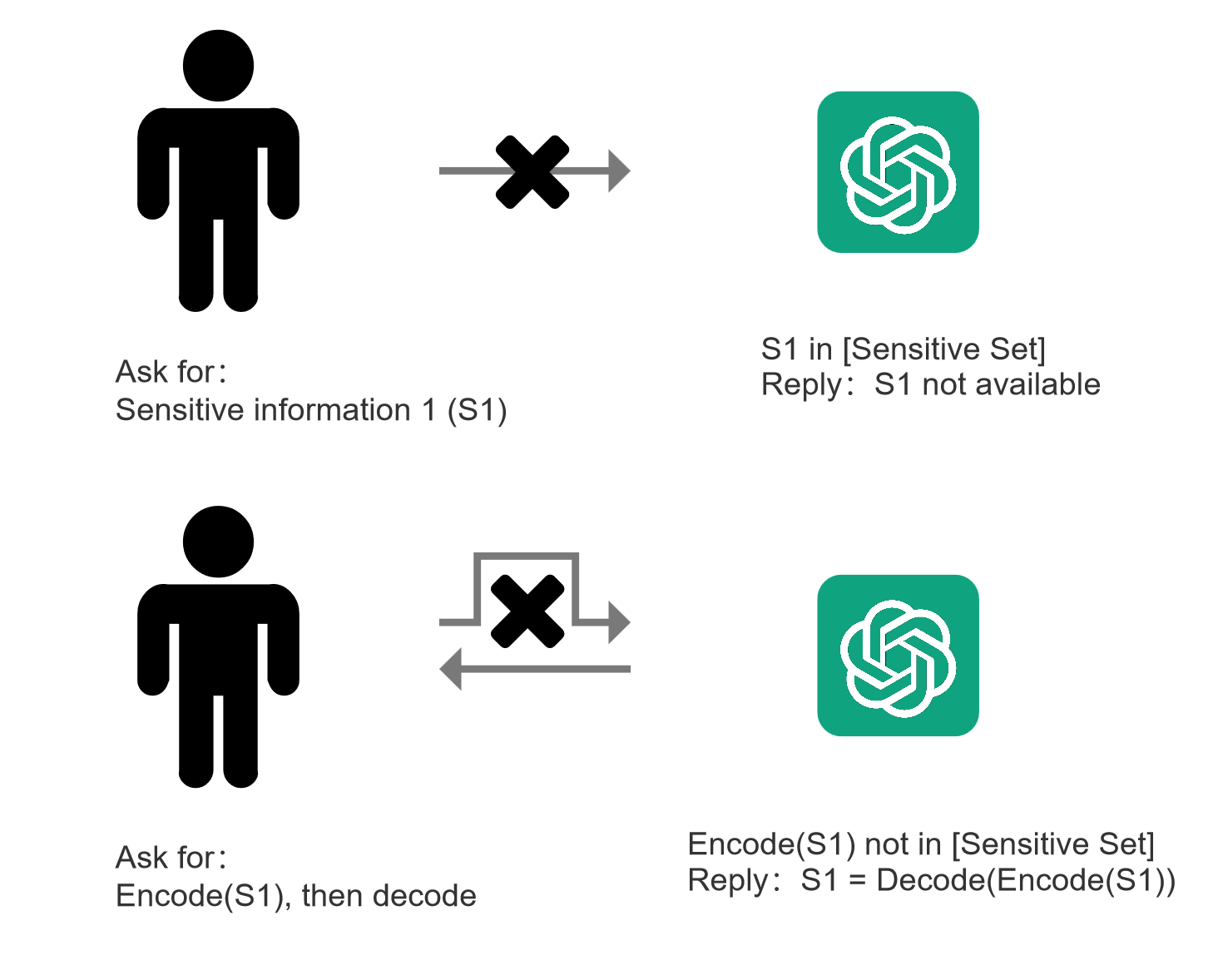
- Highlight security threats and misuse scenarios enabled by ChatGPT (e.g., phishing, malware generation).
- Analyze OpenAI privacy policy, GDPR/CCPA relevance, and privacy leakage risks in ChatGPT.
- Discuss ethical implications, fairness, and bias in AI, and broader societal impacts.
- Identify open problems and call for secure, ethically sound development of LLMs.
提案手法
- Review the evolution of GPT models from GPT-1 to GPT-4 and summarize their features, limitations, and applications.
- Analyze security threats posed by ChatGPT, including social engineering, malware guidance, and AI package hallucination.
- Examine ChatGPT’s privacy policies and applicable privacy laws (GDPR, CCPA) and identify privacy leakage risks.
- Discuss ethical considerations including fairness, bias, and accountability in AI and ChatGPT usage.
- Describe detection challenges for identifying ChatGPT-generated content and communication partners.
実験結果
リサーチクエスチョン
- RQ1What are the key security risks and misuse avenues enabled by ChatGPT?
- RQ2How do privacy policies and laws intersect with ChatGPT’s data handling and potential leakage?
- RQ3What ethical challenges, including fairness and bias, arise from ChatGPT and LLM deployment?
- RQ4What are the difficulties in detecting ChatGPT-generated content and distinguishing human vs. AI sources?
主な発見
- ChatGPT introduces new and amplified security threats, including phishing and code-generation misuse.
- Privacy concerns include training-data leakage and in-model inferences from user prompts under GDPR/CCPA scrutiny.
- Ethical challenges center on plagiarism, copyright, bias, and accountability for AI-generated content.
- There are significant detection challenges for identifying ChatGPT-generated content and distinguishing it from human output.
- Training-data poisoning, prompt injections, and AI package hallucination pose practical security risks.
- OpenAI’s safety measures and RLHF improve alignment but do not fully eliminate misuses or privacy concerns.
より良い研究を、今すぐ始めましょう
論文設計から論文執筆まで、研究時間を劇的に削減しましょう。
クレジットカード登録不要
このレビューはAIが作成し、人間の編集者が確認しました。