
[논문 리뷰] A Common Tracking Software Project
이 논문은 입자물리학에서 트랙 및 버텍스 재구성에 사용할 수 있는 오픈소스이자 실험 및 프레임워크에 종속되지 않는 도구인 ACTS(A Common Tracking Software)를 소개한다. ATLAS의 경험을 바탕으로 개발된 ACTS는 스레드 세이프하고 고성능인 알고리즘을 제공하여 감도가 높고 복잡도가 증가하는 검출기 환경에서도 효율적으로 확장되며, 주요 실험 프레임워크와의 호환성을 입증하고 향후 FCC-hh와 같은 대형 충돌기 실험에도 대응할 수 있다.
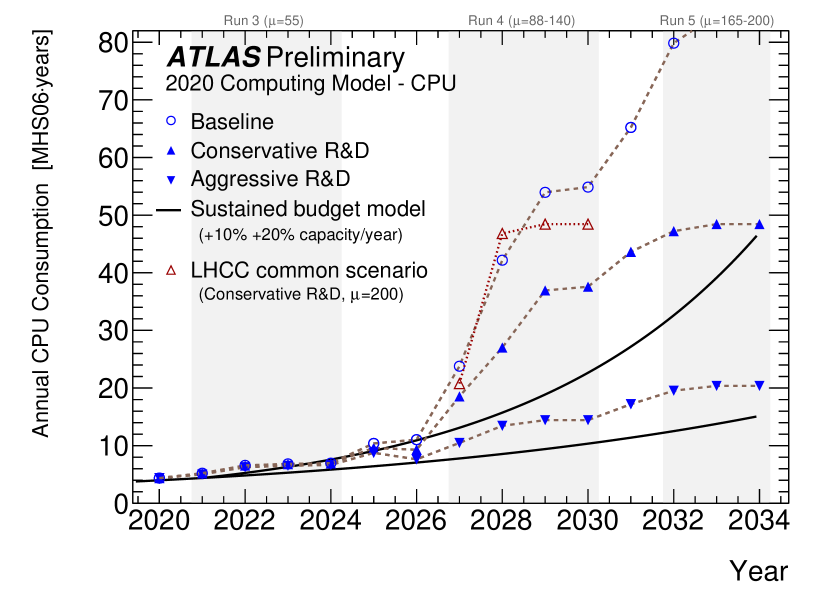
The reconstruction of the trajectories of charged particles, or track reconstruction, is a key computational challenge for particle and nuclear physics experiments. While the tuning of track reconstruction algorithms can depend strongly on details of the detector geometry, the algorithms currently in use by experiments share many common features. At the same time, the intense environment of the High-Luminosity LHC accelerator and other future experiments is expected to put even greater computational stress on track reconstruction software, motivating the development of more performant algorithms. We present here A Common Tracking Software (ACTS) toolkit, which draws on the experience with track reconstruction algorithms in the ATLAS experiment and presents them in an experiment-independent and framework-independent toolkit. It provides a set of high-level track reconstruction tools which are agnostic to the details of the detection technologies and magnetic field configuration and tested for strict thread-safety to support multi-threaded event processing. We discuss the conceptual design and technical implementation of ACTS, selected applications and performance of ACTS, and the lessons learned.
연구 동기 및 목표
- HL-LHC와 같은 고광도 충돌기 실험에서 트랙 재구성의 증가하는 계산 부담을 해결한다.
- 다양한 검출기 기하학적 구조와 자기장 분포에 대응할 수 있는 재사용 가능하고 실험에 종속되지 않는 소프트웨어 툴킷을 개발하여 트랙 재구성의 표준화와 최적화를 도모한다.
- 향후 고속 데이터 환경에서 요구하는 성능을 충족하기 위해 스레드 세이프하고 동시성 처리가 가능한 이벤트 처리를 가능하게 한다.
- Gaudi 및 Athena와 같은 기존 실험 소프트웨어 프레임워크와의 통합을 촉진하여 광범위한 적용성과 확장성을 확보한다.
- 향후 알고리즘 튜닝과 하드웨어 이식성의 기반을 마련하며, 이질적 컴퓨팅 플랫폼 지원을 포함한다.
제안 방법
- 검출기 특화 세부 정보를 추상화하는 모듈식 고수준 소프트웨어 툴킷을 설계하여 다양한 실험에서의 재사용을 가능하게 한다.
- 고성능 컴퓨팅 환경에서 필수적인 동시 이벤트 처리를 지원하기 위해 스레드 세이프 알고리즘을 구현한다.
- 성능와 유지보수성의 균형을 위해 최적화된 템플릿 표현식과 컴파일 타임 최적화를 활용한 C++를 사용한다.
- 의존성 주입을 통한 컨텍스트 기반 데이터 처리를 구현하여 런타임 오버헤드를 최소화하고 구성의 유연성을 확보한다.
- 실험 프레임워크의 네이티브 로깅 시스템으로 ACTS 로깅 인스턴스를 교체할 수 있도록 하여 로깅 통합을 원활하게 한다.
- Athena 및 Gaudi 기반 프레임워크에서의 통합 예제를 통해 호환성을 입증하고, 테스트 세트에 일반화된 로깅 데모를 포함한다.
실험 결과
연구 질문
- RQ1통합적이고 실험에 종속되지 않는 소프트웨어 툴킷은 고광도 충돌기 실험에서 트랙 재구성의 유지보수성과 성능을 어떻게 향상시킬 수 있는가?
- RQ2트랙 재구성 소프트웨어에서 모듈성을 훼손하지 않으면서도 스레드 세이프성과 효율적인 동시 처리를 가능하게 하는 아키텍처 패턴은 무엇인가?
- RQ3Gaudi 및 Athena와 같은 다양한 실험 소프트웨어 프레임워크에 공통 소프트웨어 툴킷을 통합할 수 있는 정도는 어느 정도인가?
- RQ4ACTS 툴킷은 트랙 재구성 로직에 검출기 특화 코드를 하드코딩하지 않고도 포워드 검출기와 시간 투영 채널을 포함한 다양한 검출기 기하학적 구조를 어떻게 처리하는가?
- RQ5HL-LHC 및 향후 FCC-hh 이벤트에서 일반적인 고다수 조건에서 ACTS는 어떤 성능 및 확장성 특성을 보여주는가?
주요 결과
- ACTS는 트랙 재구성 알고리즘을 검출기 기하학적 구조와 자기장 분포로부터 완전히 분리하여 다양한 실험에서의 광범위한 재사용 가능성을 확보했다.
- 툴킷은 스레드 세이프성을 입증하고 동시 이벤트 처리를 지원하여 HL-LHC에서 예상되는 고속 데이터 처리 요구사항을 충족한다.
- ACTS는 Gaudi 기반 프레임워크(예: ATLAS, FCC-hh)와 Athena에 성공적으로 통합되어 주요 실험 소프트웨어 스택과의 호환성을 입증했다.
- TrackML 검출기 모델을 활용한 초기 성능 연구 결과, ACTS는 이벤트당 최대 4,000개의 양성입자를 처리할 수 있으며, 이는 HL-LHC의 기대 수준과 일치한다.
- 툴킷의 로깅 및 데이터 처리 메커니즘은 실험 로깅 인fra와 완전히 호환되어 원활한 디버깅과 모니터링이 가능하다.
- 템플릿 기반 C++ 코드로 인한 초기 컴파일 오버헤드가 있었지만, 리팩터링을 통해 자원 소비가 감소하여 유지보수성 향상과 향후 하드웨어 이식성의 길을 열었다.
더 나은 연구,지금 바로 시작하세요
논문 읽기부터 검토까지, 연구 시간을 획기적으로 줄여보세요.
카드 등록 없음 · 무료 플랜 제공
이 리뷰는 AI가 만들고, 인간 에디터가 검토했습니다.