
[논문 리뷰] Atacama Large Aperture Submillimeter Telescope (AtLAST) science: Gas and dust in nearby galaxies
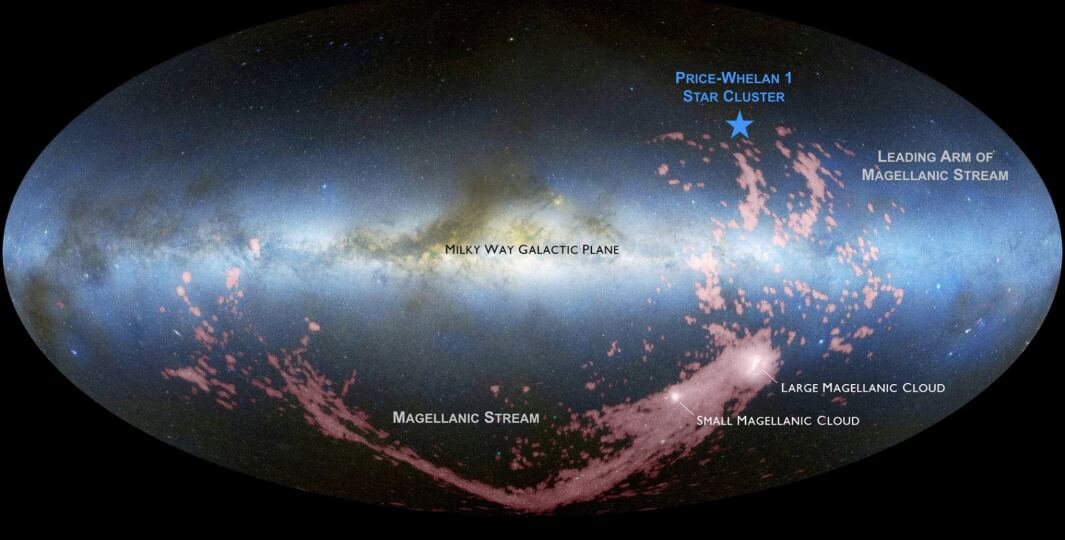
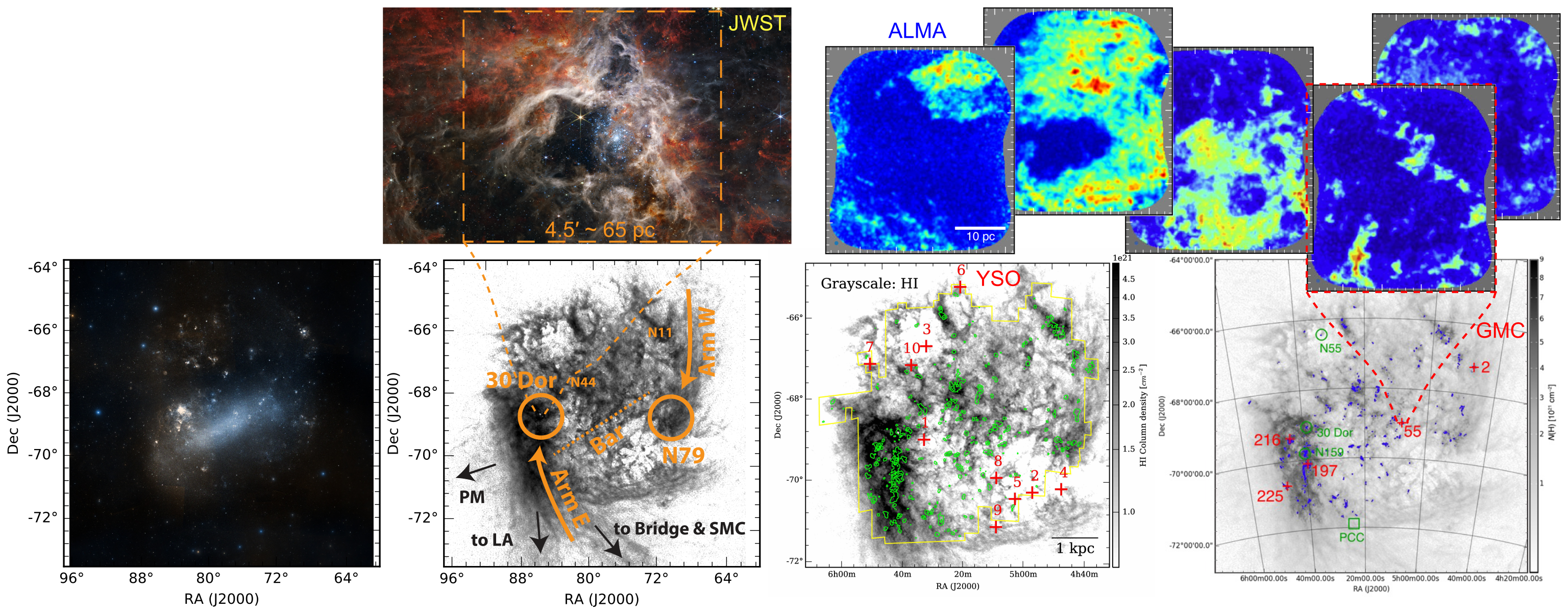
본 연구 사례는 제안된 50m 서브밀리미터 망원경 AtLAST가 먼지/가스의 심층 매핑을 통해 광대한 하늘 영역과 여러 트레이서를 이용해 국지 은하의 ISM 및 별 형성 연구를 어떻게 혁신할지, 특히 LMC/SMC에 대해 설명한다.
Understanding the physical processes that regulate star formation and galaxy evolution are major areas of activity in modern astrophysics. Nearby galaxies offer unique opportunities to inspect interstellar medium (ISM), star formation (SF), radiative, dynamic and magnetic physics in great detail from sub-galactic (kpc) scales to sub-cloud (sub-pc) scales, from quiescent galaxies to starbursts, and from field galaxies to overdensities. In this case study, we discuss the major breakthroughs in this area of research that will be enabled by the Atacama Large Aperture Submillimeter Telescope (AtLAST), a proposed 50-m single-dish submillimeter telescope. The new discovery space of AtLAST comes from its exceptional sensitivity, in particular to extended low surface brightness emission, a very large 2 degree field of view, and correspondingly high mapping efficiency. This paper focuses on four themes which will particularly benefit from AtLAST: 1) the LMC and SMC, 2) extragalactic magnetic fields, 3) the physics and chemistry of the interstellar medium, and 4) star formation and galaxy evolution. With ~1000-2000h surveys each, AtLAST could deliver deep dust continuum maps of the entire LMC and SMC fields at parsec-scale resolution, high-resolution maps of the magnetic field structure, gas density, temperature and composition of the dense and diffuse ISM in ~100 nearby galaxies, as well as the first large-scale blind CO survey in the nearby Universe, delivering molecular gas masses for up to 10^6 galaxies (3 orders of magnitude more than current samples). Through such observing campaigns, AtLAST will have a profound impact on our understanding of the baryon cycle and star formation across a wide range of environments.
연구 동기 및 목표
- 근처 은하의 가스와 먼지에 초점을 맞춘 AtLAST의 과학 사례를 동기 부여하고 정의한다.
- AtLAST가 다양한 환경에서 ISM 물리학, 화학, 자기장 및 별 형성을 어떻게 탐구할지 시연한다.
- LMC/SMC를 주요 실험실로 강조하고 이러한 목표를 달성하기 위한 관측 요구 사항을 정량화한다.
- 잠재적인 설문 전략을 설명하고 은하의 바리온 순환 이해에 미치는 영향을 제시한다.
제안 방법
- AtLAST의 능력을 설명한다: 50m 단일접시, 확장 발산에 대한 탁월한 민감도, 2° 시야, 그리고 높은 맵핑 효율.
- Band 3에서 Band 10까지 다-band 연속체와 스펙트럴 라인 설문을 제안하여 먼지와 가스 트레이서를 매핑한다.
- LMC/SMC에 대한 구체적인 설문 시나리오를 개요하고, 온소스 시간 추정치(~2900시간 기본)와 분해능(Band 10 약 1.5–2″)을 제공한다.
- 기존 시설(ALMA, APEX, Herschel)과의 능력 비교 및 AtLAST가 CO-다크 가스와 확산형 ISM에 어떻게 독특하게 대응하는지 논의한다.
- 가스 상을 특징짓기 위한 CO, [CI], [CII], 먼지 방출 등 표적 트레이서를 논의한다.
- AtLAST 데이터를 가스 질량, 먼지 질량, 금속 함량 효과, 별 형성 과정을 제약하는 프레임워크를 제시한다.
실험 결과
연구 질문
- RQ1LMC/SMC의 확산형 및 고밀도 ISM가 은하수 환경과 어떻게 다른가, 그리고 이것이 별 형성에 대해 무엇을 시사하는가?
- RQ2저금속도 환경에서 CO-다크 분자 가스의 범위와 특성은 무엇이며, [CI] 및 다른 선들로 어떻게 추적할 수 있는가?
- RQ3먼지 특성(온도, 발광율, 질량)은 LMC/SMC의 금속도와 환경에 따라 어떻게 달라지는가?
- RQ4은하 규모에서 하위-kpc 규모까지 가스 흐름과 별 형성을 형성하는 데 있어 자기장이 차지하는 역할은 무엇인가?
- RQ5광범위한 국소 은하 집단을 전면적으로 조사했을 때 먼지와 분자 가스의 구성은 어떠한가?
주요 결과
- 저금속 환경에서 CO-다크 가스가 중요하며, [CII] 관측은 LMC에서 CO로 추적되지 않는 차가운 가스의 큰 비율을 시사한다.
- AtLAST는 여러 밴드에서 확산 방출에 대한 전례 없는 민감도와 Herschel 대비 10배~15배 더 높은 공간 해상도로 LMC/SMC를 연속파로 매핑할 수 있어 약 100 deg² 영역에서 서브파 섭크 규모 연구를 가능하게 한다.
- AtLAST를 통한 대규모 CO 및 [CI] 설문은 기존 CO 설문과 깊이와 해상에서 대등하거나 그 이상인 연속적 고감도 커버리지를 제공할 것이다.
- 다중 대역 연속 데이터는 먼지와 자유전하/프리-프리/ CMB 전방향 혼선을 구분하게 해 주어 다양한 환경에서 먼지 질량과 온도 추정치를 개선한다.
- 고주파에서 CO, [CI] 등의 선 설문은 상당한 영역에서 가능해져 구름 규모에서 은하 규모까지의 자세한 들뜸과 가스 상태 연구를 가능하게 한다.
- 설문 전략은 LMC/SMC 연속 파 매핑에 약 2900시간에 달하는 상당한 관측 시간을 다년간에 걸쳐 분산시키는 것을 시사한다.
이 논문 읽기
누빈트 뷰어에서 원문을 열고, 읽으면서 궁금한 곳을 바로 물어보세요.
누빈트에서 이 논문 읽기이 리뷰는 AI가 논문 원문을 바탕으로 만들었습니다. 인용하기 전에 원문을 확인해 주세요.