
[논문 리뷰] ATLASGAL: 3-mm class I methanol masers in high-mass star formation regions
이 연구는 IRAM 30m 전자현미경을 사용하여 408개의 ATLASGAL 클러스터에 대해 3-mm 스펙트럼 라인 조사(스캔)를 수행하여 84, 95, 및 104.3 GHz에서 클래스 I 메탄올 마저를 탐지하였다. 각각 54개, 100개, 4개의 새로운 마저 탐지가 이루어졌으며, 95 GHz 마저가 84 GHz 마저보다 더 강력하며, 마저는 SiO 충격 트레이서 및 볼로메트릭 빛의 세기, H₂ 열량 밀도와 같은 클러스터 특성과 강하게 상관됨을 확인하여 고질량 성간 별 형성의 초기 단계에서 발생하는 충격을 나타내는 지표임을 밝혔다.
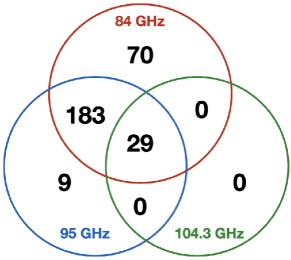
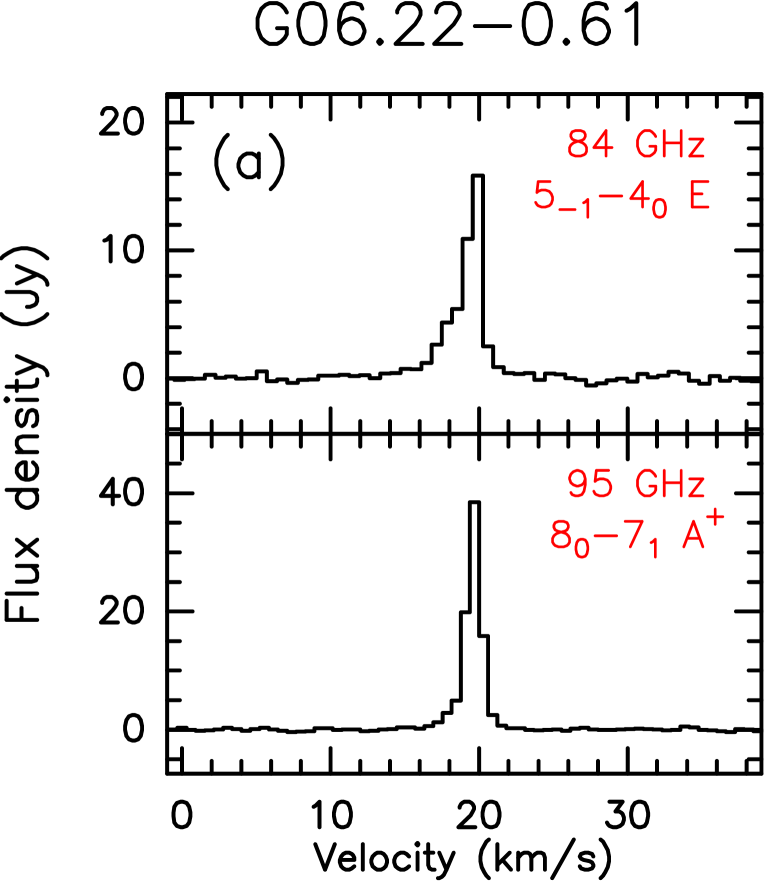
We analyzed the 3-mm wavelength spectral line survey of 408 ATLASGAL clumps observed with the IRAM 30m-telescope, focusing on the class I methanol masers with frequencies near 84, 95 and 104.3 GHz. We detect narrow, maser-like features towards 54, 100 and 4 sources in the maser lines near 84, 95 and 104.3 GHz, respectively. Among them, fifty 84 GHz masers, twenty nine 95 GHz masers and four rare 104.3 GHz masers are new discoveries. The new detections increase the number of known 104.3 GHz masers from 5 to 9. The 95 GHz class I methanol maser is generally stronger than the 84 GHz maser counterpart. We find 9 sources showing class I methanol masers but no SiO emission, indicating that class I methanol masers might be the only signpost of protostellar outflow activity in extremely embedded objects at the earliest evolutionary stage. Class I methanol masers that are associated with sources that show SiO line wings are more numerous and stronger than those without such wings. The total integrated intensity of class I methanol masers is well correlated with the integrated intensity and velocity coverage of the SiO (2--1) emission. The properties of class I methanol masers are positively correlated with the bolometric luminosity, clump mass, peak H$_2$ column density of their associated clumps but uncorrelated with the luminosity-to-mass ratio, dust temperature, and mean H$_2$ volume density. We suggest that the properties of class I masers are related to shocks traced by SiO. Based on our observations, we conclude that class I methanol masers at 84 and 95 GHz can trace a similar evolutionary stage as H$_2$O maser, and appear prior to 6.7 and 12.2 GHz methanol and OH masers. Despite their small number, the 104.3 GHz class I masers appear to trace a short and more evolved stage compared to the other class I masers. [abridged]
연구 동기 및 목표
- 고질량 성간 별 형성 영역에서 84, 95, 및 104.3 GHz에서 새로운 클래스 I 메탄올 마저를 탐지하기 위해.
- 클래스 I 마저와 SiO 방출과 같은 충격 트레이서 간의 통계적 상관관계를 조사하기 위해.
- 다양한 진화 단계에서 마저 특성과 그 주변 클러스터 특성을 비교하기 위해.
- 다중 클래스 I 마저가 동시에 흥분될 수 있는 물리적 조건을 규명하기 위해.
- 다른 마저 종류들에 비해 각 클래스 I 마저 전이가 나타내는 진화 단계를 규명하기 위해.
제안 방법
- IRAM 30m 전자현미경을 사용하여 408개의 ATLASGAL 클러스터에 대해 3-mm 스펙트럼 라인 조사(스캔)를 수행하였다.
- 클래스 I 메탄올 마저의 84, 95, 및 104.3 GHz 전이에서 좁은, 마저 유사한 특징을 식별하기 위해 집중하였다.
- 마저 탐지 결과를 SiO (2–1) 방출과 연관시켰으며, 특히 충격을 나타내는 라인의 날개 부분을 분석하였다.
- 마저 통합 강도와 클러스터 특성 간의 상관관계를 분석하였으며, 볼로메트릭 빛의 세기, 질량, H₂ 열량 밀도, 먼지 온도, H₂ 부피 밀도를 포함하였다.
- 다중 마저 전이가 관측된 영역에서 운동 온도, 파라-H₂ 밀도, 메탄올 열량 밀도를 추정하기 위해 물리적 모델링을 사용하였다.
- 빛의 세기 대비 질량 비율과 마저 존재 여부를 기반으로 한 진화 단계 연관성을 평가하기 위해 통계 분석을 적용하였다.
실험 결과
연구 질문
- RQ1고질량 성간 별 형성 클러스터에서 84, 95, 및 104.3 GHz에서 클래스 I 메탄올 마저의 탐지율은 어떠한가?
- RQ2마저 특성은 SiO 방출 특징, 특히 충격을 나타내는 라인 날개와 어떻게 상관되는가?
- RQ3클러스터 특성 중에서(예: 빛의 세기, 질량, H₂ 열량 밀도) 마저 강도와 가장 강하게 상관되는 것은 무엇인가?
- RQ484 및 95 GHz 클래스 I 마저는 H₂O 마저와 같은 진화 단계를 나타내는가? 6.7/12.2 GHz 메탄올 및 OH 마저와 비교해보면 어떠한가?
- RQ5다중 클래스 I 마저 전이가 동시에 흥분될 수 있도록 하기 위한 물리적 조건은 무엇인가?
주요 결과
- 84 GHz에서 54개의 새로운, 95 GHz에서 29개의 새로운, 104.3 GHz에서 4개의 새로운 클래스 I 메탄올 마저가 탐지되었으며, 이로 인해 알려진 104.3 GHz 마저의 수는 5개에서 9개로 증가하였다.
- 95 GHz 클래스 I 마저는 일반적으로 84 GHz 마저보다 더 강력하며, 마저와 시스템성 속도 간의 상대 속도는 약 ~5 km s⁻¹ 이내였다.
- 9개의 소스에서 클래스 I 마저는 탐지되었지만 SiO 방출은 관측되지 않아, 초기 임베디드 단계에서 마저가 유일한 원시별 분출 활동 지표가 될 수 있음을 시사하였다.
- 마저 강도는 SiO (2–1)의 통합 강도와 속도 범위(FWZP)와 양의 상관관계를 보이며, 충격 활동과의 강한 연관성을 나타내었다.
- 클래스 I 마저 특성은 볼로메트릭 빛의 세기, 클러스터 질량, 최고 H₂ 열량 밀도와 양의 상관관계를 보였지만, 빛의 세기 대비 질량 비율, 먼지 온도, 평균 H₂ 부피 밀도와는 상관관계가 없었다.
- 104.3 GHz 마저는 오직 H II 영역 단계에서만 탐지되었으며, 낮은 주파수 마저보다 더 높은 클러스터 빛의 세기(>10⁴ L⊙), 질량(>200 M⊙), H₂ 열량 밀도(>10²³ cm⁻²)를 요구하여 더 진화된 단계임을 나타내었다.
이 논문 읽기
누빈트 뷰어에서 원문을 열고, 읽으면서 궁금한 곳을 바로 물어보세요.
누빈트에서 이 논문 읽기이 리뷰는 AI가 논문 원문을 바탕으로 만들었습니다. 인용하기 전에 원문을 확인해 주세요.