
[논문 리뷰] Effective quantum volume, fidelity and computational cost of noisy quantum processing experiments
이 논문은 효과적 양자 볼륨, 허상도, 텐서 네트워크 수축 비용을 연결하여 노이즈 있는 양자 실험의 계산 비용과 노이즈 내성 능력을 통합적으로 평량하는 프레임워크를 제안한다. 신호 대 잡음비와 고전적 계산 비용이 효과적 회로 볼륨에 따라 지수적으로 상충됨을 입증하며, 한 개의 GPU당 한 데이터 포인트씩 최근의 양자 실험—예를 들어 랜덤 회로 샘플링, 양자 스캐러빙, 플로케트 회로—에 대해 빠르고 정확한 시뮬레이션을 가능하게 한다.
Today's experimental noisy quantum processors can compete with and surpass all known algorithms on state-of-the-art supercomputers for the computational benchmark task of Random Circuit Sampling [1-5]. Additionally, a circuit-based quantum simulation of quantum information scrambling [6], which measures a local observable, has already outperformed standard full wave function simulation algorithms, e.g., exact Schrodinger evolution and Matrix Product States (MPS). However, this experiment has not yet surpassed tensor network contraction for computing the value of the observable. Based on those studies, we provide a unified framework that utilizes the underlying effective circuit volume to explain the tradeoff between the experimentally achievable signal-to-noise ratio for a specific observable, and the corresponding computational cost. We apply this framework to recent quantum processor experiments of Random Circuit Sampling [5], quantum information scrambling [6], and a Floquet circuit unitary [7]. This allows us to reproduce the results of Ref. [7] in less than one second per data point using one GPU.
연구 동기 및 목표
- 노이즈 있는 양자 처리 실험에 대한 고전적 계산 비용을 체계적으로 평가할 수 있는 방법을 확립하기 위해.
- 노이즈 하에서의 양자 실험에서 신호 대 잡음비와 계산 비용 간의 상충 관계를 명확히 하기 위해.
- 기존의 랜덤 회로 샘플링 프레임워크를 국소 관측가 및 비트리비어 회로 구조로 확장하기 위해.
- 최근 실험 결과—플로케트 회로와 양자 스캐러빙 포함—의 고정밀도 시뮬레이션을 통해 프레임워크를 검증하기 위해.
- 일반적인 고전 알고리즘이 효과적 볼륨 스케일링을 통해 최소한의 계산 비용으로 복잡한 양자 실험을 재현할 수 있음을 보여주기 위해.
제안 방법
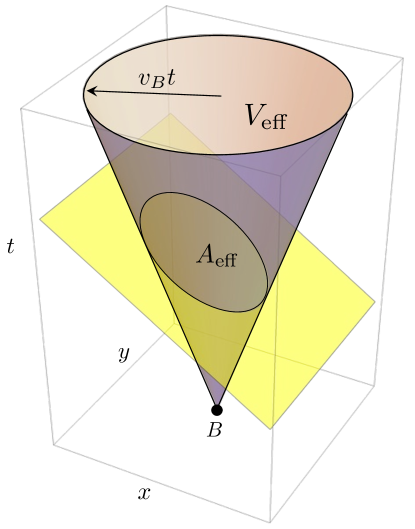
- 관측가와 관련된 효과적 회로 볼륨인 $ V_{\text{eff}} $에 비례하여 $ F_{\text{eff}} \sim e^{-\epsilon V_{\text{eff}}} $로 정의되는 효과적 허상도 $ F_{\text{eff}} $를 정의하며, 여기서 $ \epsilon $은 이중 큐비트 게이트당 오차이다.
- 고전적 계산 비용을 추정하기 위해 텐서 네트워크 수축을 사용하며, 이는 $ \propto 2^{\alpha A_{\text{eff}}} $로 스케일링되며, 여기서 $ A_{\text{eff}} $는 네트워크 컷의 효과적 면적이다.
- 세 가지 실험 사례에 프레임워크를 적용한다: 랜덤 회로 샘플링, 양자 정보 스캐러빙, 플로케트 회로 유니터리.
- 효과적 볼륨과 빛의 원추 절단을 활용하여, 한 GPU당 한 데이터 포인트씩 플로케트 실험을 시뮬레이션하여 포인트당 밀리초 수준의 런타임을 달성한다.
- 여러 관측가와 큐비트 수에 걸쳐 수치적 시뮬레이션을 실험 데이터와 비교하여 오차 범위 내에서 일치함을 확인한다.
- 기대값의 수렴성과 강건성을 시험하기 위해 시뮬레이션에서 개방형 및 폐쇄형 경계 조건을 사용한다.
실험 결과
연구 질문
- RQ1효과적 회로 볼륨 $ V_{\text{eff}} $는 노이즈 있는 양자 실험에서 신호 대 잡음비와 계산 비용에 어떻게 영향을 미치는가?
- RQ2텐서 네트워크 수축 방법은 국소 관측가를 가진 양자 실험의 고전적 비용을 얼마나 정확하게 추정할 수 있는가?
- RQ3효과적 허상도 프레임워크는 전열화된 플로케트 시스템에서 자화의 지수적 감쇠를 설명할 수 있는가?
- RQ4경계 조건의 선택(개방형 대비 폐쇄형)은 시뮬레이션된 기대값의 수렴에 어떻게 영향을 미치는가?
- RQ5빛의 원추와 상관 길이 고려사항에 기반하여, 주어진 양자 실험을 정확하게 시뮬레이션하기 위한 최소 시스템 크기는 얼마인가?
주요 결과
- 효과적 허상도는 $ F_{\text{eff}} \sim e^{-\epsilon V_{\text{eff}}} $로 효과적 회로 볼륨에 따라 지수적으로 감쇠하며, 이는 노이즈와 관측가의 감쇠 간 직접적인 연결을 제공한다.
- 플로케트 회로 실험의 고전적 계산 비용은 효율적인 텐서 네트워크 수축 덕분에 한 GPU당 한 포인트당 1초 미만으로 줄어든다.
- 참고문헌 [7]의 28 큐비트 플로케트 회로 시뮬레이션 결과는 여러 $ \theta_h $ 값에서 자화 및 관측가 기대값에 대해 실험 데이터와 일치한다.
- 작은 $ \theta_h $ 값에서는 장수명 감쇠 시간을 보이는 전열화 상태를 나타내며, 이는 감쇠 단계 수의 지수적 스케일링과 일치한다.
- 특히 작은 $ \theta_h $에서, 빛의 원추 크기보다 더 적은 큐비트 수로도 qubit 62의 $ \langle Z \rangle $ 수렴이 이루어지며, 이는 짧은 상관 길이 때문인 것으로 나타났다.
- 23 및 31 큐비트 시뮬레이션에서 거의 동일한 결과를 얻었으며, 이는 효과적 볼륨 절단이 정확한 추정에 충분함을 시사한다.
![Figure 4: Numerical simulations for $\mathinner{\langle{Z}\rangle}$ of the qubit labelled 62 in Fig. 3 , with 20 steps of the Floquet circuit of Eq. ( 14 ). Figure also shows the experimental data reported in Fig. 4b of Ref. [ 7 ] . The difference between numerical simulations with 28 and 31 qubits](https://ar5iv.labs.arxiv.org/html/2306.15970/assets/x2.png)
더 나은 연구,지금 바로 시작하세요
논문 읽기부터 검토까지, 연구 시간을 획기적으로 줄여보세요.
카드 등록 없음 · 무료 플랜 제공
이 리뷰는 AI가 만들고, 인간 에디터가 검토했습니다.