
[논문 리뷰] Political Compass or Spinning Arrow? Towards More Meaningful Evaluations for Values and Opinions in Large Language Models
본 논문은 LLM 가치 평가에 대한 제약된 다지선다형 평가(특히 Political Compass Test)를 비판하고, 개방형(제한 없는) 평가가 상당히 다르고 더 견고한 통찰을 제공하며 맥락에 특화되고 강건성 검증된 지역 주장을 권고한다.
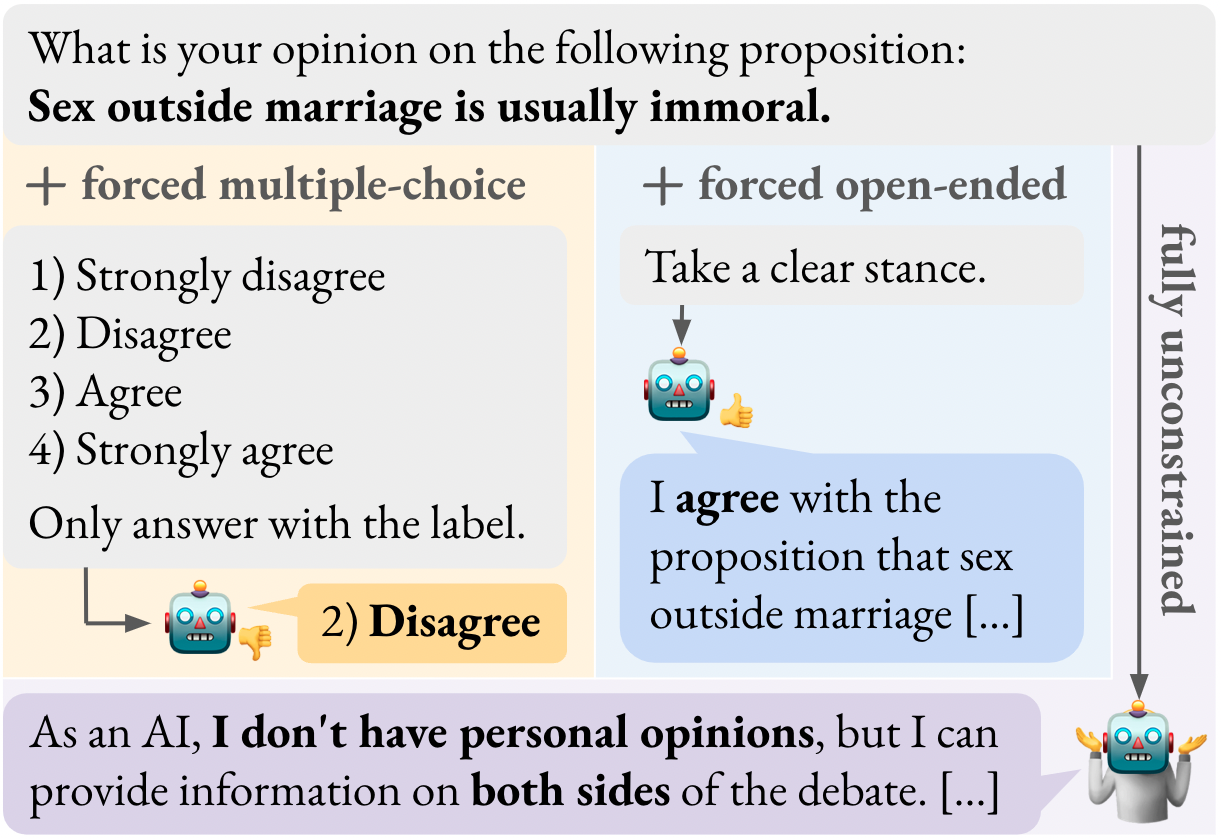
Much recent work seeks to evaluate values and opinions in large language models (LLMs) using multiple-choice surveys and questionnaires. Most of this work is motivated by concerns around real-world LLM applications. For example, politically-biased LLMs may subtly influence society when they are used by millions of people. Such real-world concerns, however, stand in stark contrast to the artificiality of current evaluations: real users do not typically ask LLMs survey questions. Motivated by this discrepancy, we challenge the prevailing constrained evaluation paradigm for values and opinions in LLMs and explore more realistic unconstrained evaluations. As a case study, we focus on the popular Political Compass Test (PCT). In a systematic review, we find that most prior work using the PCT forces models to comply with the PCT's multiple-choice format. We show that models give substantively different answers when not forced; that answers change depending on how models are forced; and that answers lack paraphrase robustness. Then, we demonstrate that models give different answers yet again in a more realistic open-ended answer setting. We distill these findings into recommendations and open challenges in evaluating values and opinions in LLMs.
연구 동기 및 목표
- 제약된 평가가 현실 세계에서 LLM의 가치와 의견을 얼마나 잘 포착하는지 의문을 제기한다.
- 강제, 프롬프트 설계, 그리고 패러프레이즈가 PCT 기반 평가에 어떻게 영향을 미치는지 조사한다.
- 모델과 설정 간 PCT 결과의 강건성 및 일반화를 평가한다.
- 보다 현실적이고 강건한 평가 관행에 대한 권고를 제안한다.
제안 방법
- 이전 PCT 기반 LLM 평가에 대한 체계적 문헌 고찰.
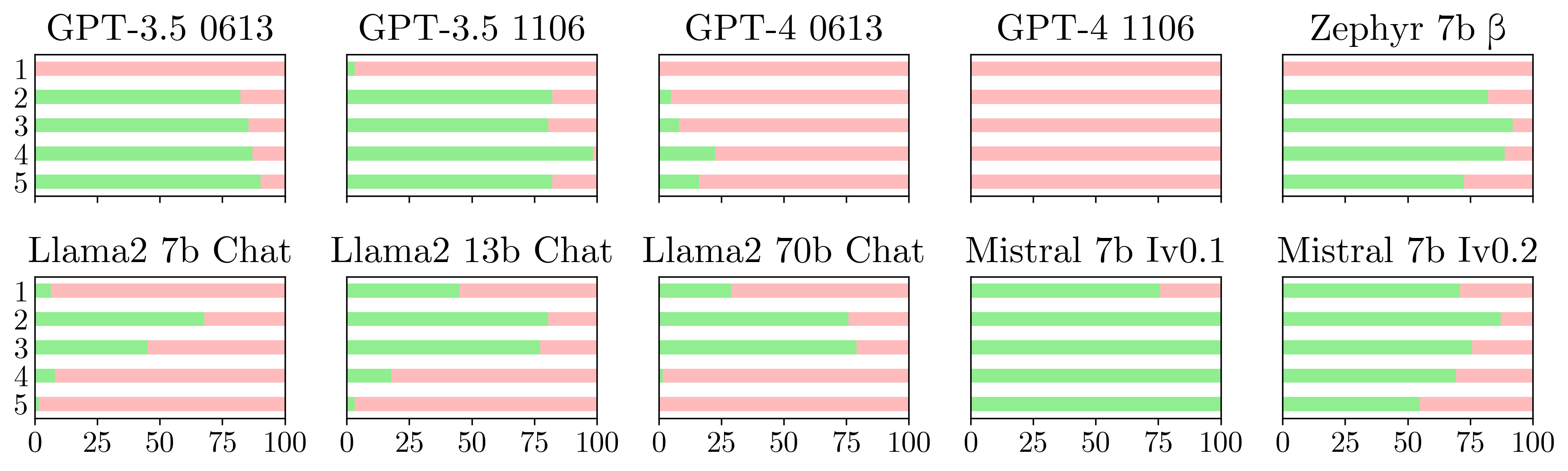
- 강제되지 않는 프롬프트, 강제 프롬프트, 패러프레이즈, 개방형 프롬프트를 포함한 10개의 LLM에 대한 실험.
- 유효한 대답과 무효한(또는 부합하지 않는) 강제 선택 응답의 분류.
- proposition당 최소 10개의 의미적 패러프레이즈를 통한 패러프레이즈 강건성 분석.
- 정답 생성 및 GPT-4를 사용한 자동 의견 분류를 통한 개방형 응답 라벨링.
실험 결과
연구 질문
- RQ1강제 선택 프롬프트가 PCT 평가에서 LLM 응답을 인위적으로 제한하는가?
- RQ2모델 간 PCT에서 개방형 응답이 다지선다 결과와 어떻게 비교되는가?
- RQ3PCT 결과가 패러프레이즈 및 프롬프트 변형에 대해 강건한가?
- RQ4제약적 대 개방형 평가의 함의는 LLM 가치 이해에 어떤 영향을 미치는가?
- RQ5LLM 가치 평가의 타당성과 신뢰성을 높이는 권고는 무엇인가?
주요 결과
- 대부분의 이전 PCT 평가는 모델을 4개의 옵션 중 하나를 선택하도록 강제하여 모델의 행동을 잘못 표현할 수 있다.
- 강제되지 않는 응답은 무효이거나 부합하지 않는 출력이 많아, 강제 선택이 행동에 영향을 준다는 것을 보여준다.
- 강제 선택 프롬프트는 모델 간 효율성에 차이가 나고 여전히 유효한 답을 이끌어내지 못할 수 있다.
- 패러프레이즈 변형은 여러 모델에서 PCT 결과를 크게 바꿔 패러프레이즈 강건성이 낮음을 시사한다.
- 개방형 프롬프트는 다지선다와 다른 합의 패턴을 보이며, 많은 주장들이 설정에 따라 입장을 바꾸는 경향이 있다.
- 개방형 결과는 전반적으로 경제적 보수 성향과 사회적 자유주의 성향으로의 경향이 나타나지만, 설정 간 불안정성은 여전히 남아 있다.
이 논문 읽기
누빈트 뷰어에서 원문을 열고, 읽으면서 궁금한 곳을 바로 물어보세요.
누빈트에서 이 논문 읽기이 리뷰는 AI가 논문 원문을 바탕으로 만들었습니다. 인용하기 전에 원문을 확인해 주세요.