
[논문 리뷰] Self-similarity-based super-resolution of photoacoustic angiography from hand-drawn doodles
이 논문은 손으로 그린 드로잉에서 확산 기반 생성 모델을 사용해 고품질의 PAA 영상을 생성하는 자기유사성 기반 초해상도 방법을 제안한다. 이는 실제 PAA 데이터가 극소수일 경우에도 효과적인 훈련을 가능하게 하며, 실제 PAA 영상으로 훈련된 모델를 능가하는 우수한 복원 품질을 달성한다. 이는 의료 영상 초해상도 분야에서 합성 데이터를 활용한 제로샷 일반화의 타당성을 입증한다.
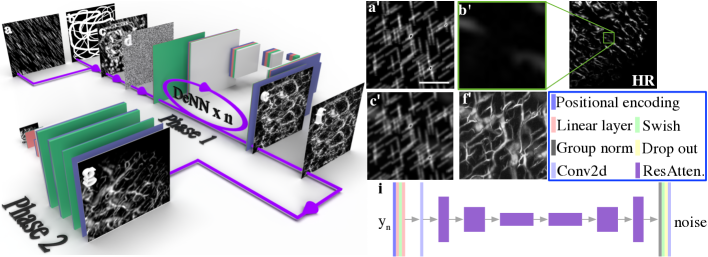
Deep-learning-based super-resolution photoacoustic angiography (PAA) is a powerful tool that restores blood vessel images from under-sampled images to facilitate disease diagnosis. Nonetheless, due to the scarcity of training samples, PAA super-resolution models often exhibit inadequate generalization capabilities, particularly in the context of continuous monitoring tasks. To address this challenge, we propose a novel approach that employs a super-resolution PAA method trained with forged PAA images. We start by generating realistic PAA images of human lips from hand-drawn curves using a diffusion-based image generation model. Subsequently, we train a self-similarity-based super-resolution model with these forged PAA images. Experimental results show that our method outperforms the super-resolution model trained with authentic PAA images in both original-domain and cross-domain tests. Specially, our approach boosts the quality of super-resolution reconstruction using the images forged by the deep learning model, indicating that the collaboration between deep learning models can facilitate generalization, despite limited initial dataset. This approach shows promising potential for exploring zero-shot learning neural networks for vision tasks.
연구 동기 및 목표
- 실제 PAA 훈련 데이터가 부족하여 모델의 일반화 능력이 저하되고 스캔 시간이 증가하며 조직 손상 위험이 증가하는 문제를 해결하기 위해.
- 시간이 오래 걸리는 진짜 PAA 영상의 광범위한 확보에 의존하지 않는 데이터 효율적인 초해상도 프레임워크를 개발하기 위해.
- 고성능 초해상도 모델 훈련을 위한 실제 데이터의 대안으로 합성된 확산 기반 PAA 영상의 실현 가능성 탐색을 위해.
- 과도하게 샘플링된 데이터에서의 초해상도 복원을 통해 실시간 고해상도 PAA 영상 촬영을 가능하게 하기 위해.
제안 방법
- 손으로 그린 드로잉에서 실제 PAA 영상의 작은 세트를 기반으로 확산 확률 모델을 훈련시어 현실적인 고해상도 PAA 영상을 생성한다.
- 생성된 PAA 영상으로 자기유사성 기반 초해상도 모델(SwinIR)을 훈련시키며, 혈관 패턴의 구조적 재현성을 활용한다.
- 확산 과정의 반복적 노이즈 제거 단계를 활용해 저해상도 입력을 구조적 정밀도가 향상된 고해상도 PAA 출력으로 정밀하게 개선한다.
- SwinIR의 자기유사성 메커니즘은 혈관 네트워크 내 반복 패턴을 식별하고 재구성함으로써 특징 학습을 향상시킨다.
- 원래의 202장의 진짜 이미지보다 훨씬 많은 10,000장 이상의 위조 PAA 영상으로 훈련이 가능해져 데이터셋을 크게 확장한다.
- 동적 PAA 영상 시퀀스에서의 검증을 통해 재구성된 프레임 간 시간적 일관성이 입증된다.
실험 결과
연구 질문
- RQ1손으로 그린 드로잉에서 유도된 합성 PAA 영상가 초해상도 모델 훈련에 실제 PAA 영상과 동일하게 효과적으로 사용될 수 있는가?
- RQ2특히 데이터가 적은 환경에서 위조 PAA 데이터로 훈련된 초해상도 모델이 실제 데이터로 훈련된 모델보다 더 잘 일반화되는가?
- RQ3제안된 방법이 과도하게 샘플링된 프레임에서 동적 PAA 영상 시퀀스를 고품질로 시간적으로 일관성 있게 재구성할 수 있는가?
- RQ4확산 기반 데이터 생성 기법이 PAA 초해상도에서 모델의 강인성과 영상의 현실감을 얼마나 향상시키는가?
주요 결과
- 교차 도메인 테스트에서 위조 PAA 영상으로 훈련된 초해상도 모델이 실제 PAA 영상으로 훈련된 모델보다 더 높은 PSNR 및 SSIM 값을 기록했다.
- 2D에서 원래 해상도의 1/4로 샘플링을 줄임으로써 영상 촬영 속도를 16배로 가속화하면서도 높은 복원 품질을 유지했다.
- 재구성된 동적 PAA 영상 시퀀스는 기준 영상보다 배경이 더 깔끔하고 노이즈가 적은 강한 시간적 일관성을 보였다.
- 원래 도메인 및 교차 도메인 평가에서 위조 영상으로 훈련된 모델이 실제 데이터 모델을 능가했으며, 이는 향상된 일반화 능력을 시사한다.
- 확산 기반 생성 기법을 활용함으로써 훈련 데이터의 다양성과 양이 크게 증가하여 작고 제한된 실제 데이터셋의 한계를 극복했다.
- 스캔 횟수를 줄임으로써 조직에 노출되는 레이저 노출량을 최소화하여 PAA의 더 안전한 임상 적용을 지원한다.
이 논문 읽기
누빈트 뷰어에서 원문을 열고, 읽으면서 궁금한 곳을 바로 물어보세요.
누빈트에서 이 논문 읽기이 리뷰는 AI가 논문 원문을 바탕으로 만들었습니다. 인용하기 전에 원문을 확인해 주세요.