
[論文レビュー] A Berkeley View of Systems Challenges for AI
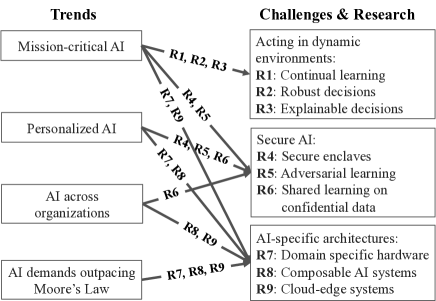
論文は、動的環境、プライバシー、セキュリティ、ポスト・ムーアの法則のスケーラビリティに対処するために、システム、アーキテクチャ、セキュリティの協調的イノベーションが必要であると主張し、動的環境での行動、セキュアAI、AI特化アーキテクチャを軸とした9つの研究機会を整理している。
With the increasing commoditization of computer vision, speech recognition and machine translation systems and the widespread deployment of learning-based back-end technologies such as digital advertising and intelligent infrastructures, AI (Artificial Intelligence) has moved from research labs to production. These changes have been made possible by unprecedented levels of data and computation, by methodological advances in machine learning, by innovations in systems software and architectures, and by the broad accessibility of these technologies. The next generation of AI systems promises to accelerate these developments and increasingly impact our lives via frequent interactions and making (often mission-critical) decisions on our behalf, often in highly personalized contexts. Realizing this promise, however, raises daunting challenges. In particular, we need AI systems that make timely and safe decisions in unpredictable environments, that are robust against sophisticated adversaries, and that can process ever increasing amounts of data across organizations and individuals without compromising confidentiality. These challenges will be exacerbated by the end of the Moore's Law, which will constrain the amount of data these technologies can store and process. In this paper, we propose several open research directions in systems, architectures, and security that can address these challenges and help unlock AI's potential to improve lives and society.
研究の動機と目的
- 動的環境で時間通りに安全で堅牢かつ機密性の高いAIシステムの必要性を動機づける。
- データ成長とポスト・ムーアの制約の下で、システムとアーキテクチャがスケーラブルなAIを可能にする役割を強調する。
- 継続的学習、ライフロ-long? 生涯学習、パーソナライズ、組織間データ活用における主要な課題を特定する。
- 動的環境、セキュリティ、AI特化アーキテクチャにおける具体的な研究方向(R1–R9)を提案する。
提案手法
- ビッグデータ、ビッグシステム、アクセス可能性といったAIトレンドから洞察を統合し、AI展開の体系的課題を特定する。
- 動態、セキュリティ、アーキテクチャをAIニーズに結ぶ9つの研究機会(R1–R9)を明示する。
- RL、シミュレーテッドリアリティ、プロヴェナンス、プライバシーを将来のシステムの核心的手法テーマとして位置づける。
- セキュア enclaves、堅牢な意思決定、差分プライバシーといったAIモデルの提供におけるシステム設計原則を推奨する。
- データ・プロヴェナンス、リプレイアビリティ、因果推論を説明可能性と信頼性のためのシステムレベルの能力として概説する。
実験結果
リサーチクエスチョン
- RQ1動的で実世界の環境でAIを展開するために必須のシステムレベルの課題は何か?
- RQ2システム設計、セキュリティ機構、アーキテクチャは組織間で堅牢でプライベートかつスケーラブルなAIをいかに可能にするか?
- RQ3継続的学習、セキュアAI、AI専用のハードウェア/ソフトウェアニーズに対処できる研究方向(R1–R9)は?
- RQ4RL、シミュレーテッドリアリティ、プロヴェナンスのような技術をシステムに統合して安全性、説明性、性能をどう向上させるか?
主な発見
- AIの進展はデータ、スケーラブルなシステム、利用可能なツールに依存しており、研究室を超えた実世界の応用を可能にする。
- データと計算の拡大はムーアの法則の低速化に伴い、新しいシステムとアーキテクチャの革新を必要とする、特にミッション・クリティカルなAIにとって。
- RLと深層学習には、動的タスクグラフ、ミリ秒レベルの待機、異種ハードウェアをサポートする新しいシステムが必要。
- シミュレーテッドリアリティ(SR)と継続的学習は、変化する環境に対して安全・迅速・スケーラブルに相互作用するために不可欠。
- セキュリティ課題はエンクレーブ、対敵学習防御、プライバシー保護の学習と提供を促し、システムレベルの保護を要請する。
- 組織横断のデータ共有は学習に利益をもたらす可能性があるが、機密性を保護するためのセキュアでプライベートな機構(エンクレーブ、MPC、差分プライバシー)が必要。
より良い研究を、今すぐ始めましょう
論文設計から論文執筆まで、研究時間を劇的に削減しましょう。
クレジットカード登録不要
このレビューはAIが作成し、人間の編集者が確認しました。