
[Paper Review] A Closer Look into Recent Video-based Learning Research: A Comprehensive Review of Video Characteristics, Tools, Technologies, and Learning Effectiveness
This paper presents a comprehensive review of 257 video-based learning (VBL) studies (2016–2021) using PRISMA guidelines, identifying eight video characteristic categories and four research directions. It finds textual, visual, and interactive features are most studied, with deep learning widely used in tool development, but highlights a critical gap in multimodal integration and diverse video styles beyond STEM.
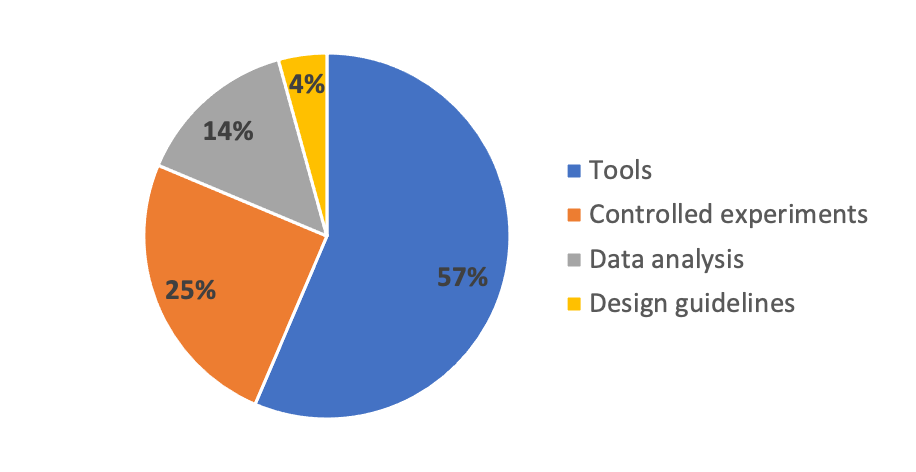
People increasingly use videos on the Web as a source for learning. To support this way of learning, researchers and developers are continuously developing tools, proposing guidelines, analyzing data, and conducting experiments. However, it is still not clear what characteristics a video should have to be an effective learning medium. In this paper, we present a comprehensive review of 257 articles on video-based learning for the period from 2016 to 2021. One of the aims of the review is to identify the video characteristics that have been explored by previous work. Based on our analysis, we suggest a taxonomy which organizes the video characteristics and contextual aspects into eight categories: (1) audio features, (2) visual features, (3) textual features, (4) instructor behavior, (5) learners activities, (6) interactive features (quizzes, etc.), (7) production style, and (8) instructional design. Also, we identify four representative research directions: (1) proposals of tools to support video-based learning, (2) studies with controlled experiments, (3) data analysis studies, and (4) proposals of design guidelines for learning videos. We find that the most explored characteristics are textual features followed by visual features, learner activities, and interactive features. Text of transcripts, video frames, and images (figures and illustrations) are most frequently used by tools that support learning through videos. The learner activity is heavily explored through log files in data analysis studies, and interactive features have been frequently scrutinized in controlled experiments. We complement our review by contrasting research findings that investigate the impact of video characteristics on the learning effectiveness, report on tasks and technologies used to develop tools that support learning, and summarize trends of design guidelines to produce learning videos
Motivation & Objective
- To identify and categorize video characteristics that influence learning effectiveness in video-based learning (VBL).
- To analyze the four main research directions in VBL: tool proposals, controlled experiments, data analysis, and design guideline development.
- To assess the role of deep learning and multimodal analysis in VBL tool development and learning effectiveness.
- To identify research gaps, including underrepresentation of non-STEM disciplines and limited use of diverse video production styles.
- To propose a taxonomy of video characteristics and contextual aspects to guide future VBL research and tool development.
Proposed method
- Systematic literature review of 257 VBL studies from computer science databases (ACM, IEEE, DBLP) using PRISMA guidelines.
- Categorization of video characteristics into eight domains: audio, visual, textual, instructor behavior, learner activities, interactive features, production style, and instructional design.
- Analysis of research methods across four types: tool proposals, controlled experiments, data analysis (using logs, biometrics, etc.), and design guideline proposals.
- Identification of dominant technologies, especially deep learning, used in video analysis, segmentation, OCR, speech-to-text, and pipeline development for learning tools.
- Comparison of experimental conditions and video characteristics across studies to assess consistency and heterogeneity in learning effectiveness findings.
- Synthesis of trends in design guidelines and recommendations for content creators, educators, and platform developers.

Experimental results
Research questions
- RQ1What are the most frequently studied video characteristics in video-based learning research from 2016 to 2021?
- RQ2How do different research methods—tool development, controlled experiments, data analysis, and guideline proposals—contribute to understanding VBL effectiveness?
- RQ3Which video production styles and modalities (audio, visual, textual, etc.) are most prevalent in controlled experiments and why?
- RQ4To what extent are multimodal representations and deep learning integrated into VBL tool development and learning outcome prediction?
- RQ5What are the key gaps in current VBL research, particularly regarding diversity in disciplines, video styles, and learner contexts?
Key findings
- Textual features (e.g., transcripts, captions) were the most frequently studied video characteristic, followed by visual features (e.g., frames, images, illustrations).
- Learner activities were primarily studied via log file analysis, while interactive features (e.g., quizzes) were most commonly evaluated in controlled experiments.
- Deep learning was the dominant technology in tool development, applied to video segmentation, OCR, speech-to-text, embeddings, and end-to-end pipelines for recommendation and learning prediction.
- Slide-based production was the most common style in controlled experiments, while handwriting, screencast, and virtual reality styles were underrepresented.
- Despite widespread use of deep learning, few studies integrated multimodal representations to model synchronous audio-visual-textual interactions, a key need for human-like learning comprehension.
- Only a small number of studies proposed design guidelines, and most were generic; there is a significant need for discipline-specific, evidence-based guidelines for effective video creation.
Read this paper
Open the full text in the Nubint reader and ask about any passage as you read.
Read this paper on NubintThis review was generated by AI from the original paper. Please check the paper before citing it.