
[Paper Review] A Comprehensive Survey of Deep Transfer Learning for Anomaly Detection in Industrial Time Series: Methods, Applications, and Directions
A comprehensive, application-focused survey of deep transfer learning for anomaly detection in industrial time series, detailing problem settings, methods, challenges, and future directions.
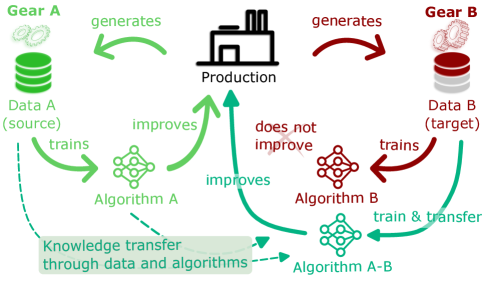
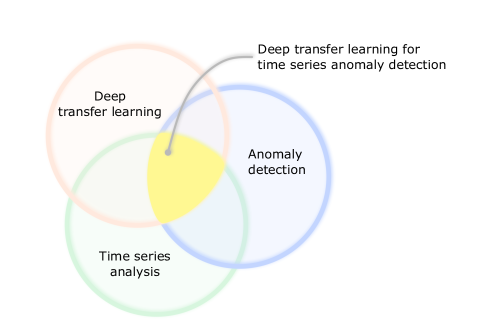
Automating the monitoring of industrial processes has the potential to enhance efficiency and optimize quality by promptly detecting abnormal events and thus facilitating timely interventions. Deep learning, with its capacity to discern non-trivial patterns within large datasets, plays a pivotal role in this process. Standard deep learning methods are suitable to solve a specific task given a specific type of data. During training, deep learning demands large volumes of labeled data. However, due to the dynamic nature of the industrial processes and environment, it is impractical to acquire large-scale labeled data for standard deep learning training for every slightly different case anew. Deep transfer learning offers a solution to this problem. By leveraging knowledge from related tasks and accounting for variations in data distributions, the transfer learning framework solves new tasks with little or even no additional labeled data. The approach bypasses the need to retrain a model from scratch for every new setup and dramatically reduces the labeled data requirement. This survey first provides an in-depth review of deep transfer learning, examining the problem settings of transfer learning and classifying the prevailing deep transfer learning methods. Moreover, we delve into applications of deep transfer learning in the context of a broad spectrum of time series anomaly detection tasks prevalent in primary industrial domains, e.g., manufacturing process monitoring, predictive maintenance, energy management, and infrastructure facility monitoring. We discuss the challenges and limitations of deep transfer learning in industrial contexts and conclude the survey with practical directions and actionable suggestions to address the need to leverage diverse time series data for anomaly detection in an increasingly dynamic production environment.
Motivation & Objective
- Provide an in-depth review of deep transfer learning for anomaly detection in industrial time series.
- Categorize transfer learning problem settings and deep transfer learning approaches.
- Summarize applications across manufacturing, predictive maintenance, energy, and infrastructure.
- Discuss challenges, limitations, and practical directions for practitioners.
Proposed method
- Classify transfer learning problem settings into inductive and transductive.
- Divide deep transfer learning into four categories: instance transfer, parameter transfer, mapping transfer, domain-adversarial transfer.
- Offer formal definitions for domains, tasks, and the learning objective in anomaly detection.
- Survey and synthesize literature with inclusion criteria (post-2013, deep transfer learning, industrial time series anomaly detection).
- Provide taxonomy and actionable recommendations for AI practitioners.
Experimental results
Research questions
- RQ1What are the prevailing deep transfer learning methods applied to anomaly detection in industrial time series?
- RQ2How are transfer learning problem settings (inductive vs. transductive) and task/domain relationships characterized in this context?
- RQ3What industrial applications (manufacturing, predictive maintenance, energy, infrastructure) have leveraged deep transfer learning for anomaly detection?
- RQ4What are the main challenges and future directions for deploying deep transfer learning in dynamic industrial environments?
Key findings
- There are 45 papers on deep transfer learning in general and 37 papers specifically for deep transfer learning in industrial time series anomaly detection included in the survey.
- Deep transfer learning methods are categorized into four main approaches: instance transfer, parameter transfer, mapping transfer, and domain-adversarial transfer.
- The survey discusses practical challenges such as data distribution shifts, non-stationarity, and the need for labeled data in industrial settings.
- It provides actionable directions and recommendations to leverage diverse time series data for anomaly detection in dynamic production environments.
- The methodology includes a literature search across Google Scholar, Scopus, Elsevier, and IEEE, with criteria focusing on post-2013 studies using deep transfer learning for time-series anomaly detection in industry.
Read this paper
Open the full text in the Nubint reader and ask about any passage as you read.
Read this paper on NubintThis review was generated by AI from the original paper. Please check the paper before citing it.