
[Paper Review] A Large-Scale Pad-Sensor Based Prototype of the Silicon Tungsten Electromagnetic Calorimeter for the Forward Direction in ALICE at LHC
This paper presents the design, construction, and performance validation of a large-scale silicon-tungsten electromagnetic calorimeter prototype (Mini FoCal) for the ALICE experiment at CERN's LHC. Using 20 layers of n-type silicon pad sensors and tungsten absorber plates, the prototype achieved an energy resolution of 4.3% for 150 and 250 GeV electron beams, with longitudinal shower profiles and invariant mass distributions of neutral pion candidates in pp collisions at √s = 13 TeV showing good agreement with simulations and real data, demonstrating feasibility for the future FoCal upgrade.
We constructed a large-scale electromagnetic calorimeter prototype as a part of the Forward Calorimeter upgrade project (FoCal) for the ALICE experiment at the Large Hadron Collider (LHC). The prototype, also known as ``Mini FoCal'', consists of 20 layers of silicon pad sensors and tungsten alloy plates with printed circuit boards and readout electronics. The constructed detector was tested at the test beam facility of the Super Proton Synchrotron (SPS) at CERN. We obtain an energy resolution of about 4.3% for electron beams at both 150 and 250 GeV/$c$, which is consistent with realistic detector response simulations. Longitudinal profiles of electromagnetic shower were also measured and found to agree with the simulations. The same prototype detector was installed in the ALICE experimental area about 7.5m away from the interaction point. It was used to measure inclusive electromagnetic cluster energy distributions and neutral-pion candidate invariant mass distributions for pseudo-rapidity of $η$=3.7-4.5 in proton-proton collisions at $\sqrt{s}$ = 13 TeV at LHC. The measured distributions in different $η$ regions are similar to those obtained from PYTHIA simulations.
Motivation & Objective
- To develop and test a large-scale silicon-tungsten electromagnetic calorimeter prototype for the ALICE Forward Calorimeter (FoCal) upgrade at the LHC.
- To validate the performance of n-type silicon pad sensors with improved radiation tolerance and light shielding for high-energy forward physics.
- To demonstrate the feasibility of precise electromagnetic shower energy measurement and neutral pion reconstruction in high-background environments at 7.5 m from the LHC interaction point.
- To compare experimental data from SPS test beams and pp collisions with realistic Geant4 simulations to assess detector response and resolution.
Proposed method
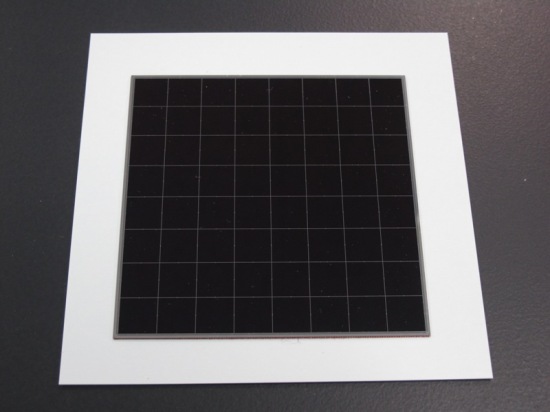
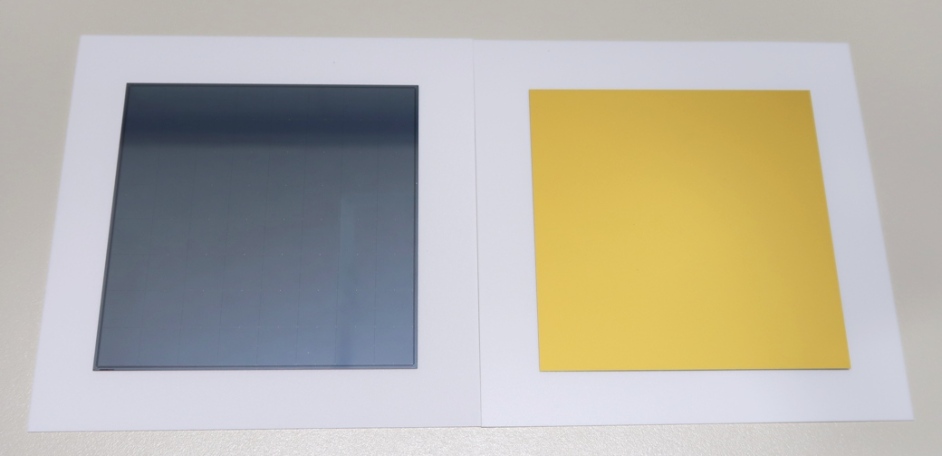
- Constructed a 20-layer silicon-tungsten electromagnetic calorimeter prototype (Mini FoCal) using 60 n-type silicon pad sensors with 320 µm thickness and Al/Au surface coatings for radiation hardness and noise suppression.
- Equipped the prototype with individual layer readout using APV25 hybrid-SRS readout electronics to enable precise calibration and improved energy resolution.
- Conducted beam tests at the CERN SPS facility using 150 and 250 GeV/c electron beams to measure energy resolution and longitudinal shower profiles.
- Installed the prototype 7.5 m downstream of the ALICE interaction point and collected data during pp collisions at √s = 13 TeV to measure inclusive electromagnetic cluster energies and di-cluster invariant masses.
- Performed detailed comparisons between data and Geant4 simulations, including realistic noise and partial readout (12 layers) to model real detector conditions.
- Used the mixed-event technique to estimate and subtract combinatorial background in di-cluster invariant mass distributions for neutral pion reconstruction.
Experimental results
Research questions
- RQ1What is the energy resolution of a large-scale silicon-tungsten electromagnetic calorimeter prototype using individually read-out pad sensors at 150 and 250 GeV electron beams?
- RQ2How well do measured longitudinal shower profiles in the Mini FoCal prototype agree with Geant4 simulations of the detector response?
- RQ3To what extent do the invariant mass distributions of reconstructed electromagnetic cluster pairs in pp collisions at √s = 13 TeV match PYTHIA8 simulations and realistic detector simulations?
- RQ4What impact do in-situ backgrounds and material effects have on neutral pion peak structure and mass resolution in the forward region?
- RQ5How does the performance of a pad-only readout compare to a future design with added pixel layers for two-shower separation?
Key findings
- The Mini FoCal prototype achieved an energy resolution of 4.3% for 150 GeV/c and 250 GeV/c electron beams, consistent with realistic Geant4 simulations.
- Longitudinal shower profiles measured in the SPS beam test showed excellent agreement with simulated profiles, confirming accurate modeling of electromagnetic shower development.
- Inclusive electromagnetic cluster energy distributions in pp collisions at √s = 13 TeV were found to be consistent with PYTHIA8 simulations across different pseudorapidity windows (η = 3.7–4.5).
- Reconstructed di-cluster invariant mass distributions in data showed good agreement with realistic simulation after mixed-event background subtraction, with the pion peak well described by the simulation.
- An unexplained structure at approximately 0.25 GeV/c² appeared in the data at high energies, likely due to material in front of the detector or in-jet correlations affecting clusterization.
- The efficiency for reconstructing neutral pion pairs dropped rapidly above 125 GeV, limiting observable pion peaks at higher energies, highlighting the need for future pixel layer integration to improve mass resolution.
Read this paper
Open the full text in the Nubint reader and ask about any passage as you read.
Read this paper on NubintThis review was generated by AI from the original paper. Please check the paper before citing it.